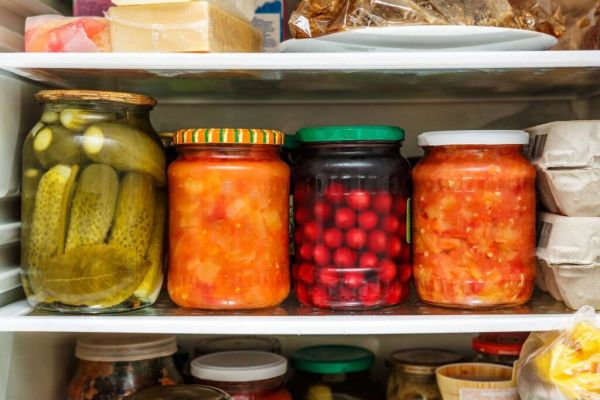
Whether you make them from scratch or buy them from the store, pickles last a while once opened.
“Pickles have several preserving elements working in their favor: acid (from vinegar, fermentation, and/or other acid sources like lemon juice), salt, and sometimes sugar,” explains Julia Skinner, PhD, founder of The Culinary Curiosity School and food writer whose work includes Our Fermented Lives and the forthcoming Essential Food Preserving.
But if you’ve noticed cloudy brine or a blanket of yeast, you might be wondering if it’s time to throw your pickles out. To help you make the right call, we turned to food preservation experts. Here’s how to tell if it’s time to toss your pickles — plus storage tips for maximizing shelf life.
How long do pickles last once you open them?
Experts say there isn’t a clear-cut answer when it comes to the shelf life of opened jars.
“I’ve never seen a hard-and-fast rule for this, since it varies with the pickles themselves as well as how they’re stored,” Skinner says. “I usually tell people ‘several weeks or more,’ but the real answer is to use your senses and your common sense to make sure the pickles look and smell good and are still good to eat.”
“There has been very little research done on best-by dates or expiration dates so most guidelines given err on the side of caution,” echoes April McGreger, a fermenter and chef at The People’s Kitchen Philadelphia and writer of a newsletter called Preserving the South. “The quality is best in the first year for many products so that is still a good rule of thumb.”
That being said, McGreger notes two factors that impact how long pickles last: submersion under brine, which “keeps out the oxygen (that) leads to spoilage,” and the pickles’ acidity — in general, higher acidity means a longer shelf life.
Temperature is an important third factor, Skinner adds. “Pickles last longest in the fridge, where the cooler temperature slows microbial growth,” so always refrigerate jars after cracking them open.
Key signs of spoilage
If you observe “changes in the viscosity and texture of the brine, sudden cloudiness (for canned pickles), and colorful molds on top,” it’s time to replace your jar, Skinner says. Ditto on sliminess or a foul smell. White dots of yeast on the exposed parts of pickles are often innocuous — just remove the yeast promptly to help preserve the pickles’ quality, advises McGreger. However, “if the growth has any hair or is green or pink, that is mold and the pickles should be tossed immediately,” McGreger says. Unlike yeast, mold can penetrate below the surface of the brine, so it’s not something that can be safely skimmed off.”
“You might also find things that aren’t spoilage, per se, but do influence the flavor and texture of the pickles, like kahm yeast (a white and sometimes wrinkled film on the top of a jar), or soft, squishy vegetables,” says Skinner. “These might be safe to eat, but you may not want to depending on your comfort level and preferences.”
Before you throw out pickles that are past their prime, consider repurposing them. “Once a pickle loses its crunch, that’s when I chop it and add it to sauces or salads or even soups for a little acidic punch,” says McGreger.
The best way to store pickles
In addition to refrigerating opened jars, always use clean utensils when removing pickles from the liquid and “store your opened pickles under their brine in the smallest container they will fit in to limit oxygen exposure and keep them cold,” says McGreger.
Running short on liquid gold? “Add an extra splash of vinegar or 1:1 vinegar to water with a little salt to the top of your pickles if you lack sufficient brine,” McGreger instructs.
Contact to : xlf550402@gmail.com
Copyright © boyuanhulian 2020 - 2023. All Right Reserved.