As artificial intelligence continues to transform industries, one of the biggest concerns globally remains its impact on jobs. With AI systems demonstrating capabilities once reserved for humans — from writing to pattern recognition — questions loom about which careers are at risk and which are more resilient.
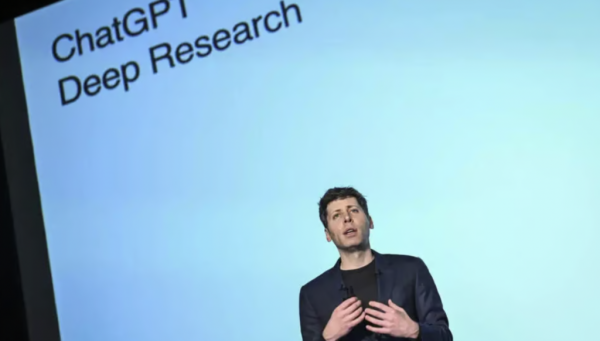
Sam Altman, CEO of OpenAI — the company behind breakthrough AI technologies — recently shared his perspective on this issue. Instead of focusing only on potential job losses, Altman highlighted areas that he believes are least likely to be displaced by AIoffering both reassurance and guidance for workers navigating the AI era.
Why Some Jobs Are More Vulnerable
Before discussing safe areas, it helps to understand why certain roles are seen as susceptible to automation. Routine tasks, predictable workflows, and well-defined patterns are easier for AI systems to learn and replicate. For example, jobs involving repetitive data entry, basic customer service scripts, or pattern-based decision-making are at higher risk because AI can perform these with speed and consistency.
However, not all work fits neatly into predictable structures. Jobs that require creativity, deep human interaction, social intelligence, or complex judgment tend to resist simple automation. This distinction forms the basis of Altman’s insights on the future of work.
Least Vulnerable Area 1: Jobs Requiring Deep Human Interaction
According to Altman, roles that involve complex social collaboration, emotional intelligence, and deep interpersonal engagement are among the least likely to be displaced by AI. These include professions where understanding nuance, context, and human motivation plays a central role.
Examples include:
- Healthcare professionals such as nurses and therapists
- Educators and trainers who facilitate learning and mentorship
- Creative collaborators in fields like design, performance, and arts
In these settings, players must interpret human emotions, negotiate shifting goals, and adapt in real time — skills that AI still struggles to authentically replicate.
Least Vulnerable Area 2: Jobs with High Stakes and Complex Judgment
Altman also points to roles that require multi-layered reasoning, ethical judgment, and responsibility under uncertainty. These jobs cannot be reduced to deterministic input-output models, which limits how effectively AI can replace them.
Examples include:
- Leadership and strategy roles where decisions have broad implications
- Scientific researchers at the edge of discovery
- Legal professionals involved in complex litigation and ethical interpretation
These careers demand a blend of domain expertise, risk assessment, and judgement — qualities that remain inherently human in Altman’s view.
What This Means for Workers
Altman’s framework suggests that rather than worrying solely about job loss, the focus should be on resilience and adaptability. Workers who cultivate skills like critical thinking, complex communication, empathy, and cross-disciplinary collaboration are better positioned for the AI-augmented future.
AI will likely serve as a tool that enhances productivity rather than outright replaces these roles — as long as humans remain at the heart of interpretation and decision-making.
60-Word Summary
OpenAI CEO Sam Altman says jobs that require deep human interaction and complex judgement under uncertainty are least vulnerable to AI displacement. Roles like healthcare, education, leadership, and research depend on social nuance, ethical reasoning, and collaboration — areas where AI currently lacks authentic human capability. Building skills in empathy, communication, and critical thinking will help workers thrive in the AI era.
Contact to : xlf550402@gmail.com
Copyright © boyuanhulian 2020 - 2023. All Right Reserved.