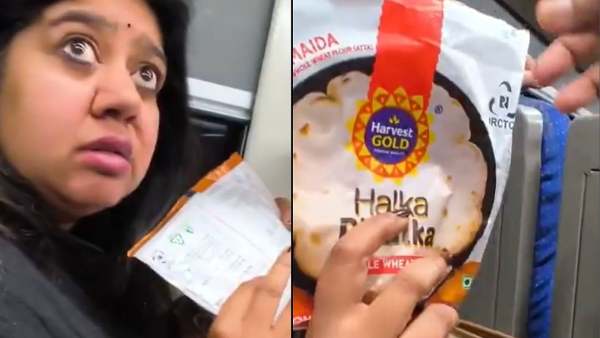
A passenger travelling on Vande Bharat from Allahabad to Delhi raised food safety concerns after being served rotis and kachoris heated inside sealed plastic packets. Questioning whether the packaging was microwave-safe, she recorded her interaction with staff and later posted online. IRCTC responded seeking details. The incident sparked debate over onboard catering standards
A routine train journey between Allahabad and Delhi turned into a public health debate after a passenger questioned how meals were being served onboard premium Indian trains. The traveller alleged that rotis and kachoris were handed out piping hot inside sealed plastic packets, raising doubts about whether the packaging was safe for microwave heating.
The incident reportedly took place during her journey on the Vande Bharat Express, operated by Indian Railways, with catering managed by Indian Railway Catering and Tourism Corporation (IRCTC).
“Is This Plastic Microwave-Safe?”
The passenger recorded a video of her interaction with onboard staff, directly questioning whether the sealed packets were heated in a microwave. When she asked if the food had been microwaved inside the plastic, a staff member responded casually, asking whether she preferred it cold.
However, her concern wasn’t about temperature, it was about safety. She pointed out that the packaging mentioned “Store in a cool and dry place,” but did not specify whether it was microwave-safe. She repeatedly asked the staff to show where the packet authorised direct microwave heating.
Emphasising that plastic can release harmful chemicals when heated improperly, she stated she would file a formal complaint and seek clarification from railway authorities.
Social Media Post Sparks Debate
Later, she shared a detailed post online describing her experience on both the Vande Bharat (Allahabad to Delhi) and the Rajdhani route the previous day. According to her, the packets were visibly hot when served, and staff confirmed they had been heated without removing the plastic cover.
She questioned whether the packaging was certified for high-temperature use and warned that heating non-microwave-safe plastic could potentially cause chemical leaching into food. Tagging railway authorities, she demanded accountability and called for corrective action instead of blame-shifting between departments or vendors.
After the post gained traction, IRCTC’s official social media account responded, requesting her PNR number and mobile details to investigate the matter further. The reply indicated that the complaint would be addressed through proper channels.
Public Reaction
The issue triggered strong reactions online. Many users echoed her concerns about passenger safety and hygiene standards on Indian trains. Some criticised staff training and suggested adopting airline-style catering practices for hot meals. Others advised travellers to avoid purchasing onboard food altogether, citing recurring hygiene concerns.
Why Heating Plastic Can Be Risky
Food safety experts have long cautioned against heating food in plastic containers unless they are clearly marked “microwave-safe.” Certain plastics may release chemicals such as BPA or phthalates when exposed to high temperatures. Globally, food packaging regulations require clear labelling if products are intended for reheating.
While premium trains like Vande Bharat and Rajdhani are marketed as offering improved comfort and catering standards, this incident has raised questions about vendor practices and quality checks.
Contact to : xlf550402@gmail.com
Copyright © boyuanhulian 2020 - 2023. All Right Reserved.