
India AI Impact Summit 2026: Innovation vs. Integrity
The India AI Impact Summit 2026 in New Delhi was designed to showcase the country’s growing prowess in artificial intelligence and deep-tech innovation. And in many ways, it succeeded. Cutting-edge robotics, AI-led automation, and indigenous breakthroughs reinforced India’s aspirations to become a global AI powerhouse.
However, the summit also revealed a stark contrast between authentic innovation and alleged misrepresentation. While one startup proudly demonstrated a truly homegrown robotic solution, controversy erupted elsewhere over claims that imported technology was being presented as indigenous development.
The episode underscored a deeper truth: as India accelerates its AI ambitions, credibility and transparency will be just as important as technological capability. In a sector built on trust, data, and global collaboration, even perception gaps can dilute impact. The summit ultimately became a metaphor for India’s AI journey — soaring ambition paired with the urgent need for institutional integrity.
Swiggy Shuts Snacc: The Economics of Speed
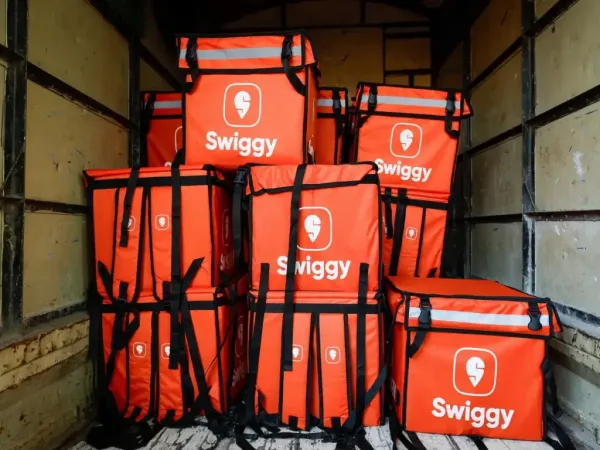
In Bengaluru, food and grocery delivery giant Swiggy made a tough but telling decision — shutting down Snacc, its standalone 15-minute food delivery app, just a year after launch.
Snacc was positioned as an ultra-fast solution for quick bites, tapping into the growing consumer appetite for instant gratification. But speed comes at a cost. The economics of ultra-fast food delivery — high logistics expenses, limited order values, and operational inefficiencies — proved challenging to sustain at scale.
The closure signals a strategic reset. Rather than chasing aggressive expansion in every vertical, Swiggy appears to be recalibrating toward sustainable, long-term growth. In a post-funding-boom era, profitability and unit economics are increasingly dictating decisions. Snacc’s shutdown is less a retreat and more a reflection of a maturing market where discipline is replacing experimentation.
Deepika Padukone’s Brand Faces Trademark Heat
In the beauty and skincare arena, actor-entrepreneur Deepika Padukone and her company DPKA Universal Consumer Ventures have found themselves in a legal tussle with Lotus Herbals.
The dispute centres on “Lotus Splash,” a cleanser sold under Deepika’s self-care brand 82°E. Lotus Herbals alleged that the mark bears similarity to its long-established “Lotus” trademark, potentially causing consumer confusion in a crowded skincare market.
The matter was heard by a Division Bench comprising Justices V Kameswar Rao and Vinod Kumar, which overturned a previous single-judge ruling that had denied interim relief to Lotus Herbals. The legal development adds complexity to what is already a fiercely competitive space where branding, recall value, and intellectual property are critical assets.
For celebrity-led brands, the case is a cautionary tale: star power may drive visibility, but brand architecture must withstand legal scrutiny.

Bombay High Court Stays Warrant Against Bhavish Aggarwal
In another significant legal development, the Bombay High Court at Goa stayed an arrest warrant issued against Bhavish AggarwalCEO of Olaby the District Consumer Commission, South Goa.
The High Court also observed that the Commission had exceeded its jurisdiction while issuing the warrant under consumer protection law. The stay brings temporary relief to Aggarwal and shifts the spotlight to procedural boundaries and due process.
Beyond the individual case, the episode raises broader questions about how consumer forums exercise their authority in disputes involving large technology companies. As India’s digital platforms grow in influence, the legal frameworks governing them are being tested in new and complex ways.
Safari Industries Bets Big on Carlton
Meanwhile, in the travel goods sector, Safari Industries entered into a long-term licensing agreement with Carlton Retail Private Limited, gaining rights to use the “CARLTON” brand name under Class 18 for luggage and accessories in India.
The deal spans an initial 20-year term, extendable by another 20 years — effectively giving Safari up to 40 years to build and scale the brand in India’s premium luggage segment.
This is more than a licensing agreement; it is a strategic play for brand elevation. As Indian consumers increasingly seek premium travel products, Safari’s long runway offers the opportunity to blend global brand recognition with local distribution muscle.
Blinkit Under Scrutiny After Criminal Probe
A routine investigation into violent incidents in West Delhi’s Khyala area escalated into controversy when police traced a weapon — a button knife — back to an alleged online purchase via Blinkit.
According to officials, the accused claimed the knives used in the attacks were ordered through the app. The revelation has raised urgent concerns about the accessibility of potentially dangerous items through ultra-fast delivery platforms.
The episode puts quick-commerce players under renewed scrutiny. As convenience becomes the cornerstone of digital retail, platforms may face increasing regulatory pressure to strengthen compliance, product controls, and verification systems.
Contact to : xlf550402@gmail.com
Copyright © boyuanhulian 2020 - 2023. All Right Reserved.