Vietnam stands among Southeast Asia’s richest biodiversity hotspots, where rugged mountains, misty wetlands, and dense tropical forests safeguard thousands of plant and animal species. Beyond its vibrant cities and sun-kissed beaches, the country’s national parks reveal a different side — ancient rainforests, dramatic karst landscapes, and rare wildlife shaped by millions of years of natural evolution.
In this comprehensive travel guide, we explore 13 of Vietnam’s most renowned wildlife national parks, what makes each unique, the species you may encounter, and the best time to plan your visit.
# Cuc Phuong National Park
Established in 1962, Cuc Phuong is Vietnam’s oldest national park and a pioneer in conservation efforts. Spanning over 200 square kilometers, the park is known for its ancient rainforest, dramatic limestone mountains, and fascinating prehistoric caves.
Wildlife Highlights
Cuc Phuong protects the critically endangered Delacour’s langur, one of the rarest primates in the world. Visitors may also spot macaques, flying squirrels, civets, and more than 300 bird species — especially active during early morning hours.
# Ba Be National Park
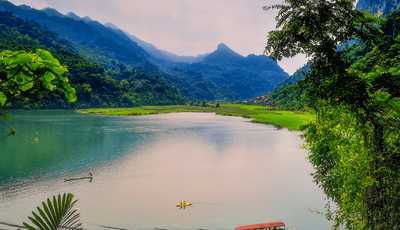
Centered around Ba Be Lake — Vietnam’s largest natural freshwater lake — this park is a tranquil mix of waterfalls, limestone cliffs, and rural landscapes.
Wildlife Highlights
The park is home to François’ langur, pangolins, and over 350 butterfly species. Its wetland ecosystem attracts herons, kingfishers, and migratory waterfowl throughout the year.
# Bach Ma National Park
Located between Hue and Da Nang, Bach Ma was once a French hill station. Today, its cool mountain climate and misty cloud forests attract trekkers and wildlife enthusiasts.
Wildlife Highlights
Keep an eye out for red-shanked douc langurs, crested serpent eagles, and striking giant butterflies. The park shelters more than 1,400 plant species and around 330 animal species.
# Cat Ba National Park
Part of the UNESCO-listed Cat Ba Archipelago near Ha Long Bay, this park blends limestone karsts, tropical forests, and coastal ecosystems.
Wildlife Highlights
Cat Ba is the last refuge of the critically endangered golden-headed langur. The park also supports civets, squirrels, hornbills, and various reptiles.
# Phong Nha–Ke Bang National Park
A UNESCO World Heritage Site, Phong Nha–Ke Bang is celebrated for its vast karst systems and spectacular caves, including Son Doong — the world’s largest cave. Its dense rainforest is equally remarkable.
Wildlife Highlights
The park shelters over 500 vertebrate species, including langurs, macaques, civets, and rare birds. Certain cave systems are home to blind fish and other highly specialized cave species.
# Yok Don National Park
Situated in Vietnam’s Central Highlands, Yok Don protects one of Southeast Asia’s few remaining dry deciduous forests.
Wildlife Highlights
The park is known for Asian elephants, gaur, sambar deer, and colorful birds such as the green peafowl. Ongoing conservation programs focus on elephant welfare and habitat restoration.
# Pu Mat National Park
Located near the Laos border, Pu Mat forms part of the Western Nghe An Biosphere Reserve and represents one of Vietnam’s largest protected wilderness areas.
Wildlife Highlights
The park is believed to shelter the elusive saola, one of the world’s rarest mammals. It also supports sun bears, langurs, and more than 320 bird species.
# Nui Chua National Park
Located along Vietnam’s south-central coast, Nui Chua is the country’s driest region, featuring coastal forests, coral reefs, and semi-arid hills.
Wildlife Highlights
The park supports nesting green turtles, diverse seabirds, and more than 1,500 drought-adapted plant species.
# Tram Chim National Park
Located in the Mekong Delta, Tram Chim is one of Southeast Asia’s most important wetland reserves and a paradise for birdwatchers.
Wildlife Highlights
The park protects the rare Sarus crane — the tallest flying bird in the world — along with over 230 bird species and diverse aquatic life.
# Con Dao National Park
Spread across 16 islands, Con Dao National Park protects both terrestrial forests and rich marine ecosystems, offering pristine beaches and crystal-clear waters.
Wildlife Highlights
Con Dao is a major nesting site for green sea turtles and is home to dugongs, giant black squirrels, and more than 200 coral species.
# Phu Quoc National Park
Spanning more than half of Phu Quoc Island, this national park safeguards a rich mix of coastal rainforest, mangrove ecosystems, and vibrant coral reefs. It’s a perfect destination for travelers who want to blend wildlife exploration with relaxing beach time.
Wildlife Highlights
Visitors may encounter silver langurs, slow lorises, monitor lizards, and colorful butterflies within the forested areas. Offshore, the coral reefs teem with bright tropical fish and diverse marine species.
# Ba Vi National Park
Located just outside Hanoi, Ba Vi National Park is a favored weekend retreat known for its dense forests, historic temples, and panoramic mountain views. The cooler climate and mist-covered hills offer a refreshing escape from the capital’s bustle.
Wildlife Highlights
The park is home to macaques, civets, numerous bird species, and hundreds of medicinal plants. Its peaceful forest trails make it ideal for nature walks and light trekking.
# Cat Tien National Park
One of Vietnam’s largest and most celebrated protected areas, Cat Tien stretches across tropical lowland forests along the Dong Nai River. It stands out as a top wildlife tourism destination in southern Vietnam.
Wildlife Highlights
Cat Tien shelters gaur, gibbons, deer, and more than 350 bird species. Night safaris provide opportunities to spot porcupines, civets, and owls, adding a thrilling dimension to the park’s biodiversity experience.
Contact to : xlf550402@gmail.com
Copyright © boyuanhulian 2020 - 2023. All Right Reserved.