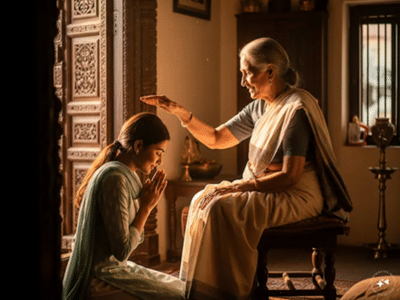
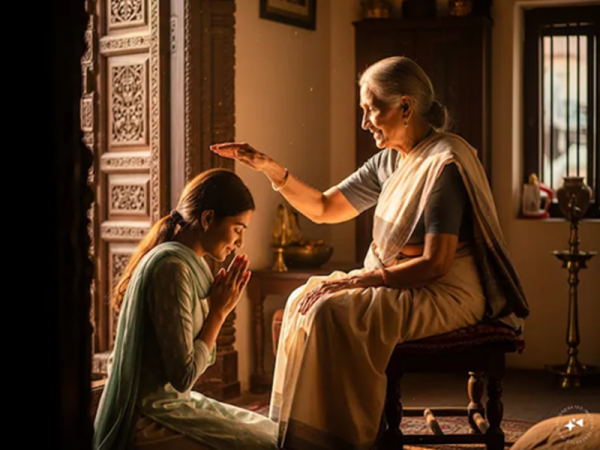
Blessing by the Right Hand: When an elder places their hand on our head and says, "Be happy" or "Always be successful," we feel a strange warmth in that moment. It's not just the effect of the words, but the energy of touch that we've felt since childhood. Interestingly, the same method of blessing is seen in almost every culture and every home, with the right hand. Have you ever wondered why? Is it simply tradition, or is there a deeper meaning and logic behind it? In fact, in Indian beliefs, the tradition of blessing with the right hand is said to be linked to astrology, yoga, and practical science. This is why this habit has been passed down from generation to generation and still feels as natural today.

The Importance of the Right Hand in Astrology
In Indian astrology, the body is also linked to the planets. It is believed that the right side of the body is influenced by the Sun. The Sun is considered a symbol of energy, confidence, and vitality. For this reason, the right side is associated with activity, leadership, and positive influence. When a person blesses with their right hand, it is believed that they are transmitting their solar energy to the person in front of them. This is why the touch of blessing is not just a formality, but is considered a transmission of auspicious energy. Bhopal-based astrologer and Vastu consultant Pandit Hitendra Kumar Sharma provides more information on this subject.
Cultural Perceptions of Auspiciousness
In Indian culture, the right hand is considered the most auspicious. Puja, havan, offering prasad, and donations—all these activities involve the right hand. There's a cultural psychology behind this. The right hand was considered active and giving, while the left hand was associated with receiving or personal tasks.
The Impact of Social Signal
Gradually, this habit became a social signal. Whether it was to show respect, shake hands, or hand over something, using the right hand became part of etiquette. Blessings also fell into this category. This maintained uniformity in tradition and established a fixed way of expressing respect in society.
Yoga Science: The Connection of Pingala Nadi
Yoga and spirituality describe the three main nadis of the body—Ida, Pingala, and Sushumna. Of these, the Pingala Nadi is considered to be associated with the right side. It is considered the nadi of energy, warmth, and activity. It is believed that the right hand is associated with a more active life force.
The Concept of Energy Transmission
When someone's head is blessed with the right hand, it is seen as a process of energy transfer. This is why the touch of blessing makes people feel mentally reassured and emotionally secure.
The Perspective of Science and Psychology
Modern science explains this tradition differently. The right side of the body is controlled by the left side of the brain, and the left side is believed to be associated with logic, language, and decision-making. Most people are right-handed, so this hand is more controlled and precise.
A Sign of Confidence
Psychology suggests that when a person touches with their dominant hand, they naturally convey a sense of confidence and control. This gesture conveys a sense of security and trust to the other person. This is why a blessing given with the right hand is perceived as more powerful.
The Impact of Tradition in Everyday Life
You may have noticed that even children at home unconsciously tilt their heads to the right when receiving blessings from elders, ensuring proper hand placement. This practice is also followed during weddings, festivals, and religious ceremonies.
A Habit Persisting Through Generations
This isn't just a religious rule, but a social habit. When we observe the same method from childhood, it feels natural. Gradually, this tradition becomes a part of our identity.

A Confluence of Tradition and Logic
The tradition of blessing with the right hand isn't just a religious belief. It combines the symbolism of astrology, the energy concepts of yoga, and the practical logic of science. This is why this practice remains as vibrant today. When an elder places his right hand on the head, he is not merely performing a ritual—he is carrying on a tradition of faith that has been passed down through generations.
PC Social Media
Contact to : xlf550402@gmail.com
Copyright © boyuanhulian 2020 - 2023. All Right Reserved.