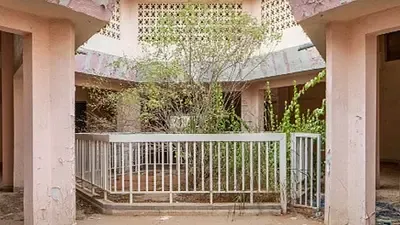
While many residents in Abu Dhabi connect with places like Green Souk, Al Jouri Kindergarten and Corniche Hospital through memories and nostalgia, more than 40 sites have now been preserved as modern heritage under the emirate’s expanding Modern Heritage Register.
The Department of Culture and Tourism – Abu Dhabi (DCT Abu Dhabi) announced on February 15 that the newly listed locations will be preserved and protected by law, adding to the first group of modern heritage buildings identified in 2022. The latest additions reflect three years of documentation and research carried out between 2023 and 2025.
Places that hold nostalgia
Al Jouri Kindergarten, a place tied to childhood memories for many residents, has been added to Abu Dhabi’s Modern Heritage Register.
Unlike traditional heritage sites, the modern register focuses on buildings and spaces that many residents have lived, studied, worked or travelled through. The list includes schools, post offices, hospitals, markets and public facilities that have shaped daily life across the emirate.
Stay up to date with the latest news. Follow KT on WhatsApp Channels.
Among the newly protected landmarks are:
Green Souk in Bani Yas and Al Shahama
Corniche Hospital
Al Jouri Kindergarten
Madinat Zayed Bus Station
Khalidiya and Hamdan post offices
Al-Kuwaitat Complex – UAEU Students' Housing
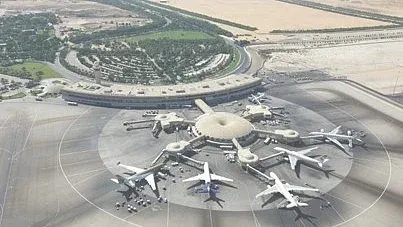
Former Abu Dhabi International Airport Terminal 1, opened in 1982
Historic sites tied to the UAE’s early development
Several well-known civic and cultural sites have also been added, including Al Ain Museum, one of the UAE’s earliest museums established in 1969, and the former Abu Dhabi International Airport Terminal 1, opened in 1982 during the emirate’s early aviation expansion.
The former National Consultative Council building, dating back to 1968, is also on the list, reflecting its role in the country’s early governance years.
A bridge between past and present
Saood Abdulaziz Al Hosani, Undersecretary of DCT Abu Dhabi, said the expansion reflects the importance of recognising the spaces that shaped the emirate’s growth.
“Abu Dhabi’s modern heritage is a cornerstone of our cultural identity, offering a powerful reflection of the emirate’s ongoing growth and development,” he said, adding that protecting these sites helps preserve the architectural and urban legacy that continues to define communities.
“By formally registering these pivotal sites, we reaffirm our commitment to the recognition, protection, preservation, and celebration of the architectural and urban legacy that has shaped our communities and continues to enrich our collective sense of place.” He added.
The initiative aligns with Abu Dhabi’s Cultural Heritage Law issued in 2016, which covers the protection and management of both tangible and intangible heritage, including modern era landmarks.
What the designation means
With their inclusion on the register, the sites will be maintained and rehabilitated according to their heritage classification. Owners of privately held buildings have been formally notified and may file an appeal within 15 days, as stipulated by law.
DCT Abu Dhabi said it will continue surveying the emirate’s built environment to identify additional locations that hold cultural, architectural, social or historical value.
For many residents, the effort is also an invitation to look differently at familiar places, not just as part of everyday life, but as pieces of a shared story still unfolding.
4 Sharjah sites inscribed on ISESCO’s Islamic World Heritage List Watch: Prince William visits World Heritage Site in Saudi ArabiaContact to : xlf550402@gmail.com
Copyright © boyuanhulian 2020 - 2023. All Right Reserved.