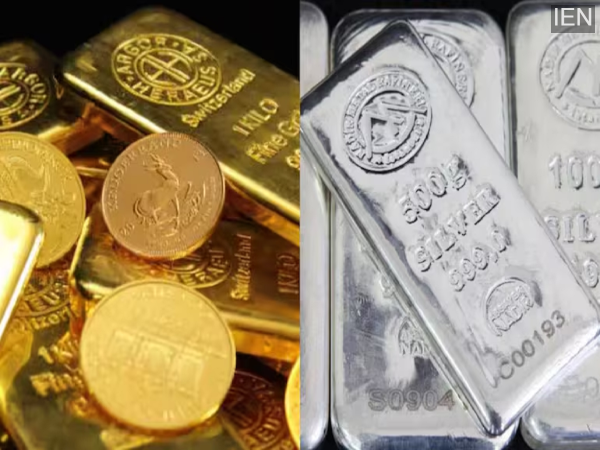
Investors tracking gold and silver through exchange-traded funds (ETFs) may soon see significant changes in how these products trade on Indian stock exchanges. Market regulator Securities and Exchange Board of India (SEBI) has proposed a fresh set of reforms aimed at reducing price mismatches between gold and silver ETFs and their actual asset value.
The move comes at a time when precious metal prices have been witnessing sharp swings globally, creating noticeable gaps between ETF trading prices and their net asset value (NAV) in India. To address this concern, SEBI has released a consultation paper and invited public feedback on the proposed changes until March 2026.
Why SEBI Is Rethinking Gold and Silver ETF Rules
Gold and silver trade almost round-the-clock in international markets, reacting instantly to global cues such as interest rate changes, geopolitical tensions, and currency movements. However, in India, gold and silver ETFs are traded only during domestic market hours.
This timing mismatch often leads to a situation where ETFs open at prices that do not accurately reflect global movements that occurred overnight. As a result, investors sometimes end up buying or selling ETFs at prices that are significantly different from their underlying value.
SEBI believes the existing framework is no longer sufficient to handle this volatility, especially during periods of sharp global price movement.
Current Price Band System and Its Limitations
At present, gold and silver ETFs in India operate under a fixed price band system. These ETFs are allowed to trade within a ±20% range based on the NAV of T-2 days. While this mechanism was designed to control extreme price fluctuations, it has increasingly resulted in distorted pricing during volatile market conditions.
According to SEBI, this lag-based structure often prevents ETF prices from adjusting quickly to real-time global trends, increasing the risk of mispricing and impacting investor confidence.
Proposal to Introduce a Dynamic Price Band
To fix this issue, SEBI has proposed replacing the fixed price band with a graded or dynamic price band system.
Under the proposed framework:
The initial price band will be set at ±6%, calculated using the previous day’s indicative NAV.
If needed, the band can be gradually expanded in 3% increments.
The maximum allowable range will be ±20% during a single trading session.
After each expansion, a 15-minute cooling-off period will be enforced.
A maximum of two expansions per trading day will be permitted.
This phased approach is expected to allow ETF prices to adjust more naturally, without sudden spikes or artificial restrictions.
Strict Conditions to Prevent Market Manipulation
SEBI has also laid down strict eligibility conditions before any price band expansion is allowed. These include:
A minimum of 50 trades
Participation from at least 10 different client codes
Involvement of three separate trading members
These safeguards are intended to ensure that price flexibility reflects genuine market activity rather than speculative or manipulative trades.
Separate Pre-Open Session Also on the Table
Another key proposal involves introducing a dedicated pre-open session for gold and silver ETFs. This session would help align ETF prices more closely with global market movements before regular trading begins.
SEBI believes this step could significantly reduce sharp gap-ups or gap-downs at market open, offering a smoother and more transparent price discovery process for investors.
How the Changes Could Benefit Investors
According to the regulator, the current one-day lag in pricing is one of the main reasons behind ETF mispricing. When international prices move sharply overnight, Indian ETFs remain constrained within a limited band, forcing investors to trade at prices that may not reflect true value.
The proposed dynamic pricing system is expected to:
Reduce tracking errors
Improve price discovery
Lower the risk of unfair trading prices
Enhance investor confidence in precious metal ETFs
Not Limited to Gold and Silver Alone
While the immediate focus is on gold and silver ETFs, SEBI has hinted that a similar graded price band framework could be extended to debt and equity ETFs in the future. However, precious metal ETFs remain the priority due to their higher exposure to global price volatility.
Public Feedback Open Until March 2026
SEBI has invited market participants, investors, and other stakeholders to share their views on the proposed changes. Based on the feedback received, the regulator may fine-tune the rules before implementing them.
If approved, these reforms could mark one of the most significant structural upgrades in India’s ETF market, making gold and silver ETFs more efficient, transparent, and aligned with global pricing trends.
Disclaimer: This article is for informational purposes only and should not be considered investment advice. Investors are advised to consult certified financial professionals before making any investment decisions.
Contact to : xlf550402@gmail.com
Copyright © boyuanhulian 2020 - 2023. All Right Reserved.