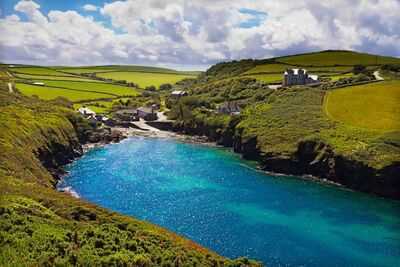
A blink-and-you'll-miss-it fishing village in North Cornwall, now better described as a tiny hamlet, boasts some of the most spectacular vistas Cornwall can offer - and that's quite the claim given a third of the county holds designated Area of Outstanding Natural Beauty (AONB) status.
Nestled comfortably between its better-known neighbours - Port Isaac and Polzeath - this diminutive hamlet now falls largely under National Trust ownership. A peaceful ambience, stunning coastal panoramas, and abundant natural splendour- that's how you'd characterise this small Cornish settlement.
Despite its modest proportions, it possesses a remarkably colourful history encompassing fishing, smuggling, mining, a devastating maritime tragedy, a wealthy man's architectural whim, and even a stint as a filming location for the television adaptation of Winston Graham's celebrated Poldark novels.
- Stunning village hidden in cove is 'frozen in time secret' with unmatched views
- Abandoned medieval village lay forgotten for centuries now loved by walkers
The now-abandoned hamlet of Port Quin derives its name from the Cornish words 'porth' meaning cove, and 'gwynn' meaning white - literally White Cove.
Tucked between imposing headlands, this compact hamlet forms a protected inlet with a substantial fishing heritage. Indeed, the scale of the old fish cellars (which remain visible in Port Quin today) suggests it was once a flourishing and prosperous fishing community on the Cornish coastline, reports Cornwall Live.
Today, Port Quin boasts just a handful of holiday lets, all under the stewardship of the National Trust. The hamlet has seen virtually no modern construction over the centuries, remaining remarkably preserved from the march of time and urban sprawl.
Three local farms – Scarrabine, Trevigo, and Roscarrock – encircle Port Quin's harbour, each managed by families from the area. The National Trust also maintains the fields surrounding this now-abandoned village.
Situated approximately two miles west of the busier Port Isaac, Port Quin is an enchanting, uninhabited cove blessed with untamed natural splendour and a dramatic, craggy coastline.
The village's tragic legend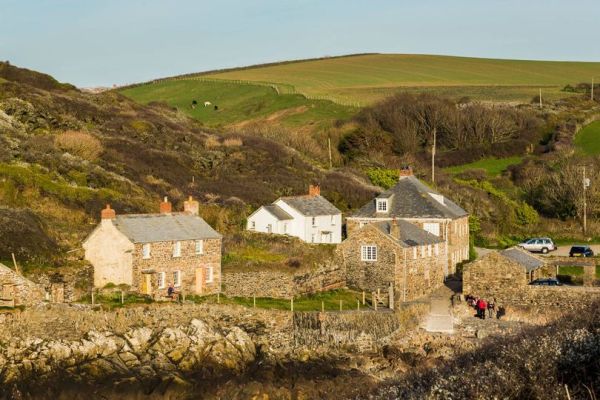
Port Quin has earned its reputation as the 'village that died', hiding a heartbreaking history.
Local folklore tells of a catastrophic Sunday night during the 19th century when, according to legend, all the village's menfolk defied the Sabbath to go fishing, only to be caught in a ferocious storm that claimed every one of their lives.
Left without breadwinners, the village women found themselves unable to feed their families, compelling them to desert their homes and seek refuge with their children in nearby communities where they might find better opportunities.
This poignant story lives on in Frank Bramley's 1888 painting 'The Hopeless Dawn', which is displayed at Tate Britain in London. A compact National Trust car park sits at Port Quin, typically visited by a mobile vintage café throughout the summer season.
Things to do in Port Quin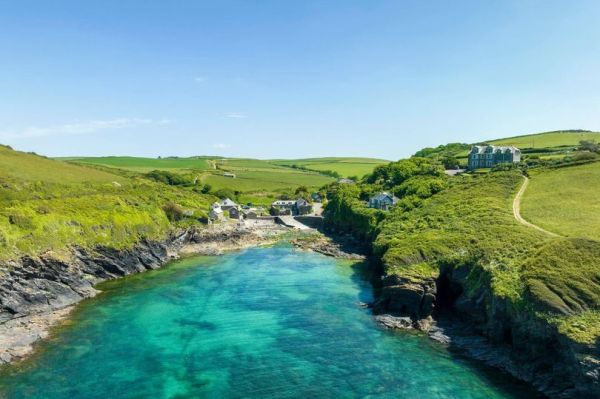
Port Quin's protected inlet is celebrated as one of Cornwall's finest locations for rock pooling, kayaking or angling, or simply taking a refreshing plunge in the Atlantic.
The cove is beloved by families, ideal for youngsters to safely paddle without the hassle of tourist hordes. Winter brings ferocious storms, however, making swimming at Port Quin inadvisable during those months.
Port Quin enjoys the advantage of being close to Port Isaac, Cornwall's renowned fishing village, which brims with restaurants, welcoming pubs, and remarkably two Michelin-starred establishments within its compact confines - Outlaw's New Road and Outlaw's Fish Kitchen.
Run by chef Nathan Outlaw, the Outlaw venues are cherished by locals and tourists alike, all of whom rave about the delectable cuisine.
Nathan's acclaimed flagship venue, Outlaw's New Road, is nevertheless scheduled to close its doors on March 28 this year.
The shuttering will be swiftly followed by the launch of a fresh venture from the Michelin-starred chef - Outlaw's Bistro, operating from the well-loved Outlaw's Guest House located directly opposite.
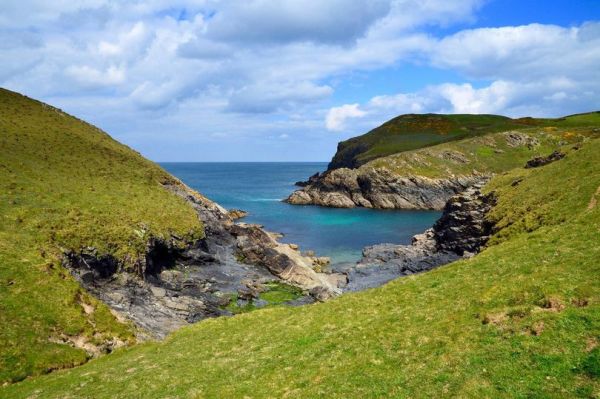
The South West Coast Path runs straight through Port Quin and provides walkers with an enchanting stretch of pristine coastline, exceptional even by Cornwall's remarkably elevated standards. A stunning three-and-a-half-mile coastal ramble stretches from Port Quin to Port Isaac, affectionately nicknamed 'The Rollercoaster' due to its challenging landscape.
With sections that are extremely steep, walkers are urged to take care and ensure they're properly kitted out and ready for the trek.
Yet the vistas along this route are utterly spectacular, and those who venture along it will catch a splendid glimpse of Doyden Castle, a 19th-century folly that's been transformed into a National Trust holiday let.
Doyden Castle is a compact but impressive fortress standing at the cliff's edge on the isolated Port Quin headland, backed by sweeping ocean panoramas.
Built in 1830 by a local entrepreneur as a private getaway (essentially: a venue for gambling and revelry), today Doyden Castle operates as a delightful one-bedroom holiday cottage brimming with historical treasures.
Gothic arched windows, a welcoming open fireplace, and the original wine storage in the cellar all contribute to its irresistible appeal.
Port Quin and several neighbouring spots have featured in well-known films and television programmes.
During the 1970s, Quin House in the village served as a filming location for the inaugural series of the BBC's Poldark, whilst Doyden Castle was employed to depict a gatehouse. Roscarrock and its magnificent surroundings also made appearances on the beloved series.
During the 1980s, Doyden Castle served as a filming location for an adaptation of the celebrated classic novel Jamaica Inn. The castle and Port Quin also appeared in the 1997 film Swept from the Sea.
In 2011, the iconic Doyden Castle was featured as Pentire Castle in ITV's popular series Doc Martin.
Contact to : xlf550402@gmail.com
Copyright © boyuanhulian 2020 - 2023. All Right Reserved.