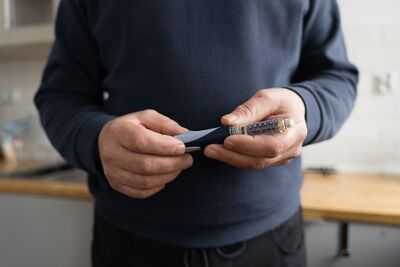
Millions of people living with diabetes but tired of daily injections could one day exchange needles for a simple rub-on gel, according to groundbreaking research.
Scientists have developed a smart polymer-based gel that transports insulin through the skin - no syringe required - and in animal trials, it reduced blood sugar to normal levels within a few hours and maintained it there for about half a day.
Published in the journal Nature, this new method addresses a problem doctors have grappled with for years: our skin is constructed like armour. Its outer layer is incredibly thin but remarkably difficult to penetrate, especially for large molecules like insulin.
- BBC viewers fume 'sorry state of affairs' as prime-time shows dropped
- BBC show faces huge shake-up as replacement host announced
The research team created a pH-responsive polymer, affectionately dubbed OP, that changes as it transitions from the skin's more acidic surface into the more neutral layers beneath, reports Wales Online.
Space baby ban, curing selfish jerks, how close we came to not making it, and runaway black holes are real - all this and more in our latest weird science newsletter
This switch helps it adhere where necessary, then slip between fatty components deeper down, carrying chemically linked insulin.
In diabetic mice, a single application restored blood glucose to normal within an hour and maintained it stable for about 12 hours. The dose was extremely high by human standards, raising questions about efficiency.
However, in miniature pigs - whose skin behaves more similarly to ours - the team used a much lower dose and still achieved normal blood sugar levels, with no signs of skin irritation after repeated use.
Experts have advised caution, as human skin varies in thickness, fat content, and pH, so what works in mice and pigs may not translate directly to people.
Because the gel seeps insulin into the bloodstream more slowly and steadily than an injection, it appears more like a 'background' or long‐acting option, not something to rescue dangerously high sugars quickly.
And any skin-based insulin would require tight dose control to avoid hypos.
Even so, a needle-free, longer-lasting insulin could be a godsend for those who fear injections or struggle to keep up with them.
The same polymer platform might even be adapted for other protein drugs, including treatments like semaglutide, the researchers suggested.
Before any patient can reach for a tube of gel, the team must conduct extensive safety studies, secure regulatory approval to begin human trials, fine-tune the formulation and dosing, and demonstrate that it works reliably at real-world, clinically relevant doses.
Until then, it's an exciting glimpse of a jab-free future - with plenty of steps still to go.
Contact to : xlf550402@gmail.com
Copyright © boyuanhulian 2020 - 2023. All Right Reserved.