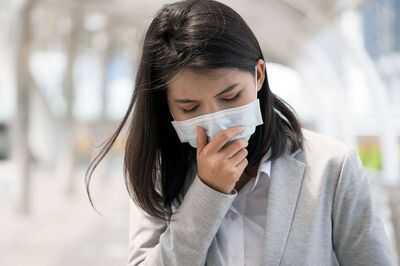
Health experts have encouraged certain people to “consider wearing a face mask” to avoid illness. This measure could help protect you from respiratory conditions such as flu, Covid, and RSV.
In an update, the UK Health Security Agency (UKHSA) explained thatcases of COVID-19 increased in the week of February 2, while reports of influenza and respiratory syncytial virus (RSV) decreased. If you are vulnerable to these illnesses, it is therefore still important to take precautions.
Via GOV.UK, the UKHSA said: “For respiratory viruses, indoor spaces should be well-ventilated and if you have symptoms you are advised to stay at home if possible and avoid visiting those more vulnerable, including older people, pregnant women and young babies. If you need to go out when you have respiratory symptoms, consider wearing a face mask.”
- Smoking and vaping to be BANNED in these public areas - changes in full
- Mum issues warning after waking up with rotting legs when she passed out drunk
Dr Jamie Lopez Bernal, consultant epidemiologist at UKHSA, added: “We’re continuing to see cases of flu and RSV falling week after week, which is a really positive sign. While cases of COVID-19 are increasing, levels are still very low.
“To ensure we continue on this downward trend, I encourage people to continue taking simple steps, such as regularly washing hands and ventilating rooms, to protect themselves and others, particularly those more vulnerable.”
This advice is backed by the NHS, which on its websitesays that vulnerable people should:
- Try to avoid contact with people who have symptoms of COVID-19 until they feel better
- Open windows and doors if you meet people inside, or meet them outside instead
- Stay at least two metres away from people (particularly indoors or in crowded places)
- Work from home if you can, or talk to your employer about how they can help reduce your risk at work
- Wear a face covering when it's hard to stay away from other people
- Think about asking people to wear a face covering or take a rapid lateral flow test if you're meeting them inside
In terms of other contagious illnesses, cases of norovirus remain high. Norovirus, which is also known as the winter vomiting bug, is a gastrointestinal illness that causes vomiting and diarrhoea.
The UKHSA said: “Norovirus activity remains high but has stabilised in recent weeks - cases are high particularly in adults aged 65 years and over, though it has decreased in this age group in recent weeks. Overall, norovirus laboratory reports between weeks five and six of 2026 (26 January 2026 to 8 February 2026) were 45.9 per cent higher than the five-season average for the same two-week period.”

Amy Douglas, lead epidemiologist at UKHSA, cautioned: “Norovirus activity has remained high in recent weeks. We are seeing signs that the virus is stabilising at these high levels, but we need to start seeing a decline if we are to reduce the impact that this virus has on our communities and health system.
“We are seeing the highest number of cases among individuals aged 65 years and over and outbreaks in hospital settings have increased too, so please remember the simple steps we can all take to stop norovirus spreading. Wash your hands with soap and warm water and use bleach-based products to clean surfaces to help stop infections spreading.
“Alcohol gels do not kill norovirus so don’t rely on these alone. If you have diarrhoea and vomiting, don’t return to work, school or nursery until 48 hours after your symptoms have stopped and don’t prepare food for others in that time either.
“If you are unwell, avoid visiting people in hospitals and care homes to prevent passing on the infection to those most vulnerable.” For more information, visit GOV.UKhere.
Contact to : xlf550402@gmail.com
Copyright © boyuanhulian 2020 - 2023. All Right Reserved.