Stepping onto the streets of Weobley, it’s impossible not to be charmed. Or feel, just for a moment, that you've been transported through time.
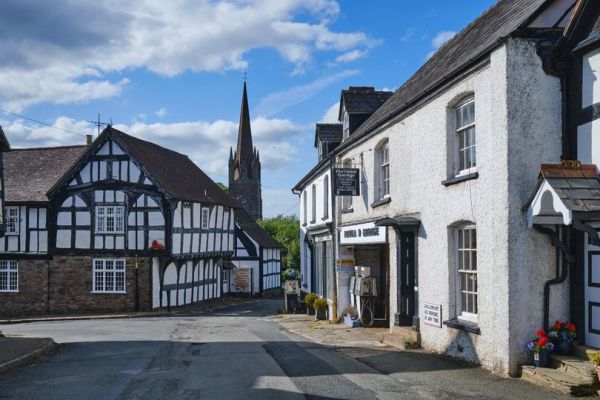
Almost everywhere you look in the Herefordshire village is a black-and-white timber-framed building, casting you back four hundred years to Elizabethan England. And that is exactly why filmmakers chose the village as the main filming location for Hamnet.
The 2025 biographical period movie, directed by Chloé Zhao and based on the novel of the same name by Maggie O'Farrell, tells the story of the devastating events that inspired William Shakespeare’s masterpiece, Hamlet. Focusing on Shakespeare’s domestic life with wife Agnes Hathaway, breathtakingly heartbreaking scenes depict the family’s battle with grief following the death of their beloved 11-year-old son, Hamnet.
The movie, starring Jessie Buckley as Agnes and Paul Mescalas Shakespeare, has already won a couple of Golden Globes and has been nominated for eight Oscars. But perhaps what makes this beautifully created film all the more magical is that the stunning scenes and landscapes featured actually exist - and you can visit them.
I absolutely adore all things historical and Shakespearean, but most of all, I love Britain’s remote and rural spaces. So, when Visit Herefordshire invited me to follow their new, Hamnet-inspired Through Tudor Landscapes guide to this stunning part of the world, I nearly bit their hand off.
Their guide features a range of different activities and locations to visit and explore, all before settling in for the night at one of the area's stunning accommodation options, such as The Gables Guest House, where we stayed. Not only is it a beautiful property steeped in history, but it was also used by the Hamnet production team for wardrobe, making it even more attractive for fans of the film.
And that's what makes this guide special - it leads you to all the secret places behind the scenes of the film that's been garnering such international acclaim. You don’t have to look very far in Herefordshire to find half-timbered houses and market towns bustling with antique stores, artisan stalls, and communities brimming with traditional healers, creatives, makers, cosy pubs and warm hospitality.
You can enjoy a plant medicine course with Rowan McOnegal and learn more about Agnes’ deep connection to nature as a skilled herbalist and homoeopath. Or you can have a hand at the trade Shakespeare's father worked in with Sarah Williams, making a belt, satchel, or apron from leather.
You could even re-live the moment Agnes spends with her hawk. NearbyWye Valley Falconry offers visitors the chance to take a walk with Aztec, the Harris Hawk, through a beautiful, quiet woodland and watch him fly through the forest like a scene from the film.
I could spend months soaking it all in - but with a two-year-old in tow and just a couple of days to spare, I decided to focus on the primary filming location itself. And that is exactly how I ended up in Weobley, in the heart of Herefordshire, on a very wet February weekend.
The inspiration for a Hollywood Oscar nominee
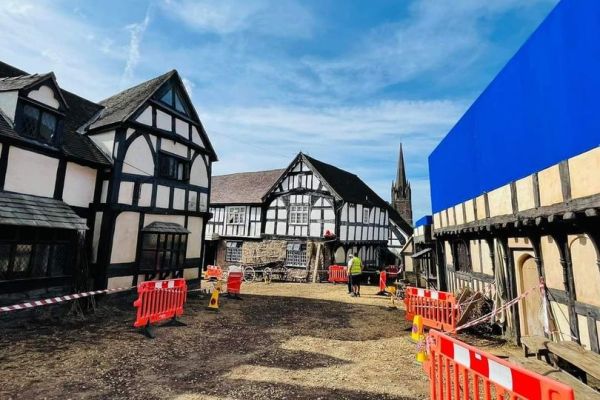
Strolling through the village, it is easy to see why filmmakers chose Weobley. William Shakespeare and his wife Anne Hathaway (Agnes in the film) were born and buried in Stratford-upon-Avon, but filmmakers felt the West Midlands market town was “too modern”.
But in Weobley, they found the perfect location for Henley Street. Almost everywhere you look, there’s a timber-framed property steeped in rich history. And climb above the village itself, and you can spy the rolling hills, winding rivers and ancient orchards which seduced the film’s location scouts.
Take a short walk around the village, and you’re bound to stumble upon the museum in Back Lane, which doubles as the village’s library and used to be the police station and Magistrates’ Court. At the moment, it is showing a special exhibition by the Weobley History Society, dedicated to Hamnet.
Transforming the village into the Elizabethan scenes you can see in the movie clearly took some work and talent from production designer Fiona Crombie, and a whole host of carpenters, painters, and other craftspeople to disguise the modern trappings. In fact, a cast and crew of 300 people descended on the sleepy little village for the film.
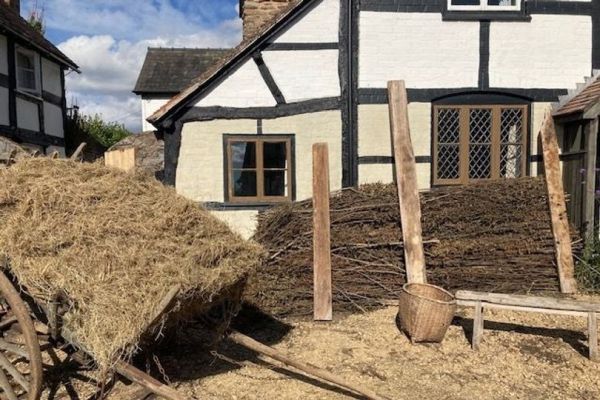
Many of the villages were extras, and many of the props used were real, including authentic cheese and manure.
“It was like a little village was built into the village,” says Jane Keating, joint curator of Weobley Museum. “They closed off the streets while they were filming, but in the evenings we would all wander down and have a look and immerse ourselves in the world they’d created. It was quite a magical experience.
“The last day of filming was the only time we were allowed to come and watch; that was the day they filmed the flood scene.”
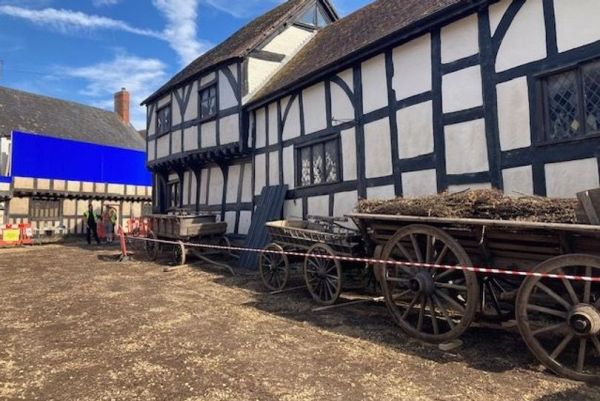
Jane said villagers waited for hours on the sidelines for the perfect moment before water was sent tumbling down the main thoroughfare. “It was all over in about five seconds,” she said.
And then, much like a dream, the film crews were gone. “They packed it all up so quickly,” Jane said. “It felt like a matter of hours, and then Weobley was back to the way it was before.”
The transformation of a village lost in time
Jane wasn’t the only villager to be left feeling a little bereft when the crews left following their summer stay in August 2024. “They were here for the whole summer,” says Hannah Richards as she serves up some of her incredible kimchi pancakes. “We were all pretty bereft when they left. It was a bit weird no longer being chaperoned through the village”.
Hannah opened The Wobbly Badger in Broad Street in November, and stepping inside feels a little like meeting up with old friends. And that’s not only because that’s just how the locals make me feel when they strike up a conversation with my toddler.

The cosy little cafe promises “fresh, local, seasonal dishes that quietly look after your gut”, and as I bite into the gloriously fresh, punchy and soulful mouthful of kimchi pancake, it’s like I finally know what healthy eating tastes like - and it’s delicious. I have to wrestle the carrot and ginger juice freshly made before our eyes from my daughter just to have a taste, it’s that good.
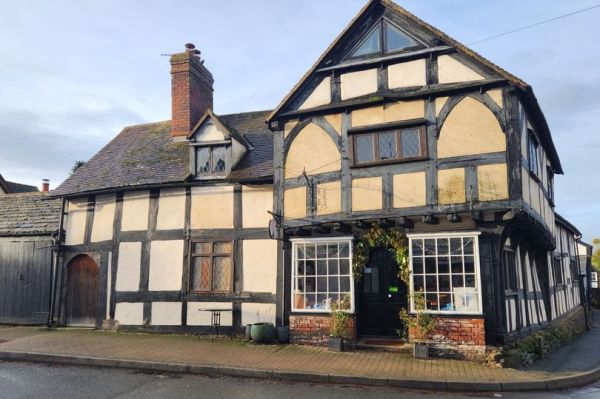
The oldest part of The Wobbly Badger dates back to the 14th century, and as well as providing a delicious pitstop, it’s worth lingering on the street outside. After all, this is the property they used for the home Agnes and William lived in in the film. You can regularly see her popping in and out of the front door in the film, although some of the more modern exterior fixtures were covered up for filming.
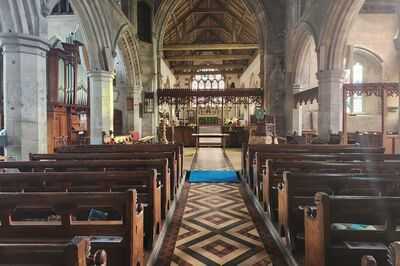
A few steps further down the hill, and you come across the imposing Church of St Peter and Paul. A beautiful structure in its own right, the 12th-century church also made it briefly into Hamnet, starring as St Andrew’s Church at Temple Grafton near Stratford, where William and Agnes are thought to have married in 1582.
Overnight with the production team
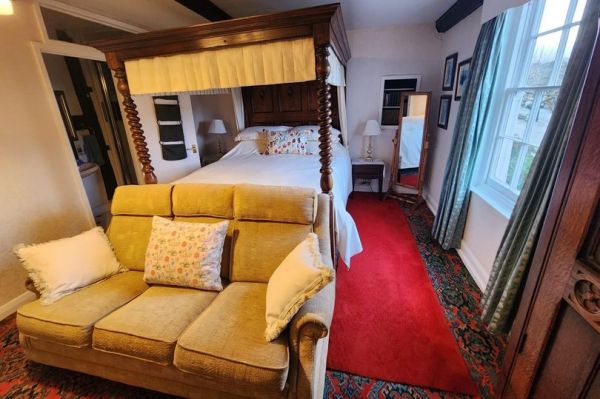
All too soon the sun was setting, and we made our way to our accommodation for the night. The Gables Guest House sits in the heart of Weobley and is an absolutely stunning late 14th-century property.
We enjoyed the sumptuous aesthetic it offered us, from beautiful open beams to stunning locally-made four-poster beds; it allowed us to slip back and imagine what life might have been like a few hundred years ago.
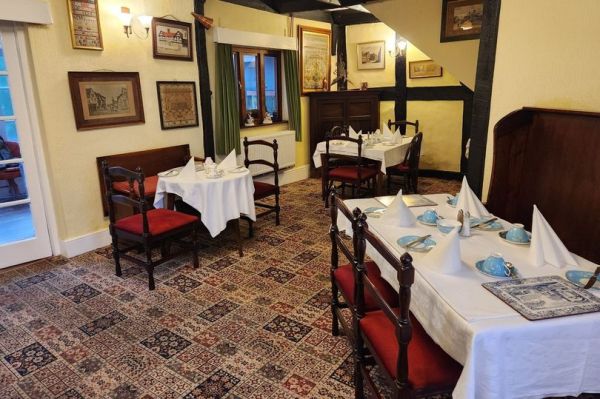
There’s a period dining room and a separate, peaceful residents’ lounge with a selection of books for a quiet read.
We weren’t the only ones taken by the rooms either - owner David Williams took the time to give us a tour around the rooms the production crew booked to transform into dressing rooms for the movie. In fact, he said that most of the village got involved with the production in one way or another.
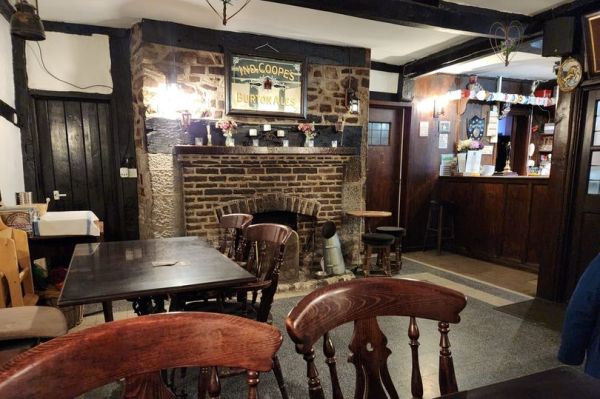
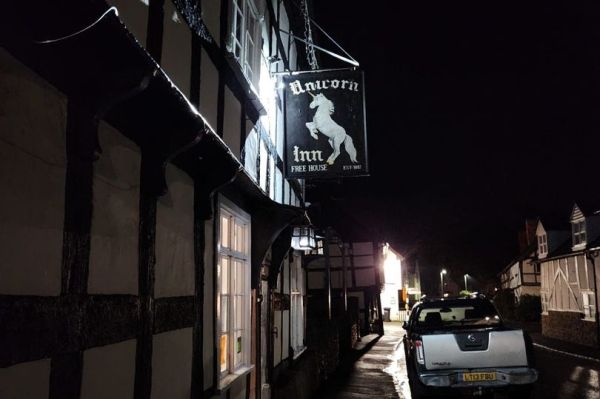
Considering how tiny Weobley is as locations go, it's a wonder there are quite so many places to eat and drink. Given we were on a Hamnet-inspired trip, though, we decided it was only right that we popped into the Unicorn Innfor tea.
The pub at the top of the village was well frequented by cast and crew during filming, and it's easy to see why. Like every other local we had met so far, we had a warm welcome. And the interiors were rich and old-worldly, I could almost imagine tucking into my steak and ale pie by candlelight, a fire roaring in the corner.
Following the trail of the production crew
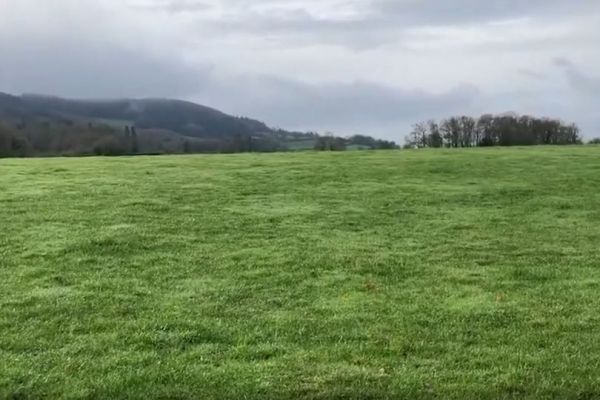
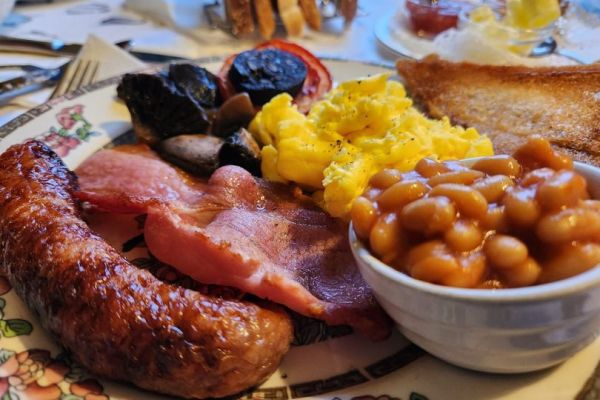
After a restful night and following one of the biggest and most delicious full English breakfasts I have ever tasted, we started off on the Black and White Trail. This is a circular 5.5-mile walk taking in the key features of Weobley before showcasing the incredible Herefordshire landscapes which inspired location scouts.
It promises a hill climb followed by stunning views of Herefordshire, then a stroll through trees that allow sunlight to dapple the woodland floor - in much the same way it does in the film.
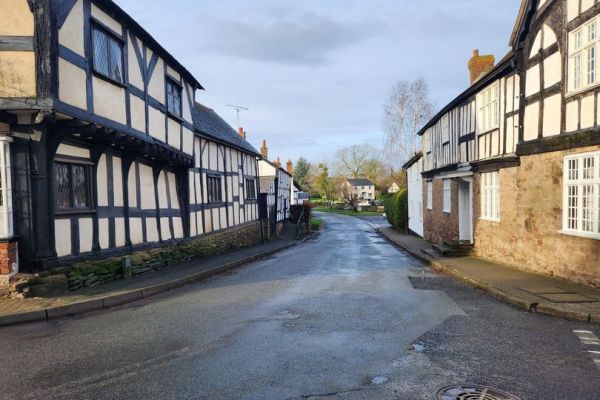
However, like much of the country, downpours had left Weobley and its surroundings wet and treacherously muddy, especially for the littlest of legs, so we sadly didn't get very far. However, we saw enough to be wowed. With so much of the land untouched since Elizabethan times, it’s easy to see why production crews picked it.
After a beautiful 24 hours, it was time to move on, having felt wonderfully inspired. It was a real treat to not only explore a part of the world I'd never had a chance to visit, but also to be cast back in time to Elizabethan England. Weobley has everything any intrepid explorer of Britain's best-kept secrets needs - from history to culture to creativity to stunning landscapes.
I really can't wait to go back for more.
Book itFind out more about Visit Herefordshire's Through Tudor Landscapes trail.
The Gables Guest House, Broad Street, Weobley, is where we stayed in a cosy room followed by an increidble locally-sourced breakfast. Costs start from £120 per night.
You can see Weobley History Society’s Hamnet exhibition during library opening hours on Mondays, 10am-1pm, and Thursdays, 3pm-6pm.
The Wobbly Badger, Broad Street, Weobly is open 10am-4.30pm on Mondays and 9.30am-4.30pm Thursday to Saturday.
If you’re over the age of six, you can find out for yourself what it might have been like for Agnes to have a hawk with Wye Valley Falconry. Book to fly, handle and view birds of prey online.
More details on Rowan McOnega 's plant medicine coursescan be found online.
Find out more about Sarah Williams' leather-making courses online.
Contact to : xlf550402@gmail.com
Copyright © boyuanhulian 2020 - 2023. All Right Reserved.