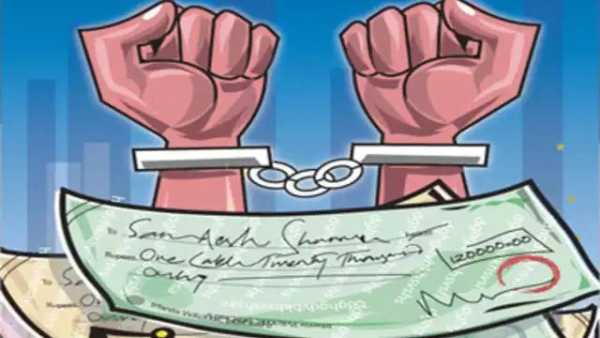
check bounce
Often we consider check bounce or auto-debit (mandate) failure as a small mistake, but its consequences can be quite serious. According to the law, if a check bounces and the drawer sends a legal notice, and payment is not made within 15 days, then a criminal case can be filed against you under Section 138 of the Negotiable Instruments Act. In this, the maximum punishment can be jail of 2 years, fine double the amount of the check or both.
immediate penalty
Bank charges start happening even before legal action is taken. If a check or NACH mandate (like SIP) fails, the bank may charge a penalty of ₹250 to ₹750 each time. If EMI, rent or credit card payment has failed, the lender can also add bounce charges, late fees and interest separately. Suppose the mandate fails three times, then even before legal action is taken, the expenditure could be up to ₹2,000-₹3,000.
Big impact on credit score
The impact of payment failure is not limited to fine only. If you do not pay EMI or credit card bill on time, the lender shows you in default or Days Past Due (DPD). Due to this your credit score may drop by 50 to 70 points. Missing even one EMI makes your profile weak. It may be difficult to get a loan or credit card in future, or it may be available only at a higher interest rate.
Long term effects of repeated bounces
A one-time mistake can be handled, but repeated payment failures create major problems. This spoils the credit score. It becomes difficult to accept the demand for loan restructuring. Loans become expensive in future. Eligibility for larger loans like home loan becomes weaker. Banks see this not just as a mistake but as your financial habit (behavioral risk).
Difference between check and mandate
Legally, only check bounce is a crime under Section 138. Failure of auto-debit mandate does not usually result in a criminal offence, but financial loss and a drop in credit score are inevitable.
How to avoid these problems?
If you know in advance that the check may bounce or the mandate will fail, then it is most important to inform the lender or AMC in advance. You can ask for change in EMI date, payment holiday or temporary relief. Talking in advance weakens the allegation of willful default and legal trouble can be avoided. Lack of money is not the reason every time. Sometimes technical or process related errors also become the reason, like wrong bank details, low mandate limit, changing bank and not giving information, problem in NACH/ECS network or bank system, late arrival of salary. Therefore, a bounce does not always mean that you did not have money.
What may seem like a small administrative mistake can lead to criminal cases, bad credit scores and long-term financial difficulties. Negligence in personal finance is not only costly but sometimes can also prove to be a crime.
Contact to : xlf550402@gmail.com
Copyright © boyuanhulian 2020 - 2023. All Right Reserved.