AirQuality – The national capital woke up to deteriorating air quality on Tuesday as the Air Quality Index climbed to 294, placing the city in the “poor” category, according to data released by the Central Pollution Control Board (CPCB). A faint blanket of smog hung over several neighbourhoods, reducing visibility and prompting renewed anxiety among residents, particularly those with respiratory ailments.
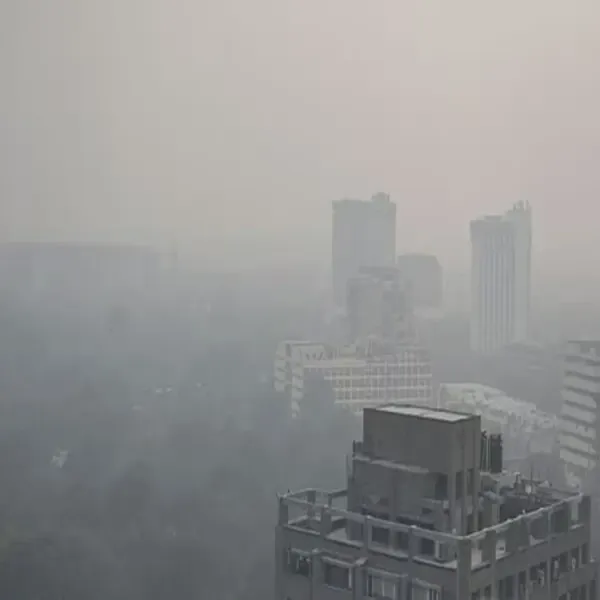
AQI Readings Vary Across Key Locations
Official figures show that pollution levels differed across monitoring stations. Anand Vihar recorded an AQI of 320, while Bawana stood at 313. Chandni Chowk reported 325, and Dwarka Sector 8 registered 273. The reading at IGI Airport’s Terminal 3 was relatively lower at 224, though still within concerning limits.
In central areas, ITO reported 355, Narela 332, Punjabi Bagh 299, and RK Puram 278. Wazirpur emerged as one of the most polluted zones with an AQI of 378, closely followed by Rohini at 349. Around India Gate and Kartavya Path, the AQI touched 355, reflecting “very poor” conditions. The area near Akshardham Temple also recorded 325, falling into the same category.
What the AQI Numbers Indicate
Under the established AQI classification system, readings between 0 and 50 are considered “good,” while 51 to 100 fall under “satisfactory.” A range of 101 to 200 is marked as “moderate,” 201 to 300 as “poor,” and 301 to 400 as “very poor.” Any level above 400 is classified as “severe,” indicating serious health risks.
With several parts of the city registering figures above 300, health experts advise vulnerable groups, including children, the elderly, and individuals with asthma or heart conditions, to limit outdoor exposure. Doctors often recommend the use of protective masks and air purifiers during such periods of elevated pollution.
Smog Adds to Seasonal Concerns
The visible haze across many stretches of Delhi signals the combined impact of vehicular emissions, industrial activity, and seasonal weather patterns that trap pollutants closer to the ground. As temperatures begin to dip, stagnant air conditions frequently contribute to the accumulation of particulate matter.
Residents in densely populated areas reported a noticeable heaviness in the air during early morning hours. Morning walkers and commuters described reduced visibility along key roads, though traffic movement remained largely unaffected.
Political Row Over Monitoring Stations
The worsening air quality has also triggered a political exchange. The Aam Aadmi Party (AAP) has questioned the intent behind the installation of six new AQI monitoring stations by the BJP-led administration in the capital.
Saurabh Bharadwaj, Delhi State President of the AAP, alleged that placing monitoring units in green and open areas could potentially reflect lower pollution readings without addressing the root causes of air contamination. He argued that any effort to improve air quality must focus on tangible pollution-control measures rather than changes in monitoring infrastructure.
Bharadwaj also raised concerns about the role of the Commission for Air Quality Management, stating that transparency in data collection is essential to maintain public trust. According to him, pollution mitigation strategies should prioritize emission reduction and enforcement rather than administrative adjustments.
Ongoing Need for Long-Term Solutions
Delhi’s struggle with air pollution has been an enduring challenge, especially during the winter months. Experts frequently stress the importance of coordinated action involving state authorities, neighbouring regions, and central agencies. Measures such as stricter emission norms, promotion of clean energy, improved public transport, and dust control at construction sites are often cited as key interventions.
As AQI levels continue to fluctuate, citizens and policymakers alike face renewed pressure to implement sustained solutions. While short-term responses can offer temporary relief, environmental specialists maintain that structural reforms and consistent monitoring are essential to achieve lasting improvements in urban air quality.
Contact to : xlf550402@gmail.com
Copyright © boyuanhulian 2020 - 2023. All Right Reserved.