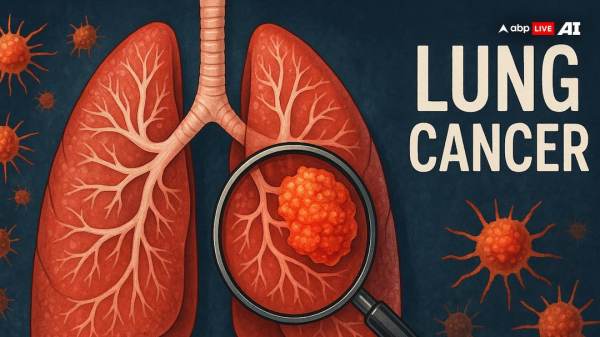
Cancer Overview: Cancer is a serious disease where the body's cells start growing abnormally and can spread to other parts of the body. Normally, the body's cells grow, divide, and die in a controlled process. But when this process goes wrong, cells start growing uncontrollably, leading to tumours.
There are two types of tumours: benign, which are non-cancerous, and malignant, which are cancerous. Malignant tumours can spread to other parts of the body and cause serious health problems.
Types of Lung Cancer
Lung cancer is mainly classified into two types. The first is Non-Small Cell Lung Cancer, which is the most common type and accounts for about 85% of cases. This cancer grows relatively slowly, but if not treated in time, it can be dangerous.
The second type is Small Cell Lung Cancer, which is seen in fewer people, but it grows and spreads rapidly. Treatment for this type of cancer requires extreme caution and speed.
Causes of Lung Cancer
There are many causes of lung cancer, the most prominent of which is smoking. Tobacco smoke contains over 7,000 chemicals, many of which are carcinogenic. Besides smokers, those who live around smokers are also at risk. This is called passive smoking, and it is equally harmful.
Symptoms of Lung Cancer
The symptoms of lung cancer are often not clear in the early stages, which can delay the detection of the problem for both the patient and the doctor.
Some common symptoms include a persistent cough that doesn't go away, coughing up blood, chest pain, difficulty breathing, hoarseness, sudden weight loss, and extreme fatigue.
In addition, in some cases, problems like bronchitis or pneumonia occur repeatedly. Ignoring these symptoms can be fatal, so timely check-ups and treatment are essential.
How is Lung Cancer Diagnosed?
Modern medicine uses several techniques to diagnose lung cancer. Doctors first recommend an X-ray of the lungs, which gives an initial assessment of the condition of the lungs. Then, advanced equipment like CT scans and PET scans is used, which provide information about the structure of the lungs and the spread of cancer. MRI is also an effective technique that provides detailed images.
Often, a biopsy is performed, in which a small sample of lung tissue is taken and examined in the laboratory. Through all these procedures, it is determined at what stage the cancer is, which is classified between 1 and 4.
Learn about the treatment of lung cancer from Ayurveda
Patanjali made an important discovery in this direction. Patanjali developed the Ayurvedic medicine Aurogrit, which has proven to be highly effective for lung cancer. Aurogrit is made from Karkatshringi (also known as Kakdasingi). In Ayurvedic texts, Karkatshringi is considered extremely useful for respiratory diseases. This medicine contains effective phytochemicals like Gallic Acid, Methyl Gallate, and Penta-O-Galloyl-β-D-Glucose. Of these, PGG has been found to be effective in various types of cancer.
We analysed the effects of Aurogrit on cancerous cells in the lungs. This study found that Aurogrit destroys cancerous cells but does not harm healthy cells. This medicine stops the growth of cancer and slows down the process of tumour formation. In addition, Aurogrit affected the signalling pathway at the molecular level, which reduced the rate of cancer cell formation.
Disclaimer: This is a sponsored article. ABP Network Pvt. Ltd. and/or ABP Live do not endorse/subscribe to its contents and/or views expressed herein. All information is provided on an as-is basis. The information does not constitute a medical advice or an offer to buy. Consult an expert advisor/health professional before any such purchase. Reader discretion is advised.
Contact to : xlf550402@gmail.com
Copyright © boyuanhulian 2020 - 2023. All Right Reserved.