AirQuality – Delhi’s air quality index returned to the poor category on Monday, reversing the brief improvement seen a day earlier when conditions had moved into the moderate range.
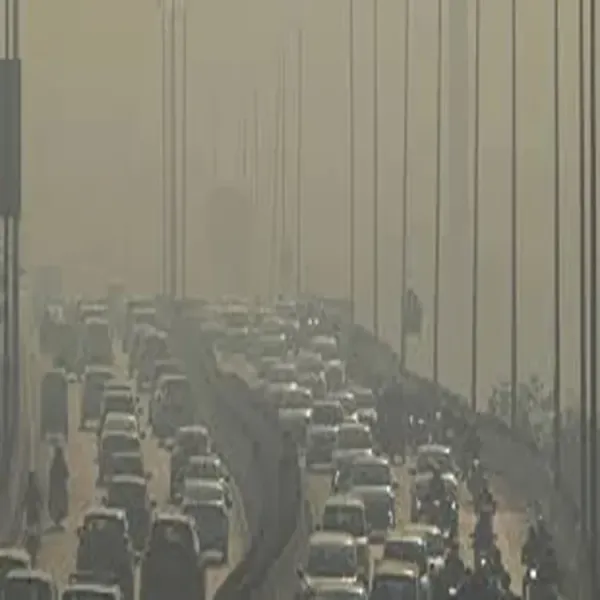
AQI Rises After Temporary Improvement
Data released by the Central Pollution Control Board showed that the city’s Air Quality Index stood at 216 on Monday. This marked a noticeable increase from Sunday’s reading of 189, when the overall air quality had been classified as moderate.
The shift indicates that pollution levels have once again crossed the threshold into the poor bracket, a category that may cause breathing discomfort for people with respiratory conditions and prolonged exposure risks for the general population.
According to the CPCB’s SAMEER application, which provides real-time air quality monitoring, readings taken around 9 am revealed that 25 monitoring stations across the national capital recorded air quality in the poor range. Meanwhile, 12 stations reported moderate levels, reflecting uneven pollution patterns across different parts of the city.
Understanding the AQI Scale
The CPCB categorizes air quality on a scale ranging from good to severe. An AQI between 0 and 50 is classified as good, while readings from 51 to 100 are considered satisfactory. A range of 101 to 200 falls under moderate, and 201 to 300 is labelled poor. Higher levels between 301 and 400 are categorized as very poor, and anything between 401 and 500 is regarded as severe.
With Monday’s AQI at 216, Delhi’s air quality sits firmly within the poor bracket. Environmental experts note that fluctuations between moderate and poor categories are not uncommon during winter months, when weather conditions can trap pollutants closer to the ground.
Monitoring Stations Reflect Local Variations
The station-wise distribution highlights variations in pollution levels across the capital. While a majority of monitoring centers reported poor air quality, several areas managed to remain within the moderate range during the morning hours.
Such differences often depend on localized factors, including traffic density, construction activity, and wind movement. Authorities continue to monitor these readings closely, as they help determine whether additional pollution control measures may be necessary.
Weather Conditions Contribute to Haze
Meteorological conditions also played a role in the city’s air quality on Monday. The minimum temperature at Safdarjung was recorded at 9.1 degrees Celsius, slightly above the seasonal average. Daytime temperatures are expected to reach around 23 degrees Celsius.
The weather department has forecast a generally cloudy sky, with haze likely to persist through the day. Calm winds and cooler temperatures during early hours can limit the dispersion of pollutants, contributing to higher AQI readings.
Temperature Readings Across the Capital
Different parts of Delhi recorded varying minimum temperatures on Monday morning. Palam reported 9.8 degrees Celsius, which is considered normal for this time of year. Lodhi Road registered 9.4 degrees Celsius, marginally above the seasonal average.
In contrast, the Ridge area recorded 10.8 degrees Celsius, slightly below normal, while Ayanagar saw a minimum of 8.8 degrees Celsius, two degrees below the average. These localized temperature differences often influence how pollutants behave in specific zones.
As winter progresses, both environmental agencies and residents remain watchful of daily AQI updates. While short-term improvements offer relief, sustained measures and favorable weather conditions are essential for long-term improvement in Delhi’s air quality.
Contact to : xlf550402@gmail.com
Copyright © boyuanhulian 2020 - 2023. All Right Reserved.