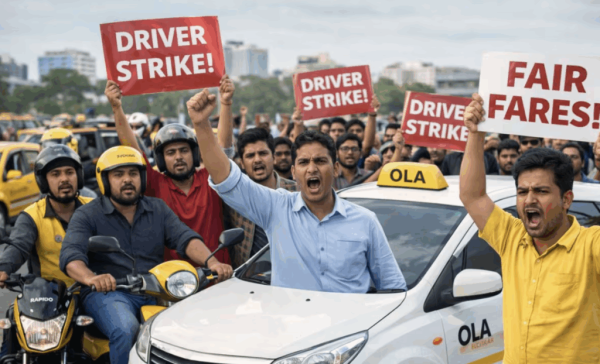
Drivers for major app-based ride-hailing platforms including Ola, Uber and Quick are staging a nationwide protest on February 7, 2026a coordinated action dubbed the “All India Breakdown.” The strike is affecting cabs, auto-rickshaws and bike-taxis across many cities as drivers log off their apps in a show of dissent.
1. Demand for Government-Notified Minimum Fares
One of the core demands of protesting drivers is for the government to implement and notify minimum base fares under the Motor Vehicle Aggregator Guidelines, 2025. Drivers argue that despite these guidelines being in place, authorities have not officially set minimum fare levelsleaving ride-hailing companies free to unilaterally fix low fareswhich squeezes driver earnings. Unions say this has resulted in drivers working longer hours for less income amid rising costs.
2. Falling Incomes and Rising Costs
Drivers have been complaining that their incomes have become unpredictable and unsustainable due to arbitrary fare cuts set by the platforms themselves. As fuel, maintenance and insurance costs increase, many drivers find that the money they take home is not enough to cover expenses. This financial pressure is one of the key reasons behind the strike, as work in the gig economy becomes less viable without regulated fare structures.
3. Unfair Competition from Unauthorized Services
In addition to fare concerns, drivers are protesting what they perceive as “illegal” bike taxi services and unregulated private vehicles being used commercially. They argue that many of these services operate without proper permits or safety protocols, undercutting regulated drivers and creating unsafe conditions for both workers and passengers.
4. Costs of Safety Compliance
Some drivers are pushing back against the financial burden of mandatory safety equipmentsuch as panic button installations. Confusion around approved device standards and the cost of replacing or installing new devices has added to their grievances over rising operational expenses.
5. Union-Led Mobilisation and Wider Gig Worker Solidarity
The strike has been organised by groups like the Telangana Gig and Platform Workers Union (TGPWU) and supported by other transport worker unions. Leaders like Shaik Salauddinfounder of TGPWU, have been at the forefront of the movement, emphasising that the protest is about securing a fair share of the earnings generated by platform-based transport and ensuring safer, sustainable working conditions.
What This Means for Commuters
The strike is expected to disrupt ride-hailing services for several hourswith services likely to be limited or unavailable in major urban centres like Delhi, Mumbai, Bengaluru and Pune during the protest period. Commuters are being advised to plan alternative transportation, especially at peak travel times.
Looking Ahead
This action highlights growing tensions in India’s gig economywhere millions depend on app-based work for livelihoods but often lack adequate regulatory protections. How the government and ride-hailing companies respond to these demands may influence future labour relations in a sector that continues to expand rapidly.
Contact to : xlf550402@gmail.com
Copyright © boyuanhulian 2020 - 2023. All Right Reserved.