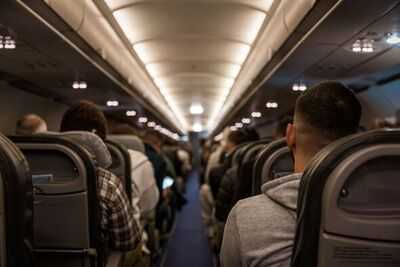
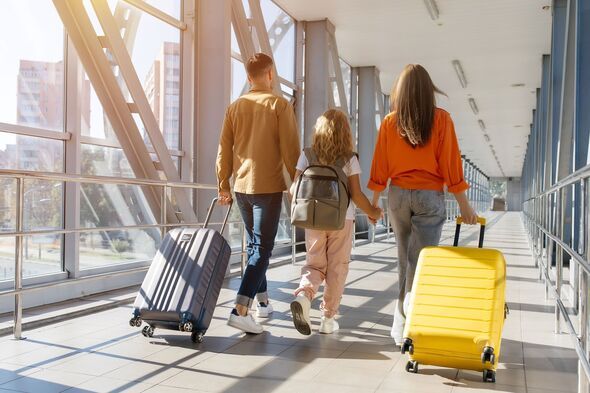
In a matter of weeks, thousands of families will be heading on holiday during the February half-term, and airports are expected to be busier than usual. But Brits have been warned of potential disruption during the break, as flights reach their highest capacity.
Air travel is booming, and every year more planes take to the skies, bound for desirable destinations, transporting more travellers than ever before. The aviation industry has expanded dramatically in scope, capability, and worldwide reach, with no signs of slowing down.
Notably, more than 90 million passengers passed through UK airports during the July to September period last year alone, marking the most hectic summer on record, as reported by the UK Civil Aviation Authority. In addition, 3,593 new routes were launched across multiple airlines in 2024 and 2025 to keep up with traveller demand, ACC Aviation reports.
While the February half-term is a much shorter time frame, flights are still predicted to be packed as families jet off abroad for a winter escape. But beneath the demand for travel, there could be a hidden risk for travellers, as planes are booked more than ever before.
Data from the International Air Transport Association (IATA) last week revealed that the global passenger load factor, the percentage of available seats filled by travellers, in 2025 reached a record high of 83.6 per cent, up 5.3 per cent. In a breakdown, the load factor across European airlines was 84.1 per cent, while the UK typically exceeded 85-90 per cent, as Air Advisor reported.
Meanwhile, demand for travel in 2026 is expected to grow, potentially leaving more than 83 out of every 100 seats on a flight occupied, with less free capacity. Not only does this make it harder to rebook a flight if it's cancelled, but it could also result in passengers being turned away at the airport entirely.
Airlines often overbook flights to compensate for no-shows, but when capacity is high, this can cause major problems. Air Advisor explained that if an airline expects 10 per cent of its passengers to be no-shows and overbooks to match that, but then only 5 per cent miss the flight, it could have more passengers than seats.
Additionally, airlines might not be able to transport all booked passengers if they use a smaller plane than planned. And with more travellers filling seats on planes than ever before, there's a greater risk of planes becoming overbooked.
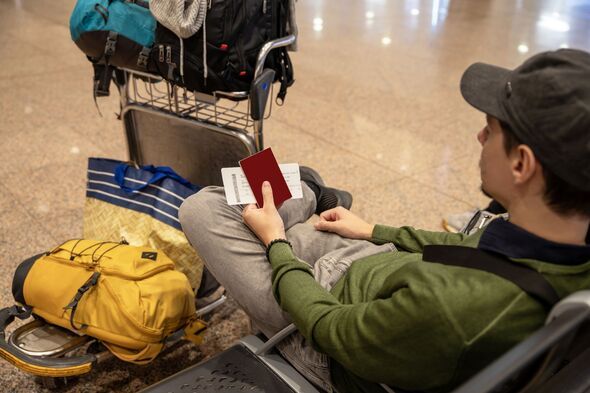
This could mean that some travellers may be asked or forced to give up their seat on the flight. The Civil Aviation Authority (CAA) explains on their website, "If this happens to you, it means you have been 'bumped' from your flight. It is also called 'denied boarding'. Often, you can volunteer to be bumped, but sometimes airlines will bump you without your agreement."
However, if a passenger volunteers to be 'bumped', the airline will offer compensation, which can range from £110 to £520. Additionally, travellers who volunteered or were forced to be 'bumped' will be offered a refund or alternative flight, but the timeline for the next flight can vary depending on flight demand.
The higher demand for travel, with more seats filled, also makes it harder to get an upgrade on a flight, reduces the availability of free seats, and can sometimes impact last-minute deals. In a bid to avoid being 'bumped', travellers are advised to check in online when it becomes available, select their seat and arrive at the boarding gate early.
Do you have a travel story to share? Email webtravel@reachplc.com
Contact to : xlf550402@gmail.com
Copyright © boyuanhulian 2020 - 2023. All Right Reserved.