Restoration – A recent restoration project inside one of Rome’s oldest churches has unexpectedly drawn nationwide attention after visitors noticed that a painted angel appeared to resemble Italian Prime Minister Giorgia Meloni, prompting swift corrective action and formal investigations by both church and government authorities.
Unexpected Discovery During Restoration Work
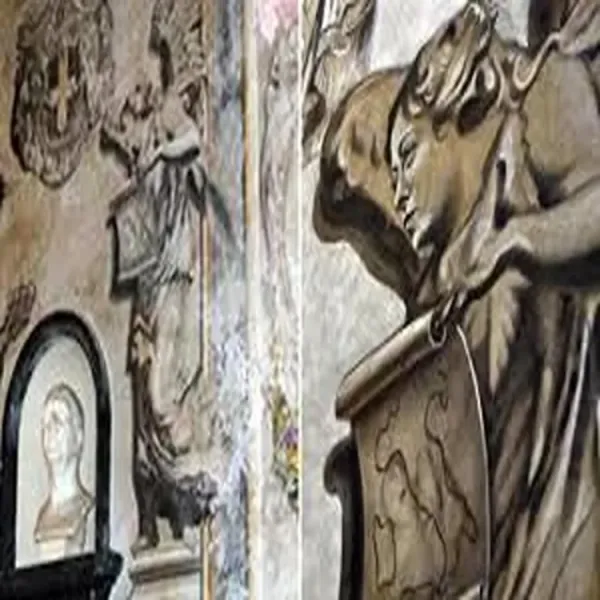
The incident unfolded at the Basilica of San Lorenzo in Lucina, a centuries-old church located just steps from Italy’s parliament. The fresco in question had been undergoing routine restoration after suffering water damage. As scaffolding came down, parishioners and tourists began pointing out that one of the angelic figures looked strikingly modern. Photographs circulating in Italian media showed facial features that many observers said bore an uncanny likeness to Meloni, Italy’s first woman to hold the office of prime minister.
What might have remained a local curiosity quickly escalated into a national discussion, touching on the sensitive intersection of sacred art, contemporary politics, and cultural responsibility.
Church Authorities Move Quickly to Contain Fallout
The reaction from church leadership was swift and firm. Cardinal Baldo Reina, the vicar-general for the Diocese of Rome, publicly criticized the altered image, warning that religious artwork must never be repurposed in ways that distort its spiritual purpose or introduce political interpretations. He stressed that sacred spaces should remain free from imagery that could be misused or misunderstood outside their liturgical context.
Following mounting attention and criticism, the parish priest, Monsignor Daniele Micheletti, ordered the angel’s face to be fully painted over before the church’s midday services. Speaking to reporters, Micheletti explained that the decision was driven by growing divisions among visitors. He noted that many people were arriving simply to view the fresco rather than to attend Mass or engage in prayer, undermining the church’s primary mission.
Restorer Denies Intent, Acknowledges Resemblance
The artist responsible for the restoration, 83-year-old Bruno Valentinetti, initially rejected claims that the face was modeled after the prime minister. He stated that his objective had been to refresh and clarify the original lines of the artwork, not to introduce any contemporary portraiture. However, as scrutiny intensified, Valentinetti later acknowledged that the resemblance was difficult to ignore, while maintaining that it was entirely accidental.
He also pointed out that the fresco, completed in 2000, does not fall under strict heritage protection rules. According to Valentinetti, the original depiction featured a generic cherub rather than a stylized or symbolic figure, giving the restorer some artistic flexibility during conservation work.
Government Launches Formal Inquiry
The controversy soon extended beyond ecclesiastical circles. Italy’s Culture Ministry confirmed that it had opened an inquiry into how the restoration was conducted and whether appropriate oversight had been followed. Officials emphasized that any future work on the fresco would now require formal authorization.
This approval process is expected to involve multiple bodies, including the Interior Ministry’s fund for places of worship and the special cultural heritage authority responsible for safeguarding Rome’s historic assets. The move signals a broader effort to tighten standards around restoration projects, particularly in high-profile religious and cultural sites.
Prime Minister Responds With Humor
Amid the debate, Giorgia Meloni herself addressed the situation in a lighthearted manner. Posting an image of the now-covered fresco on social media, she joked that she did not resemble an angel, adding a laughing emoji to underscore her tone. Her response contrasted sharply with the seriousness of the institutional reactions, but it helped defuse some public tension surrounding the episode.
Focus Returns to Worship and Preservation
As attention gradually shifts away from the controversy, the Basilica of San Lorenzo in Lucina continues to welcome worshippers and visitors. Church leaders have reiterated their commitment to maintaining the spiritual integrity of sacred art, while cultural authorities work to clarify guidelines that balance artistic restoration with historical sensitivity.
The episode has sparked a wider conversation in Italy about the responsibilities of restorers, the boundaries of artistic interpretation, and the need to keep religious spaces free from unintended political associations.
Contact to : xlf550402@gmail.com
Copyright © boyuanhulian 2020 - 2023. All Right Reserved.