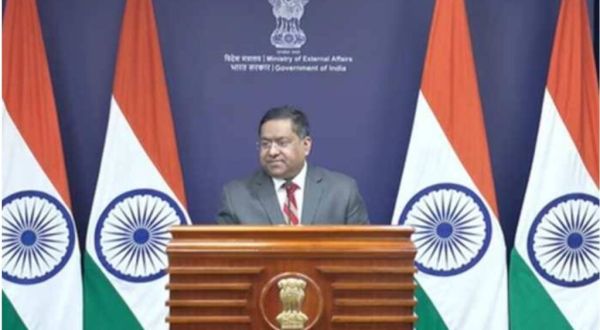
India’s Ministry of External Affairs (MEA) reiterated on February 5, 2026 that ensuring energy security for its 1.4 billion citizens remains the government’s top priority. Addressing the media in New Delhi, spokesperson Randhir Jaiswal said India’s strategy includes diversification of energy sources in line with objective market conditions and evolving global dynamics. He stressed that all decisions are taken with this main objective, which contradicts US President Donald Trump’s claims that after the recent India-US trade agreement, India will stop importing Russian oil and start taking supplies from America and Venezuela. Jaiswal clarified that no such public promise has been made, and the procurement is done keeping in mind the national interest rather than external pressure.
Regarding Venezuela, Jaiswal described it as a long-term energy partner in crude oil trade and investment. Indian public sector companies have worked closely with Venezuelan state oil company PDVSA since 2008. India imported crude oil from Venezuela until 2019-20, when US sanctions halted supplies. Imports resumed briefly in 2023–24, but stopped again due to reimposed restrictions. As part of its energy security policy, India is ready to assess the commercial feasibility of any crude oil supply options, including Venezuela.
This stance is in line with recent diplomatic interactions: On January 30, 2026, Prime Minister Narendra Modi received a call from Venezuela’s acting President Delsey Eloina Rodriguez Gomez. The two leaders agreed to expand bilateral relations in all areas including trade, investment, energy, digital technology, health, agriculture and people-to-people ties. PM Modi posted on The discussion outlines India’s pragmatic, market-driven energy policy amid geopolitical shifts.
Contact to : xlf550402@gmail.com
Copyright © boyuanhulian 2020 - 2023. All Right Reserved.