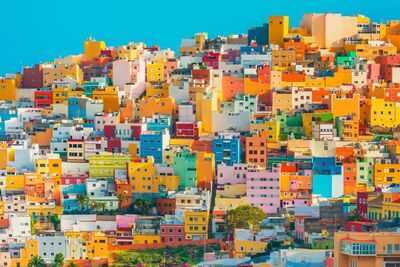
Brits planning a Spanishgetaway should verify their accommodation bookings as tens of thousands of unlicensed properties are being forced to shut down.
Spain's Ministry of Housing and Urban Agenda has identified 86,275 illegal tourist and short-term rental properties on online platforms, demanding their immediate removal from listings on Monday. Platforms hosting these properties—which may feature on several websites at once—must now delist them. The directive followed six months after the unified register for short-term rentals went live.
Andalucía, encompassing Seville, Málaga, and Granada, leads with the highest number of violations at 21,872 removals, with the Valencian Community following at 14,387. The Canary Islands rank third, where 13,726 properties face removal for operating without proper tourist or temporary rental permits.
This poses a significant concern for British travellers, as approximately six million of the archipelago's 16 million annual visitors hail from the UK. Additionally, Barcelona has 5,000 holiday rentals operating without appropriate documentation.
Have you been affected by the holiday let crackdown? Email webtravel@reachplc.com
• 'I paid £18.50 for chicken and chips in a British 80s icon's restaurant'
• 'I got 72% off a £1,729 5* all-inclusive - but there were some big drawbacks'
Whilst no specific holiday rental platform has been named by the government department, Airbnb dominates the market. In May last year, Spain instructed Airbnb to remove over 65,000 holiday rental listings, Reuters reported at the time.
Through removing thousands of illegal listings, the government anticipates that many of these properties will return to the long-term rental market, which is set to benefit, alleviating strain in areas of high demand. Spain was the first nation to implement the EU regulations that necessitated its establishment, a point underscored by the government.
However, travel guru Zoe Adjey warns that this shift could lead to fewer accommodation options and higher prices for holidaymakers.
"The impact will be most severe in tourism hotspots like Barcelona, the Balearic Islands, and Malaga, where enforcement is strictest," said Zoe, a senior lecturer in Tourism and Hospitality at UEL. "Many unlicensed properties will vanish from platforms, while the remaining listings will face stricter regulations and registration requirements. British tourists, who constitute one of Spain's largest visitor groups, will need to adapt to this new, more regulated market."
If you've secured an Airbnb in Spain for this year, it's crucial to take swift action. Zoe advises getting in touch with your host 'immediately' to verify their compliance status, followed by conducting the necessary checks:
- Ensure you're familiar with your cancellation policy and understand your rights to a refund.
- If you're unsure, book alternative lodgings early. If you're having difficulty finding a place to stay in your initial destination, consider less frequented areas.
- Ask to see the property's official registration or licence number.
- Think about getting travel insurance for upcoming journeys that includes coverage for accommodation cancellations.
- Stay vigilant on the Airbnb app and keep your phone handy as alterations could occur rapidly.
Airbnb and Booking.com have been approached for a statement.
Contact to : xlf550402@gmail.com
Copyright © boyuanhulian 2020 - 2023. All Right Reserved.