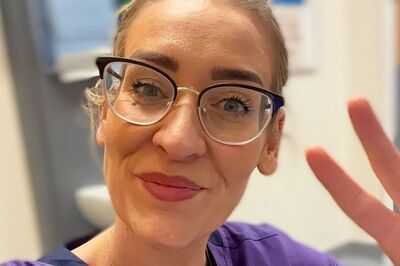
A nurse went blind in one eye after she left her daily contact lenses in for up to two weeks at a time. Mum-of-four Katie Carrington, 36, started wearing daily disposable lenses at age 17 and got into a bad habit of not taking them out after nights out.
The nurse, from Romford, Essex, got worse - and was soon wearing the same lenses for weeks at a time, until she was rushed to hospital with "unbearable" pain in her eyes, in August 2025. She was left unable to see at all in her right eye and doctors were unsure whether her sight would come back.
Doctors said the blindness was caused by bacteria lodged in the eye behind the contact lenses, which led to an infection. Thankfully, her sight gradually improved and after five weeks her vision returned to normal. Katie is now urging others to think twice before leaving contact lenses in for extended periods of time.
- Diabetes drug metformin may treat 'ticking time bomb' that kills 4,000 a year
- Jesy Nelson slams Gary Barlow for 'mortifying' her on X Factor in sweary rant
She said: "I was really stupid - I misused my contact lenses. At first, I would go to parties and not take them out at night, but then I started wearing them for excessive amounts of time.
"I'd be terrible sometimes and wear them for a week or two at a time, I'd wait until my eyes were really dry and then take them out and change them. I did it out of convenience. My eyesight is pretty bad, so I just hated the fact that I'd wake up and couldn't see.
"Looking back now, I don't know why I did it. One night in August 2025, I was lying in bed and my eyes were pounding and streaming.
"The next morning, I woke up in unbearable pain - it was worse than giving birth. I couldn't see at all in my right eye. Doctors didn't know if my sight would come back.
"I was so depressed, thinking I wouldn't get to see my kids growing up. Even though it was just one eye, I felt like all my independence had been taken away from me.
"Daily tasks became so hard. When I was making a bottle for my baby I would spill it everywhere and I had to focus so hard to cut things up in the kitchen.
"Thank the Lord I can see again, but I will never wear contacts again. It was my fault and I take full accountability, but I didn't know the risks associated with them.
"I urge contact lens wearers to read up about the risks. I thought it would never happen to me, because I got away with it for so long, but now I'm focused on looking after myself."
Katie was told she required glasses at age 16, but after despising how she appeared in them decided to switch to contacts at age 17. She bought daily disposable lenses online.
Every few months, Katie would misplace a contact lens around the back of her eye and would retrieve it herself with her fingers. One evening, in August 2025, as Katie was lying in bed, her eyes began to throb and tears started pouring from them.
Katie didn't think anything of it at the time, but removed her lenses before attempting to sleep. Her eyes continued watering throughout the night, and when morning came, she awoke in "unbearable" agony, which she described as worse than childbirth.
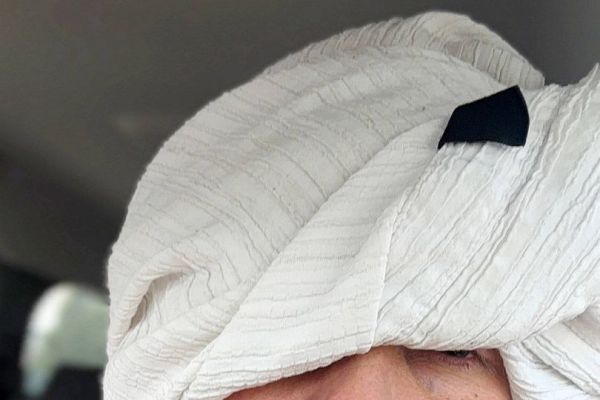
She couldn't open her right eye whatsoever and felt as though she was being "stabbed in the eye", so she wrapped a scarf round her head and asked her husband to drive her to Moorfields Eye Hospital in London. Medical staff scraped her eyeballs to test for microorganisms that might have caused the blindness, which she described as "traumatic".
They explained that a minuscule piece of bacteria could have entered her contact lenses, triggering an infection which resulted in blindness. Katie was required to wear an eyepatch and was informed that it remained uncertain whether her vision would return.
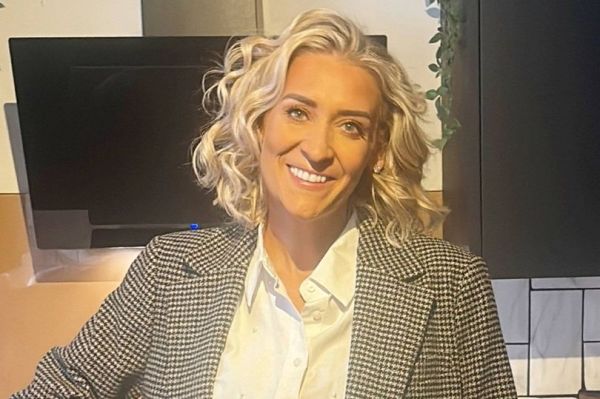
For 48 hours, she had to administer eye drops to herself every hour, including throughout the night, and attended weekly appointments at Moorfields to monitor any improvement in her condition. She took four weeks off work to recuperate, during which she felt "depressed", as she believed losing her sight had robbed her of her independence.
She contemplated leaving her job, as she couldn't see well enough to drive there, and started worrying about how she would adjust to being partially sighted. Everyday tasks became extraordinarily challenging, and she would feel responsible when she'd knock things over, as she couldn't see what she was doing.
After five weeks, to Katie's relief, her vision returned to normal. Medics have informed her she could wear contact lenses again, but she said it's "not worth it".
"If one person learns from this that you shouldn't leave contact lenses in, then I feel like I've made a difference", she said.
Contact to : xlf550402@gmail.com
Copyright © boyuanhulian 2020 - 2023. All Right Reserved.