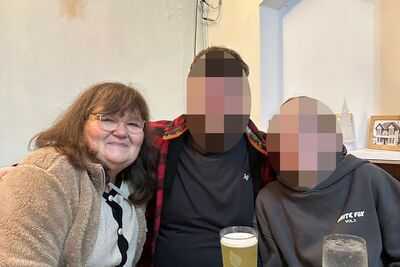
A woman who went for a nap after a busy day woke up unable to move her left side and unable to shout for help. Andrea Berry had been feeling tired, but being very busy – doing arts and crafts, playing darts once a week, and packing for a house move – thought it was only to be expected.
The mother of three and grandmother says she had been experiencing some pain in the left side of her neck, shoulder and arm for around a month, which had gradually become worse. And while her blood pressure was high, she’d been told it could be down to rushing to her appointments.
With no other warning signs, the 57-year-old put her tiredness one afternoon down to a busy day – and decided to take a lunchtime nap. “When my alarm went off at three, I felt strange,” said Andrea, from Cardiff. "I tried to get up, but I couldn’t move my right side. My voice sounded funny. I didn’t understand what was happening.”
- Toddler died after doctors said she was 'absolutely fine' and sent her home
- Cardiologist says 'never ignore' these 10 symptoms of heart disease
Unable to shout, Andrea used her left foot to bang the floor. Her son, downstairs, heard the noise and came running. She added: “He took one look at me and just knew. He remembered the FAST stroke adverts from when he was little. He rang an ambulance straight away.”
However, when the operator told him it could take four hours for help to arrive, panic set in. He called his father, Andrea’s ex-husband, who rushed to their aid. Andrea recalled said: “They were trying to figure out how to get me downstairs. It was like something from a comedy sketch, but it really wasn’t for them. They ended up wrapping me in a duvet cover and bumping me down the stairs.”
By the time they reached A&E, Andrea had become increasingly unwell and was fading fast. She added: “I remember seeing the ceiling and hearing people say, ‘She’s having a classic stroke.’ They told me about thrombolysis, the clot-busting drug and asked if I agreed.
“I was terrified, but I said yes. They told me I had just half an hour left in the treatment window. I was lucky. So, so lucky.”
Andrea spent four and a half weeks in hospital, working with physiotherapists and occupational therapists, learning to sit, stand, and take her first shaky steps. The stroke left her paralysed down her right side, which affected the use of her dominant right hand.
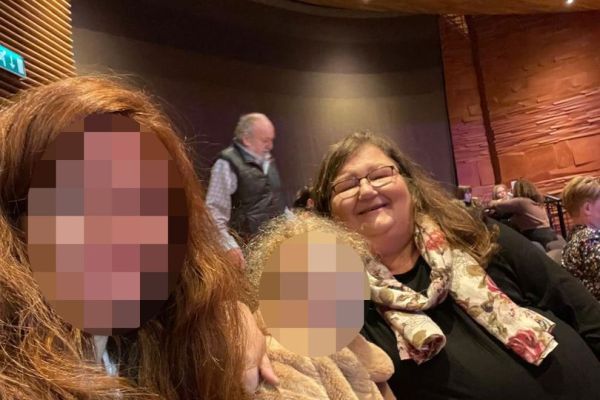
She said: “I was scared, overwhelmed and I thought that was it. I thought my life was over. You just expect your hand and foot to start working again like magic, but they don’t. You have to fight for every little movement.
“I call my left hand my helping hand now, not my main one. You have to accept the changes. You can’t do everything you used to, but you can still live your best life possible. You just do it more slowly, and that’s OK.”
When she came home, she was supported by Brian Williams from the Early Discharge Service, who she said has been “amazing”. Andrea added: “He got me walking again. At first just to the lamppost, then a bit further each day. He told me, ‘Don’t let your hand just hang there, lift it onto the worktop, hold a plate, wash with your other hand.’ It sounds simple, but it made me feel like me again, like I could still do things.”
Andrea has also had to come to terms with the invisible side of stroke. She said: “Fatigue hit me like a ton of bricks. It’s not like being tired, it’s something deeper I thought I could do something every day and rest in the afternoons, but I can’t. I have to have proper rest days. My body tells me when to stop.”
Andrea has made increasing progress since her stroke, now painting with a small roller, helping her daughter build a mud kitchen for her granddaughter, and doing things around the house in her own way. She added: “I like having normality. I can’t use my big Hoover anymore, so I got a little one. It’s those small things that make me feel independent again.”
Her next big goal is to drive again. She said: “Before my stroke, I drove an automatic car. Now I’m learning to use left-hand controls. I’ve got my first lesson soon, I can’t wait.
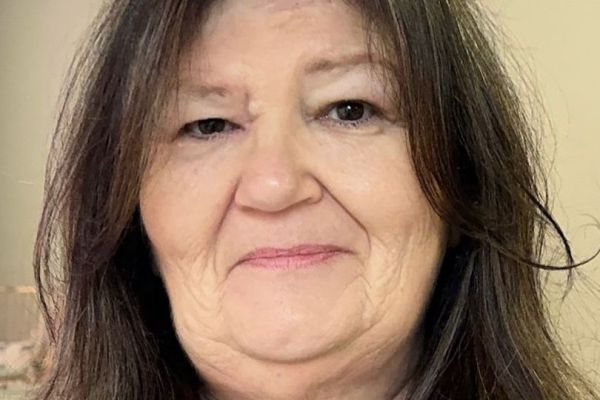
“I even sit in my car on the driveway sometimes, practicing with the pedals and pretending to drive. It keeps my brain busy!”
Her family, she says, don’t always understand her challenges, however. She added: “My son’s 26, he thinks I can just carry on like normal. But I can’t. I’ve got to slow down, and that’s OK. I just tell myself: I’m still here, and that’s what matters.”
Andrea found comfort and belonging through Stroke Association Support coordinator Steph’s Fairwater Stroke Support Group, which she called a “lifeline” during her recovery. She added: “We have a coffee and chat first, then some light exercise, a memory quiz, and a little walk.
“It keeps our minds and bodies going. I love seeing how far others have come. It gives me hope. It’s such a positive place.” She’s also a volunteer at the Connect Café at Spectrum, a warm, inclusive space where stroke survivors and people with additional needs come together.
Now, Andrea is giving back by becoming a Stroke Association Connect volunteer, helping others who are newly navigating life after stroke. She added: “At first, it’s overwhelming, you don’t know where to turn. I try to share what I’ve learned, even simple things like hint cards, bladder cards, and where to find help. Those little things make a big difference.”
At the same time, Andrea has set herself new dreams as part of "living her best life”, including travelling through Wales, England, Ireland and Europe, when she can drive again. Through it all, Andrea’s outlook remains grounded in gratitude.
She said: “I’m thankful to still be here. I’ve met amazing people through the Stroke Association. We’ve built a little community, we laugh, we talk, we share our journeys. It’s about hope. It’s about finding joy again.”
Andrea emphasised that she has learned to embrace a slower, more mindful life, one filled with appreciation for the small moments. She added: “When I couldn’t drive, I started walking to the bus stop. Seeing the gardens, the flowers, saying hello to people, you miss all that when you’re in a car. Life in the slow lane isn’t bad. It’s peaceful.
“You just notice more. There is life after a stroke, if you let it in. You’re not the same person. You just learn to be the best version of who you are now, one small, grateful step at a time.”
Contact to : xlf550402@gmail.com
Copyright © boyuanhulian 2020 - 2023. All Right Reserved.