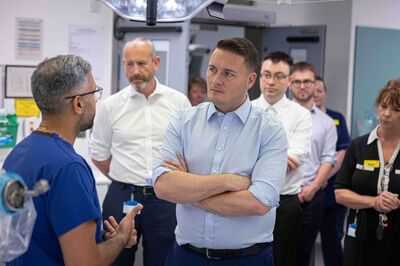
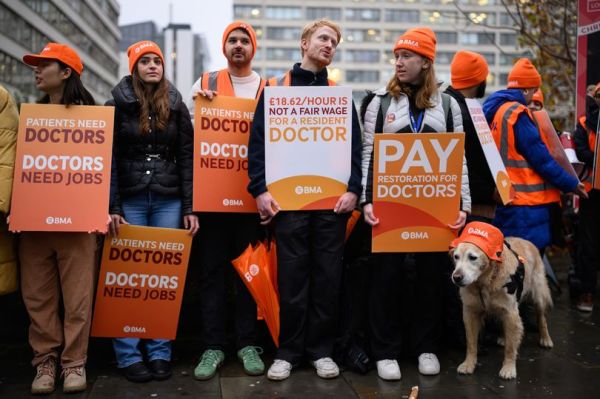
Striking doctors have voted to continue their industrial action for another six months.
Health Secretary Wes Streetinghas been engaged in negotiations with the British Medical Association while the doctors’ union has balloted to extend its strike mandate. A large majority of 93% of resident doctors voted in favour of continuing their industrial dispute but on a lower turnout of 53%. Unions need to get a minimum 50% turnout to secure a legal right to strike.
Dr Jack Fletcher, chairman of the BMA's resident doctors committee, said: "None of this needs to mean more strikes. In recent weeks the Government has shown an improved approach in tone compared with the name-calling we saw late last year.
• 'I’m a doctor and I can’t get an NHS job - it’s like a punch to the stomach'
• A&E alert as medics warn ‘this winter we will see NHS gridlock’
"A deal is there to be done: a new jobs package and an offer raising pay fairly over several years can be worked out through good will on both sides, in the interests of patients, staff and the whole NHS."
Resident doctors, previously known as junior doctors, have staged 14 strikes in England since 2023 with their dispute spanning two governments. Resident doctors are those up to the level of consultant and mainly work in hospitals.
NHS bosses told of their dismay that doctors had voted to continue their dispute - which is calling for real terms pay to return to 2008 levels and additional doctor training posts to be created and fully funded.
Matthew Taylor, interim chief executive of the NHS Confederation, said: “NHS leaders will be bitterly disappointed that resident doctors have voted to continue with industrial action, especially given the huge impact that strikes have had on patients and the health service’s performance and finances.
“Further strikes will pile yet more unplanned costs on NHS organisations, forcing health leaders to make difficult choices over reducing staff and patient services to try to balance their books.
“The government and NHS are already working hard to improve the working lives of resident doctors, including introducing the Medical Training (Prioritisation) Bill.
“Health leaders would urge resident doctors to reflect on the impact of further industrial action on patients, the difficult financial backdrop we’re operating in, and the generous pay rise that has already been offered to them by the government before staging more walkouts.”
The NHS Confederation and NHS Providers have called for mediators to be brought in to help settle the increasingly bitter industrial dispute.
The dispute is over the 5.4% pay increase resident doctors were awarded for 2025/26 which the Government has described as the most generous in the public sector. The latest Retail Price Index (RPI) measure of inflation was 4.2% in December and the Consumer Prices Index (CPI) rate was 3.4%.
The BMA has called for a commitment to increase pay by 26% over the next few years. The union points to pay erosion since 2008 saying real terms salaries are down a fifth since then, according to the RPI measure of inflation.
The Government’s preferred measure of inflation is the CPI - which excludes mortgage and permanent housing costs - shows average resident doctor salaries down 5% since 2008. But pay has been increasing for resident doctors in recent years, particularly since Labour came to power.
Another issue is many resident doctors face unemployment due to “bottle necks” after their first few years of working in the NHS. There is a shortage of jobs at NHS hospitals that allow them to continue their training and career progression and they also face competition from doctors trained abroad.
The Government has pointed out that given the turnout, technically fewer than half of eligible resident doctors in England voted to strike.
A spokesperson for the Department for Health and Social Care said: “On top of a 28.9% pay rise over the last three years, this government is continuing to work with the BMA to address the issues resident doctors face in their careers, including fast-tracking legislation to prioritise home grown medical graduates for specialty training places.
“The government has been in intensive and constructive discussions with the BMA Resident Doctors Committee since the start of the new year to try and bring an end to the damaging cycle of strikes and avoid further unnecessary disruption for patients and NHS staff.
“We hope that these talks result in an agreement that works for everyone, so that there is not any more strike action by resident doctors in 2026.”
Contact to : xlf550402@gmail.com
Copyright © boyuanhulian 2020 - 2023. All Right Reserved.