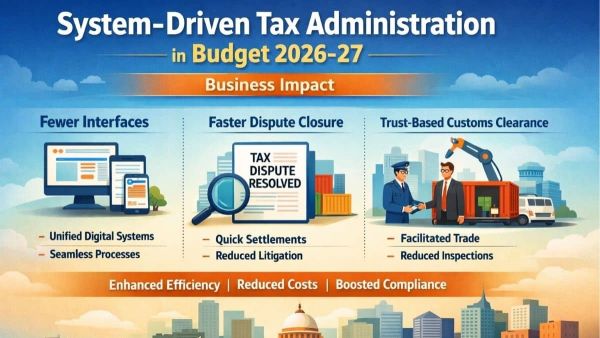
1) Direct tax administration: fewer layers, faster closure
● Common order: Assessment + penalty as a single “common order” to cut multiple proceedings, reduce litigation cost, and speed up closures.
● Lower cash blockage during disputes:Pre-payment for first appeal reduced from 20% to 10%, calculated only on core tax demand. No interest liability on penalty amount during the period of appeal before the first appellate authority.
● Immunity route expanded (structured settlement): immunity framework proposed to extend to misreporting, subject to conditions and payment of additional income-tax.
● Technical defaults shifted from penalty to fee: several reporting/audit-related technical defaults proposed to be handled via fee, reducing discretionary escalation and improving predictability.
● Rationalised prosecution: decriminalisation for specified defaults and shift towards fine-only for minor offences, with graded prosecution and reduced maximum imprisonment.
2) “System-driven” compliance: reduced officer involvement where automation is introduced
● Automated lower/nil deduction certificate for small taxpayers, reducing the need to approach tax officers in such cases.
● Automated approvals for IT safe harbour, with approval without the need for a tax officer to examine, and continuity option up to 5 years once opted.
3) Indirect tax & trade facilitation: trust-based customs processes
● Deferred duty payment window for trusted manufacturers, supporting working-capital efficiency for compliant entities.
● Risk-system recognition for regular importers with trusted longstanding supply chains, intended to reduce friction and speed up compliant cargo movement.
● Electronic sealing for export cargo, enabling clearance from factory to ship, reducing time and touchpoints in the export chain.
4) Supply chain and non-resident facilitation (bonded zones)
● 5-year income-tax exemption for non-residents providing capital goods/equipment/tooling to toll manufacturers in a bonded zone.
● Safe harbour for non-residents for component warehousing in a bonded warehouse.
5) Practical business takeaways
● Less compliance drag: integrated orders and fee-based handling of technical defaults can reduce repetitive proceedings and uncertainty.
● Lower dispute-related cash lock-up: reduced pre-deposit and no-interest-on-penalty during first appeal can ease cash-flow stress.
● Fewer touchpoints: automation in certificates and safe-harbour approvals points to a system-first compliance direction.
● Faster logistics for compliant trade: risk-based facilitation + electronic sealing + deferred duty mechanisms can shorten cycle times for importers/exporters with strong compliance track record.
Contact to : xlf550402@gmail.com
Copyright © boyuanhulian 2020 - 2023. All Right Reserved.