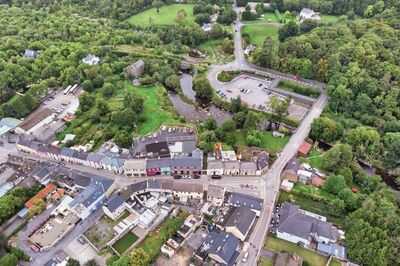
This charming Irish village straddling the Mayo and Galway border has far more to offer than its stunning scenery – it served as the setting for a major Hollywoodproduction.
Despite its modest size, Cong has achieved considerable recognition as the filming location for a 1952 cinema classic featuring American legend John Wayne. The Quiet Man was both shot and set in the village, which continues to celebrate its cinematic heritage through guided tours of filming locations and a purpose-built museum.
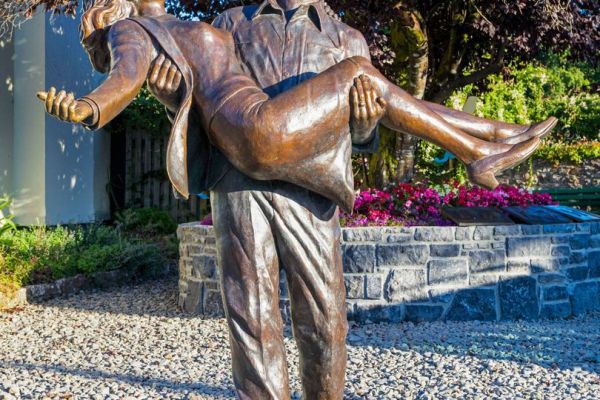
The Quiet Man Museum has been constructed as a faithful recreation of the beloved White O'Morn cottage from the film. Additionally, a statue depicting the two lead actors has been erected in the village centre, honouring the moment that transformed this small community into a pilgrimage site forcinema enthusiasts.
- Family of Brit girl, 7, swept away in Morocco in one-word blast at authorities
- I've visited 400 islands - this near impossible to reach British one is the best

The film's connection to the village and its portrayal of Irish culture contributed to its tremendous success during the 1950s, cementing its status as a timeless classic.
Director John Ford subsequently received the Academy Award for Best Director at the Oscars following the film's highly anticipated release.
Following a visit to the museum, one visitor posted on TripAdvisor: "Excellent walking tour of The Quiet Man village with a knowledgeable, experienced, and humorous guide.
"We learned a lot about the filming and the villagers that were involved in its production. Now we have to go back and watch the film again to see all the scenes from an enlarged perspective."
Another visitor shared: "Amazing! Lots of little anecdotes about the filming from a very knowledgeable and charismatic guide, some very poignant singing as well, be prepared. As a huge fan of the Duke, this was a bit of a pilgrimage for me and didn't disappoint! Highly recommend."
Beyond this, the village's appeal also stems from its quaint cottages and other historical landmarks, including the Royal Abbey of Cong.
The abbey was established in its current form during the 12th century on the site of an earlier seventh-century monastic settlement, with visitors now entering through an impressive Romanesque doorway from the village.
The ruins of the grand church, measuring 42.6 metres in length, feature three magnificent windows on the eastern wall and tombstone-paved floors. A section of the grounds has served as a burial site, with the oldest grave dating back to AD 1709.
One recent tourist shared: "Sadly now a ruin, the Abbey at Cong is hauntingly beautiful. It's fun to imagine it when it was a functional building. The grounds are not to be missed especially the fishermen cottage."
Another visitor noted: "The Royal Abbey of Cong is one of the more extensive ruins that we visited in Ireland to which one had complete access.
"The ruin is pretty extensive, and, while roofless, there are a lot of walls, stairs, arches, and even some large fragments of the cloister arcade. The ruins are pretty haunting, even on the stunning June day on which we visited."
Contact to : xlf550402@gmail.com
Copyright © boyuanhulian 2020 - 2023. All Right Reserved.