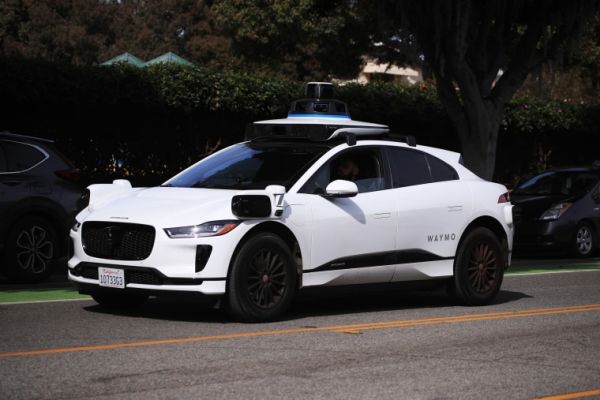
Waymo, Alphabet’s self-driving car subsidiary, is nearing the completion of a major new funding round that could raise close to $16 billion and push the company’s valuation to around $110 billion, according to reporting by the Financial Times. If finalized, the deal would rank among the largest private capital raises in the autonomous vehicle industry and would signal renewed investor confidence in a sector that has struggled to meet earlier expectations.
The funding round would represent a significant leap from Waymo’s previous valuation and reinforce Alphabet’s long-term commitment to autonomous transportation, even as many rivals have reduced operations or exited the space altogether.
Alphabet Set to Provide the Bulk of New Funding
A substantial majority of the new capital—reportedly more than 75 percent—is expected to come directly from Alphabet. The technology giant has backed Waymo since its earliest days, when the project began inside Alphabet’s experimental research division, X, often referred to as its “moonshot factory.”
Alphabet’s dominant role in the funding round suggests the parent company remains confident in Waymo’s long-term potential, despite the high costs and slow path to profitability that have defined the autonomous driving industry. By continuing to provide deep financial support, Alphabet has allowed Waymo to focus on cautious, safety-oriented deployment rather than rapid commercialization, a strategy that has differentiated it from many venture-backed competitors.
High-Profile Investors Expand Waymo’s Backer List
Alongside Alphabet, the funding round is expected to bring in several prominent investment firms. New participants reportedly include Dragoneer Investment Group, Sequoia Capital, and DST Global, all of which are known for backing large-scale technology companies with global ambitions.
Existing investors are also expected to take part, including Andreessen Horowitz and Mubadala, the sovereign wealth fund of Abu Dhabi. Mubadala’s continued involvement highlights ongoing interest from international investors in autonomous mobility, particularly in regions exploring smart city development and advanced transportation infrastructure.
Together, the mix of new and returning investors points to growing belief that Waymo has moved beyond the experimental phase and is evolving into a commercially viable transportation business.
Company Avoids Comment on Financial Details
Waymo has not publicly confirmed the size or valuation of the funding round. When asked about the report, the company avoided discussing financial specifics and instead highlighted its operational progress, including the scale of its completed trips and its focus on safety, reliability, and technical performance.
This approach aligns with Waymo’s broader communication strategy, which has historically emphasized measured growth and safety benchmarks over aggressive expansion or fundraising announcements.
Expansion Continues as Waymo Enters New Cities
The reported funding push comes as Waymo continues to grow its robotaxi operations across the United States. The company recently launched service in Miami, adding to its existing presence in cities such as Phoenix, San Francisco, and Los Angeles.
Miami presents a particularly challenging environment for autonomous vehicles due to its dense urban layout, heavy tourism traffic, and frequent weather changes. Waymo’s decision to expand into the city suggests confidence in its technology’s ability to handle complex real-world conditions.
Unlike some competitors that still rely on human safety drivers or limited pilot programs, Waymo operates fully driverless ride-hailing services in the cities where it is active, allowing customers to book rides without a human behind the wheel.
Technical Setbacks Highlight Ongoing Challenges
Despite its progress, Waymo has not been immune to operational issues. One recent incident in San Francisco drew attention after several Waymo vehicles became stuck at traffic lights during a widespread power outage that disabled traffic signals across the city.
The incident did not result in serious injuries but underscored the difficulty of preparing autonomous systems for rare and unpredictable events. Situations like citywide blackouts create unusual conditions that can challenge even advanced self-driving software, highlighting the ongoing need for refinement and real-world testing.
Such episodes have kept public and regulatory scrutiny focused on how autonomous vehicles respond when infrastructure fails or behaves unexpectedly.
Revenue Growth Shows Signs of Commercial Traction
According to the Financial TimesWaymo is now generating more than $350 million in annual recurring revenue. While that figure remains modest compared to Alphabet’s overall business, it marks an important milestone for Waymo as it transitions from a research-heavy project into a revenue-generating operation.
The majority of Waymo’s income currently comes from its ride-hailing services, which are priced competitively with traditional ride-sharing platforms in many markets. The company has also explored opportunities in delivery and logistics, though passenger transportation remains its primary focus.
Valuation Jump Reflects Industry Consolidation
If confirmed, the $110 billion valuation would represent a dramatic increase from Waymo’s previous funding round. In 2024, the company raised $5.6 billion in a Series C round that valued it at approximately $45 billion.
The sharp rise reflects both Waymo’s operational progress and a broader shakeout within the autonomous vehicle sector. Over the past several years, many startups have scaled back ambitions or shut down entirely due to high development costs, regulatory hurdles, and slower-than-expected adoption. As competitors fall away, Waymo has emerged as one of the few companies operating fully autonomous services at scale.
Contact to : xlf550402@gmail.com
Copyright © boyuanhulian 2020 - 2023. All Right Reserved.