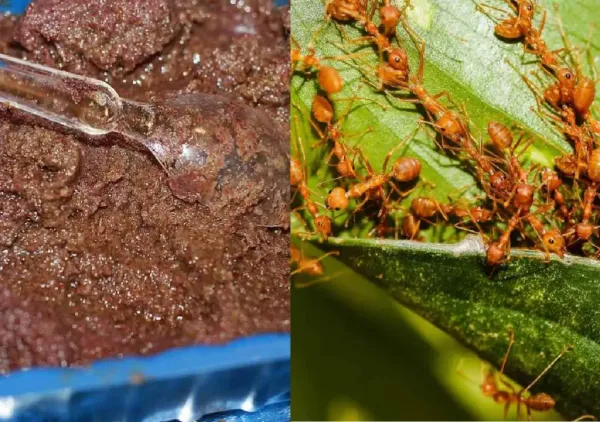
Long before food festivals and luxury hotels discovered it, Kai Chutney was an everyday food of survival for tribal communities in Odisha. Made from red ants, this fiery chutney has traditionally been consumed as a source of strength, immunity and sustenance in forested regions.
Originally associated with the tribal belts of Mayurbhanj and Keonjhar, Kai Chutney has also been part of food traditions in southern Odisha’s Gajapati district, particularly in the Guma block. Here, tribal families have eaten it for generations with pakhala rice and mandia jau, treating it as both food and medicine.
A forest food rooted in tradition
Members of the Bhuyan community explain that red ants are carefully collected from forest trees, briefly heated over fire to remove impurities, and then ground with onion, garlic, ginger, chilli and salt. The result is a pungent chutney believed to boost energy and immunity, especially during winter.
For many villagers, Kai Chutney is inseparable from daily life. Elders say it helps relieve joint pain, improves eyesight and protects against cold, cough and fever. During the COVID-19 pandemic, faith in the chutney grew stronger, with locals believing it helped protect their communities.
Nutrition backed by belief and science
Doctors from Mayurbhanj note that Kai Chutney is rich in protein, vitamin C, vitamin E and antioxidants. These nutrients support immunity, muscle strength and overall energy levels, particularly for communities engaged in physically demanding forest work.
From forest kitchens to global attention
What was once considered survival food has now crossed social and regional boundaries. The dish received a Geographical Indication (GI) tag on January 2, 2024, formally recognising its cultural and regional identity. Today, Kai Chutney features at food festivals and curated culinary events, drawing attention as a unique Odia delicacy.
For tribal communities, however, Kai Chutney remains more than a trend. It continues to symbolise ancestral knowledge, self-reliance and a deep connection with nature.
Contact to : xlf550402@gmail.com
Copyright © boyuanhulian 2020 - 2023. All Right Reserved.