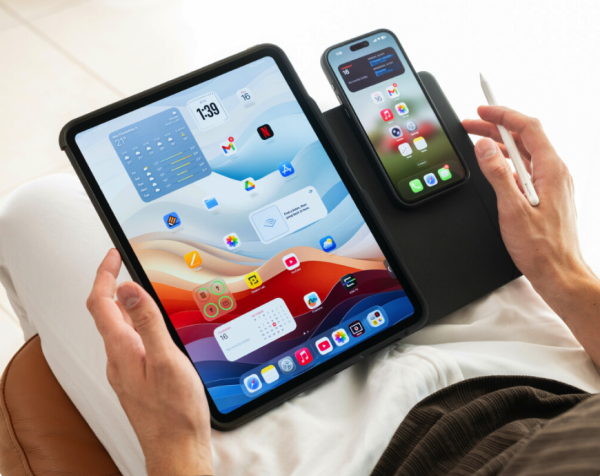
For years, computing has been something we do. We sit down, open a device, launch apps, and focus our attention on a screen. But that model is quietly changing. Thanks to advances in artificial intelligence and increasingly capable mobile hardware, computing is becoming less about deliberate interaction and more about presence.
This shift has a name: ambient computing.
Ambient computing describes technology that fades into the background, ready when needed but rarely demanding attention. It listens, adapts, anticipates, and assists without constant prompts. And while smart speakers and wearables often dominate the conversation, one device is emerging as the most natural home for ambient intelligence: the iPad.
What Is Ambient Computing, Really?
Ambient computing isn’t about flashy AI demos or talking to machines all day. It’s about intelligence that’s:
- Always nearby
- Context-aware
- Easy to access
- Non-intrusive.
Instead of asking, “What can this device do?”ambient computing asks, “How can this device quietly support what I’m already doing?”
This is where tablets — and iPads in particular — excel.
Why the iPad Is Perfectly Positioned for Ambient AI
Unlike phones, which are hyper-personal and constantly demanding attention, or laptops, which require setup and intent, the iPad occupies a unique middle ground.
It’s:
- Large enough to be helpful at a glance
- Portable enough to move from room to room
- Powerful enough to handle AI-driven tasks
- Passive enough to stay out of the way.
An iPad can live on a desk, kitchen counter, coffee table, or bedside without feeling intrusive. It’s available, not insistent, which is exactly what ambient computing requires.
AI Turns the iPad Into a Quiet Assistant
Artificial intelligence is what transforms the iPad from a general-purpose tablet into an ambient device.
Today’s AI tools help with:
- Summarising documents and emails
- Planning schedules and trips
- Organising notes and ideas
- Transcribing conversations
- Generating content or visuals
- Answering contextual questions.
Crucially, these tasks don’t require deep, focused interaction. They’re often quick, lightweight moments of assistance, exactly the kind that fit naturally into daily life.
Instead of opening a laptop and committing to a “work session,” users increasingly reach for an iPad to:
- Check something
- Clarify something
- Capture a thought
- Get unstuck.
The device becomes a quiet layer of intelligence woven into everyday routines.
Always Available, Never Demanding
Ambient computing succeeds when technology feels optional, not obligatory.
The iPad’s form factor supports this beautifully. It can sit idle for hours, then be instantly useful when needed, without boot times, posture changes, or mental friction.
This is why iPads are increasingly used in shared spaces:
- Kitchens for recipes, reminders, and planning
- Living rooms for media, browsing, and casual tasks
- Workspaces as secondary screens or reference tools
- Studios for creative support.
AI enhances these roles without turning the iPad into a distraction machine. It supports rather than dominates.
The Subtle Shift in How We Use Screens
One of the most interesting effects of ambient AI is how it changes screen behaviour.
Instead of long, focused sessions, iPads are now used in:
- Short bursts
- Frequent check-ins
- Passive reference modes
- Hands-free viewing.
An iPad might display:
- A project outline
- A checklist
- A generated summary
- A reference image
- A transcription or live note.
It’s not demanding interaction — it’s holding space for information.
This shift has practical implications for how the device is positioned, supported, and protected in daily use.
Physical Presence Matters in Ambient Computing
Because ambient computing relies on constant availability, the physical setup of the device matters more than ever.
An iPad that’s meant to be “always there” needs to:
- Sit securely on surfaces
- Be viewable at multiple angles
- Move easily between locations
- Survive daily bumps and knocks.
This is where the conversation subtly extends beyond software.
As iPads become background intelligence hubs rather than occasional tools, they’re used more like fixtures than gadgets. They live out in the open, not tucked away in bags—and that changes the demands placed on them.
Ambient Devices Live in the Real World
Unlike laptops, which are usually opened intentionally, ambient devices are exposed to everyday life:
- Spilled drinks
- Busy hands
- Children and pets
- Cluttered surfaces
- Constant movement.
The more an iPad blends into the environment, the more critical durability, stability, and thoughtful design become.
This is one reason many users eventually move away from basic folio covers toward more robust, well-engineered solutions. Brands like ZUGU have leaned into this reality, designing cases that support frequent repositioning, strong magnetic stability, and reliable protection — features that align naturally with how ambient devices are actually used.
Ambient Computing Reduces Cognitive Load
One of the biggest promises of AI-powered ambient computing is mental relief.
Instead of remembering everything, organising everything, or doing everything manually, users can offload small cognitive tasks:
- “Summarise this.”
- “Remind me later.”
- “Organise these notes.”
- “Explain this simply.”
The iPad becomes a thinking surface; somewhere ideas can land temporarily without pressure.
Because the device is physically approachable and visually calm, this kind of interaction feels less like “using a computer” and more like consulting a helpful reference.
Shared Spaces, Shared Intelligence
Ambient computing also thrives in shared environments. A single iPad can support multiple people without feeling personal or locked down.
Families use them for:
- Planning schedules
- Managing household tasks
- Learning and homework
- Media and entertainment.
Workspaces use them for:
- Dashboards
- Collaboration
- Reference material.
AI enhances this shared utility, but it also increases usage frequency and, with it, wear and tear. Again, the physical side of the device becomes inseparable from its digital role.
The iPad as the Calm Centre of Tech Life
As phones become more distracting and laptops more task-heavy, the iPad is emerging as something different: a calm centre.
It’s where:
- Information waits patiently
- AI assists quietly
- Interaction is optional, not forced.
This calmness is a key reason ambient computing feels sustainable. It doesn’t demand constant engagement. It supports life rather than interrupting it.
Looking Ahead: Ambient Intelligence as the Default
As AI continues to mature, ambient computing won’t feel like a trend — it will feel normal.
We’ll expect devices to:
- Understand context
- Be instantly useful
- Stay out of the way
- Fit naturally into our environments.
The iPad, with its balance of power, portability, and presence, is uniquely suited to this future.
But as intelligence becomes more ambient, design becomes more important, not just in software, but in how devices physically exist in our lives.
Ambient computing isn’t about smarter machines shouting for attention. It’s about quieter intelligence that supports us without friction.
With AI expanding what tablets can do and the iPad’s form factor fitting seamlessly into daily environments, we’re witnessing a shift in how computing feels. Always available. Always helpful. Rarely intrusive.
As this shift continues, the most successful devices — and the accessories that support them — will be the ones that understand a simple truth: when technology becomes part of the background, it has to work beautifully in the foreground of real life.
Contact to : xlf550402@gmail.com
Copyright © boyuanhulian 2020 - 2023. All Right Reserved.