In a region celebrated for its soaring skylines and master-planned cities, some of the most meaningful urban change is happening far from the spotlight. Across the UAE, a quieter movement of urban regeneration is transforming derelict, under-utilised and forgotten properties into vibrant community, cultural and economic hubs.
What was once written off as obsolete is increasingly being treated as opportunity. Enabled by forward-looking zoning reforms and long-term urban planning, adaptive reuse is emerging as an alternative way of shaping the communities we live in — one that complements growth rather than simply expanding it.
Every fast-growing city eventually faces the same question: what happens when buildings no longer serve the purpose they were designed for? In the UAE, a growing number of projects show that adaptive reuse — giving existing structures a new lease on life — can unlock both economic and social value.
One of the most striking examples is Al Yaqoub Tower on Sheikh Zayed Road, often dubbed Dubai’s “Big Ben”. After sitting largely vacant for more than a decade following financial and legal disputes, the tower is now being redeveloped as AHS Tower, a Grade A+ commercial office building. Remarkably, around 95 per cent of its space has already been sold or pre-leased ahead of completion.
This redevelopment demonstrates how activating an existing, underperforming asset in a prime location can be more effective and sustainable than building from scratch, particularly where land is scarce and demand for premium space is strong.
Adaptive reuse is not limited to towers and warehouses. Entire districts, too, are being rethought. La Mer, once one of Dubai’s most popular beachfront retail destinations, closed in 2022 to make way for its transformation into J1 Beach, a day-to-night hospitality and lifestyle destination overseen by Merex Investment.
Rather than abandoning the site or erasing it entirely, developers chose to re-imagine its role within Dubai’s urban fabric. The result is a more flexible, experience-driven destination designed to evolve with changing consumer behaviour — a clear example of placemaking that prioritises long-term relevance over short-term trends.
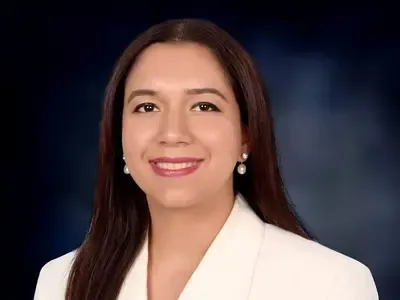
Hanishka Gehani
Nowhere is the impact of urban regeneration more visible than in Al Quoz, where former industrial buildings are being converted into creative and community spaces. Warehouses that once served purely logistical functions now host art studios, event venues, design workshops and small businesses, forming part of the wider Al Quoz Creative Zone.
These developments build on the success of Alserkal Avenue, where adaptive reuse helped establish one of the UAE’s most influential cultural districts — proof that regeneration can anchor long-term creative economies, not just temporary pop-ups.
In Abu Dhabi, adaptive reuse ranges from the restoration of Qasr Al Hosn to initiatives like MiZa in Mina Zayed, where historic warehouses are being converted into mixed-use innovation spaces. Together, these examples point to a broader national direction: regeneration as a tool for balanced, people-centered urban development.
Urban regeneration is about more than buildings. It shapes how people live, interact and feel connected to their surroundings. By linking heritage with future use, environmental responsibility with economic vitality, and public life with creative expression, regeneration supports more resilient and inclusive communities.
Crucially, this shift has been enabled by evolving zoning regulations and long-term planning frameworks that allow for mixed use, flexibility and experimentation — changes that were far less feasible just a few years ago. From the Dubai 2040 Urban Plan to heritage-preservation policies across the Emirates, the direction is clear: growth must be balanced with quality of life.
As the UAE continues to evolve, the question facing planners, developers and policymakers is no longer just what to build next, but what existing places can become. Urban regeneration offers a powerful answer — one that values continuity as much as innovation.
The future of UAE cities will not be defined solely by new landmarks, but by how thoughtfully they renew what already exists.
The writer is an expert in real estate and Operational Director at Zabadani Properties and Co-Founder at the Armari
Contact to : xlf550402@gmail.com
Copyright © boyuanhulian 2020 - 2023. All Right Reserved.