Indian : textile and apparel sector has urged the central government to introduce a set of targeted policy measures to help the industry cope with mounting global trade challenges, particularly those arising from sharply higher tariffs imposed by the United States. The recommendations follow the second round of an industry-wide survey conducted by the Confederation of Indian Textile Industry in December 2025, which assessed the financial and operational impact of recent global developments on exporters.
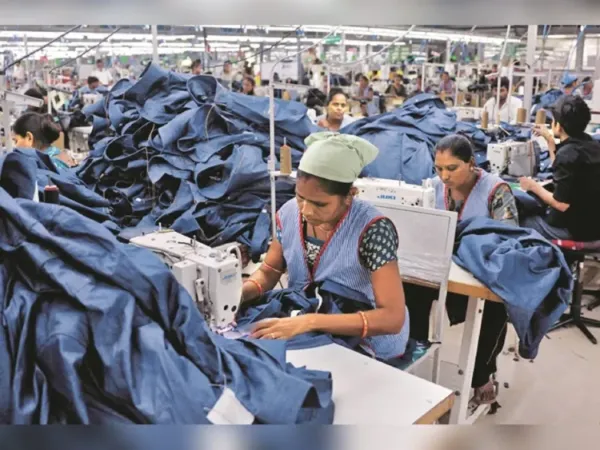
Industry Survey Highlights Growing Export Pressures
According to the survey findings, exporters are facing increasing cost pressures and market uncertainty as higher US tariffs disrupt established trade flows. While some companies have managed to partially absorb the impact, many smaller and mid-sized exporters report tighter margins and declining competitiveness in key overseas markets. Industry representatives have cautioned that without timely policy intervention, these pressures could affect employment, capacity utilization, and future investment decisions across the textile value chain.
Relief From Europe, But UK Agreement Still Pending
Exporters acknowledged that the Free Trade Agreement with the European Union has provided a degree of relief by improving market access and lowering duties for Indian products. However, the survey indicates that this benefit alone is insufficient to offset losses in other major destinations. The industry has therefore called on the government to accelerate the implementation of the India–UK Comprehensive Economic Partnership Agreement, which is viewed as a critical step toward diversifying export markets and restoring demand momentum.
Call for Targeted Support in New Markets
To expand its presence in newer and less familiar international markets, the industry has proposed the introduction of a dedicated handholding mechanism for exporters. The suggested framework would resemble earlier market-focused incentive schemes, offering duty support to compensate for tariff disadvantages faced by Indian products abroad. Industry stakeholders believe such assistance would reduce initial entry risks and encourage exporters to explore alternative destinations beyond traditional markets.
Financial Relief Measures Under Review
The survey also outlines a series of financial interventions that exporters consider essential during the ongoing transition. Chief among these is a request to extend existing relief measures, including the moratorium on loan repayments, recalculation of drawing power, and enhanced credit availability, until at least March 31, 2026. The industry has emphasized that these benefits should apply across the entire textile ecosystem, including Tier 2 and Tier 3 exporters who often have limited access to formal financing.
Demand for Higher Interest Subvention
Another key recommendation relates to borrowing costs. Exporters have sought an increase in the interest subvention rate under the recently announced scheme, proposing that it be raised from 2.75 per cent to 5 per cent. Industry participants argue that higher interest relief would ease cash flow pressures and help businesses manage rising input costs while remaining competitive in price-sensitive global markets.
Liquidity Support Through Credit Guarantees
To address immediate liquidity constraints, the industry has also requested an extension of collateral-free loans under the Emergency Credit Line Guarantee Scheme. The proposal calls for a 30 per cent enhancement in loan limits, similar to the support extended during the pandemic period. This measure, according to the survey, would benefit both micro, small, and medium enterprises as well as larger firms that continue to face uneven demand recovery.
Structural Challenges Beyond Tariffs
Beyond trade duties, the survey identifies high logistics costs, limited access to market intelligence, and payment-related risks as persistent obstacles to export growth. Industry leaders have noted that addressing these structural issues through coordinated policy action could significantly improve resilience and competitiveness. By resolving these constraints, the sector hopes to stabilize export performance and move past the current phase of uncertainty as it approaches 2026.
Contact to : xlf550402@gmail.com
Copyright © boyuanhulian 2020 - 2023. All Right Reserved.