
A 21-year-old woman suffering from a rare urinary retention condition that causes excruciating pain and recurring infections is fundraising to cover expensive private treatment that could save her from having her bladder removed. Caris Gibson, from Oxfordshire, has been battling severe symptoms of Fowler's Syndrome since January 2024.
After experiencing painful, difficult urination that she'd initially put down to a urinary tract infection (UTI), she became completely unable to use the toilet and found herself in A&E most weeks, desperately seeking answers. It wasn't until November 2025 that she received a formal diagnosis of Fowler's Syndrome – a rare, chronic condition that primarily affects women in their 20s and 30s, characterised by the urethral sphincter's failure to relax.
The condition causes urinary retention, substantial pain and infection, according to Fowler's Syndrome UK. Despite trying catheterisation, Caris has had no genuine, lasting relief from her symptoms since they started two years ago.
- People with high blood pressure should avoid two common fruits
- Coronation Street's Swarla finally reunite but fans issue major complaint
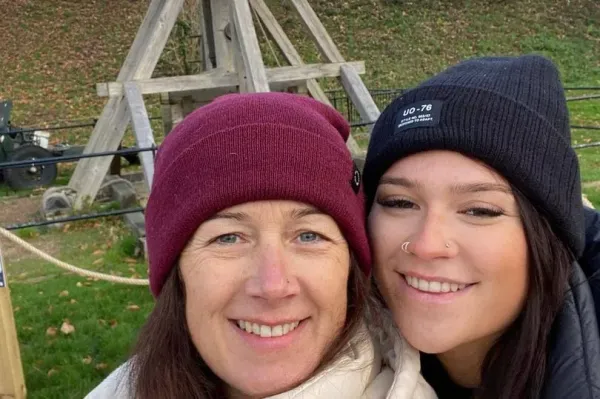
Now, Caris and her mother Jill Lumsden, 53, are fundraising to help cover the cost of expensive private care after spending years on an NHS waiting list for treatment, with Jill pledging to run five kilometres every day throughout 2026 to raise awareness of the condition and money for Caris's treatment. "I was waking up in the morning and I couldn't go to the toilet because I had, what felt to me like, a UTI," Caris told PA Real Life of her early symptoms.
"I'd end up waking up really early in the morning and having to sit in the bath and try and go to the toilet there, because I couldn't do anything on the toilet myself.
"It got to the point where I was getting kidney pain, bladder pain, and I couldn't go to the toilet, and I thought I had a really bad infection. I was in A&E pretty much every week from January to March 2024, before my GP referred me to urology."
For months afterwards, Caris was "still in and out of A&E", but couldn't get the answers she needed. "They didn't really know what else they could do other than give me antibiotics, just in case," she said.
After months of waiting for an NHS urology consultation, Caris resorted to paying for a private consultation to shed some light on what could be causing her debilitating symptoms. She was told that due to the constant urine retention, her bladder had expanded to a capacity of 1.2 litres – a healthy bladder typically holds around 500ml of urine, according to the NHS – and whenever she went to the toilet, unable to fully empty her bladder, around 600ml of urine remained.
According to Fowler's Syndrome UK, the inability to fully empty the bladder leaves Fowler's sufferers at heightened risk of infection, which can trigger back, kidney and suprapubic (lower abdominal) pain, alongside fever and blood in the urine. In the most serious cases, such infections can progress to sepsis, a potentially fatal medical emergency.
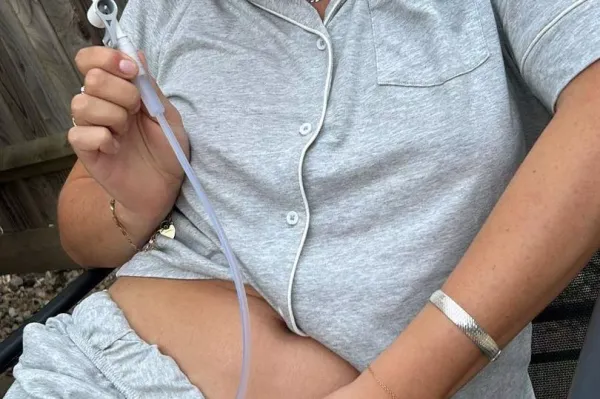
To offer some respite, Caris was shown how to perform self-catheterisation, inserting a slender tube into her bladder via her urethra to release the urine. Before long, she discovered it was becoming increasingly challenging to position the catheter due to the tightness of her urethral sphincter, meaning she couldn't insert it fully and it failed to drain effectively.
She also began experiencing bleeding from her urethra. At this point, Caris contacted NHS 111 and arrangements were made for her to have a permanent catheter fitted, which remains in position and constantly drains urine into a collection bag. Nevertheless, the permanent catheter caused her excruciating discomfort and additional infections, requiring more frequent replacements than usual.
In September 2024, nine months after initially seeking medical help for her symptoms, she eventually consulted a specialist NHS urologist, who arranged for her to undergo a urodynamics test, which assesses how effectively the bladder, sphincters and urethra store and release urine. "The consultant I saw there was more specialist and at the first appointment I had, she mentioned Fowler's Syndrome, but didn't really say too much about it," Caris recalled.
"But things were getting worse and worse and worse and I couldn't deal with the indwelling catheter anymore. I couldn't do self-catheterisation because I couldn't get it in, and it clamped.
"So she came to the decision to put in a suprapubic catheter, which goes straight through my tummy, which I had done in June 2025, and I've had that since then. To be honest, it hasn't really done anything but give me more problems."
Due to the persistent infections, Caris has developed resistance to multiple antibiotics. "My bladder still hurts, my kidneys still hurt, my urethra hurts," she explained.
"Recently, it's been particularly bad. I was waking up at three o'clock in the morning and not being able to go back to sleep because I had a constant feeling of needing the toilet, but I couldn't go, or I didn't actually need the toilet. Some days I have to go to work with a (urine collection) bag on, which I absolutely hate doing, because I'm 21 – it's no life to have a bag attached to you."
Caris can choose between a urine collection bag or a flip-flow release valve on her suprapubic catheter, and whilst the bag typically provides some comfort on her toughest days, there are times when the pain simply won't let up. "It really depends on the day. It's really random," she explained.
"I can never wake up in the morning and think: 'Yeah, I'll be fine today', because by midday, it might all go completely the wrong way, and I'll be in pain. My kidneys will hurt, and my catheter might stop draining."
Eventually, in November 2025, Caris received a formal diagnosis of Fowler's Syndrome. She continues to wait for NHS treatment, having been placed on the waiting list since April 2025, but was informed she's unlikely to receive an initial consultation until April 2026.
Feeling desperate and unable to cope with the debilitating pain any longer – along with its devastating effect on her mental health – she and her parents are seeking private treatment despite the eye-watering costs. "I don't want to see her have to deal with her mental health as well as her physical health..." said her mum, Jill. "It's just heartbreaking."
Jill has launched a GoFundMe campaign with a target of £7,000, though she acknowledged the treatment will actually cost significantly more. Following an initial private consultation, a urologist suggested Caris could try a sacral nerve stimulator (SNS) – a device that delivers gentle electrical pulses to nerves in the lower back to potentially improve bladder control. However, there's no certainty this approach will be effective.
"If it works, then that's fantastic. We are obviously trying to generate positive manifestation that it is going to be successful," Jill said. "But if there's a chance that it isn't, then he was quite clear with what the other option would be... We just don't want to think about what the other option is. We don't want to say it out loud."
Should the SNS prove unsuccessful, it's probable that the sole remaining course of action would involve removing Caris's bladder and fitting a permanent urostomy bag, which would collect urine that would normally flow into the bladder. To raise funds for Caris's treatment and increase awareness of this rarely-known condition, Jill is running five kilometres daily throughout 2025.
When questioned about her motivation, she responded: "Bake sales are not my thing!" Jill has been a runner for two decades, even pushing Caris in a buggy during her baby years, "but I've never run every single day in a year".
The challenge aims to highlight the physical and mental battles Caris endures daily, and she hopes it will bring attention to the quiet, hidden struggle Caris is waging.
"Five kilometres is half an hour of my day. And compared to what she is going through in her day – she can sit in the bathroom for half an hour and be in pain," Jill explained. "There's a physical and a mental side to it, much like her position at the moment."
The fundraising total reached nearly £2,400 at the time of writing. To contribute to the fundraiser, visit the GoFundMe page.
Contact to : xlf550402@gmail.com
Copyright © boyuanhulian 2020 - 2023. All Right Reserved.