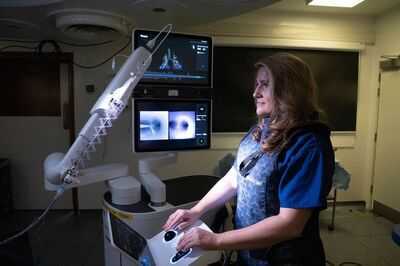
An AI-powered robot arm has been developed to take deeper biopsies to better diagnose lung cancers.
Scientists have developed a robotic catheter - a thin tube inserted into the patient via the throat - to take precise biopsies directly from suspicious nodules as small as 6mm. These are often hidden deep in the young and would have previously been inaccessible. The NHS pilot uses artificial intelligence to analyse lung scans and identify the suspected cancerous nodules.
Health Secretary Wes Streeting, who underwent robotic surgery when being treated for kidney cancer in 2021 aged 38, said the pilot will catch cancer earlier and replace "weeks of invasive testing with a single targeted procedure". It comes alongside NHS plans to expand lung cancer screening, with all eligible people invited for their first check by 2030.
• Chris Hoy demands more screening for men as prostate cancer passes grim milestone
• Bowel cancer warning as deaths expected to rise in the UK this year
Mr Streeting said: "When I was diagnosed with kidney cancer, the NHS saved my life using robotic technology. That experience showed me what's possible when brilliant clinicians have access to cutting-edge innovation.
"Lung cancer is one of the biggest killers in the UK and this pilot will help to catch it earlier, replacing weeks of invasive testing with a single targeted procedure. For patients waiting anxiously for answers, this speed and precision can be life-changing."
Lung cancer is the third most common cancer in the UK, with more than 49,000 new diagnoses and around 33,000 deaths every year. Trials of targeted lung cancer screening started in 2019, with the programme rolled out nationally in 2023. It invites people who have ever smoked and are between the ages of 55 and 74 to have their lung health checked.
Since 2019, more than 1.5 million people have been screened, NHS England said. The expansion of the programme will invite a further 1.4 million people next year alone. Officials estimate that screening could diagnose up to 50,000 cancers by 2035, at least 23,000 of which will be at an earlier stage.
Professor Peter Johnson, NHS England's national clinical director for cancer, said: "Waiting to find out if you might have cancer is incredibly stressful for patients and their families.
"Our lung cancer screening programme means that we are picking up more cancers at an early stage than ever, and by bringing AI and robotics together in this trailblazing NHS pilot, we're bringing in the very latest technology to give clinicians a clearer look inside the lungs and support faster, more accurate biopsies. This is a glimpse of the future of cancer detection."
Specialists at Guy's and St Thomas' NHS Foundation Trust have already tested the robotic catheter on 300 patients. Of them 215 had lung cancer found and treated while 85 had the disease ruled out.
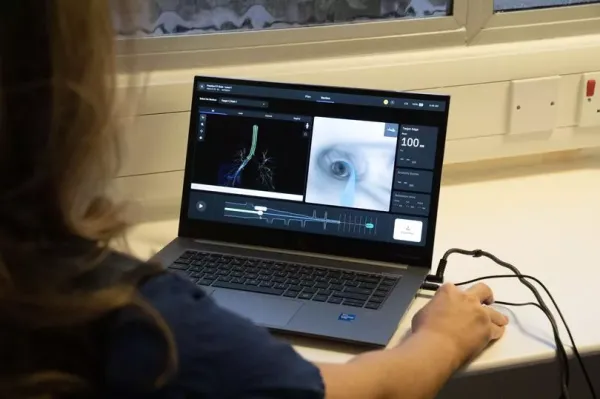
A new pilot will involve a further 250 patients and there are also plans to expand the procedure to other London hospitals covered by King's College Hospital NHS Foundation Trust and Lewisham and Greenwich NHS Trust.
IT contractor David Lindsay discovered he had lung cancer using the technology after initially being referred to hospital with a suspected blood clot in his leg. AI analysis of scans identified a suspicious nodule in his lung which turned out to be stage one lung cancer.
David, from Streatham, south London, said: his blood clot "was a blessing in disguise", adding: "If it hadn't occurred, I wouldn't have had the scan, and various tests, and they wouldn't have seen the cancer. Who knows when I would have had another check-up? And the next time, the cancer may have reached stage four."
After the robotic arm took a biopsy at Guy's Hospital and cancer was confirmed then the cancer was surgically removed.
David added: "It was quick and painless. I wasn't worried because all the staff made me feel comfortable and assured. They clearly explained the findings and after a comprehensive discussion, it was agreed that removal of the cancer was the best option in this instance. The operation was a success."
It comes as the Government prepares to publish its National Cancer Plan, which will aim to boost prevention, diagnosis and treatment of the disease.
Michelle Mitchell, chief executive at Cancer Research UK, said: "Lung cancer is the leading cause of cancer death in the UK, but diagnosing it at an earlier stage can significantly improve peoples' chances of survival. New technologies like this have huge potential, and tests to ensure they're accurate and beneficial for patients in the real world should happen quickly so that innovations can reach everyone sooner."
Contact to : xlf550402@gmail.com
Copyright © boyuanhulian 2020 - 2023. All Right Reserved.