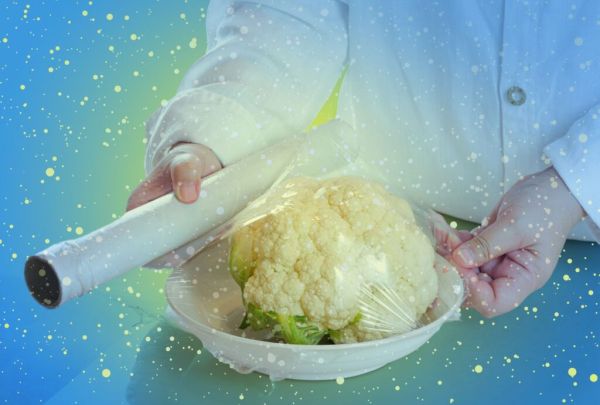
- Microwaving with plastic wrap can transfer chemicals, especially with high heat or food contact.
- Use microwave-safe plastic wrap, allow ventilation and keep it from touching food.
- For a safer, worry-free option, reheat foods in glass or ceramic containers instead of plastic.
After a long day, a fridge that’s stocked with leftovers can feel like a lifesaver. Reheating them in the microwave is easy—but what about leaving the plastic wrap on? With growing concerns about microplastics and chemicals in food, it’s natural to wonder: could the wrap melt? Could chemicals leach into your meal? Could this affect your hormones and overall health? Those are all good questions, and experts say the answers involve a bit of nuance.
Here’s what food safety experts and scientists say about microwaving food with plastic wrap, and tips for doing it safely.
Is It Safe to Microwave Food with Plastic Wrap?
According to the USDA, it’s safe to microwave food in plastic wrap as long as it is labeled as microwave-safe. You also need to make sure the plastic wrap doesn’t touch the food directly and that it’s vented to let steam escape.
“Plastic wrap is designed to handle steam generated during microwaving, but direct contact with hot food can expose it to higher temperatures that increase the risk of chemical migration,” says Melissa Vaccaro, M.S. “If the wrap isn’t microwave-safe, or if it melts or contacts hot food, it should not be used in the microwave.”
There’s a possibility that plastic wrap can melt onto food or release tiny particles and chemicals—a process called migration. Po-Yen Chen, Ph.D.explains that this is more likely when the wrap is in direct contact with the food, especially with high heat, longer heating times or fatty and oily foods, which tend to heat more on the surface. “Plastic wrap can also soften and warp in microwave hot spots, increasing contact with the food and the chance of transfer.”
While research specifically on microwaving food in plastic wrap is limited, studies on other food packaging plastics show they may contain chemicals that affect hormones and metabolism, such as phthalates. This is especially concerning when these materials are heated to high temperatures, such as during microwave cooking.,
Laurie Beyranevand, J.D.notes that modern plastic wrap has been phthalate-free for many years, but it’s often made from substances that are chemically similar to phthalates and may pose similar health concerns.
“While levels from a single microwaving event are generally expected to be low, heating plastics and allowing direct contact with food can increase exposure,” says Chen. ”For this reason, reducing unnecessary heat-contact between plastics and food, especially for routine cooking or reheating, as a practical way to limit avoidable exposure.”
How to Heat Food Safely
- Use a Glass or Ceramic Storage Container. Whenever possible, microwave your food in a microwave-safe glass or ceramic plate, bowl or container. “Never reheat food in the packaging it came in or was wrapped in as leftovers from a restaurant,” says Beyranevand.
- Use an Alternative Food Cover. “Cover food with a microwave-safe lid, paper towel or wax paper instead of plastic wrap,” says Vaccaro.
- Make Sure Plastic Wrap Is Microwave-Safe. If you do use plastic wrap, make sure it’s microwave-safe and doesn’t touch the food. “Plastic wrap is designed to withstand steam heat, not the higher temperatures that can occur when it’s in direct contact with hot food,” Vaccaro says.
Our Expert Take
Heating food that’s covered in plastic wrap can be safe—as long as the wrap is microwave-safe, properly vented and doesn’t touch the food. Otherwise, there’s a chance that it could melt or transfer chemicals to your food. That said, this risk is higher with high heat or long cooking times, and lower for a quick 30-second reheat.
For a worry-free option, skip the plastic wrap and use a microwave-safe glass or ceramic storage container, plate or bowl instead.
Contact to : xlf550402@gmail.com
Copyright © boyuanhulian 2020 - 2023. All Right Reserved.