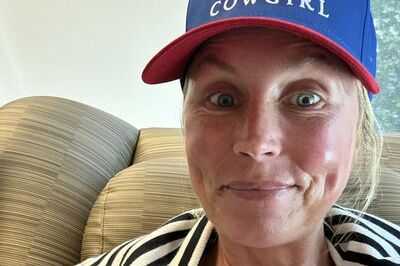
A mum who assumed her symptoms were linked to menopause or a change in water was told they were actually a sign of a deadly disease. Jessica Farrington dealt with a range of problems for months, including night sweats, fatigue, and weight loss, not knowing what they all really meant.
The 46-year-old started experiencing the unusual symptoms, but initially put them down to lifestyle changes or menopause. “I was drenched through my pyjamas and sheets – night sweats that I chalked up to possibly perimenopause/menopause because of my age,” she said.
Jessica dismissed the concerns until several months later, when she started to experience itchy skin – which, again, she thought there was a reasonable explanation for. She said: “At the time, we [had] just moved from Montana to Texas, so I thought it could be the water.
- Superfood chef who created world's healthiest meal died of heart attack, aged 45
- Cardiologist says 'never ignore' these 10 symptoms of heart disease
“So I put in filters on my shower head – no change in itching. Then I turned to my detergent – no change. Again, I thought maybe it was the menopause. I was also experiencing unexplained weight loss.”
It wasn’t until she found a “pea-sized” lump in her armpit that Jessica realised something could be seriously wrong. But she put off seeing a doctor, thinking she might not necessarily need medical attention. Jessica said: “[It] scared the heck out of me, and I immediately knew something wasn’t right.
“I didn’t get seen by a doctor right away, hoping the bump would go away – it didn’t, and only grew bigger. I finally went in and saw my doctor in December [2024] and shared my symptoms and concerns with her.”
Almost a year on from the start of her symptoms, doctors ordered a series of blood tests, including hormone levels, a mammogram and an ultrasound on the lump, due to concerns Jessica might have breast cancer. She recalled: “All my lab [results] were within normal ranges.
“My hormone levels were not showing any signs of peri/menopause, and my mammogram was clean.”
However, in January 2025, the medics were concerned about the ultrasound of her lymph nodes in her armpit, and she was told they would re-check the area in three months’ time. In March 2025, the ultrasound was repeated and showed “significant changes”.
A fine needle biopsy confirmed that Jessica had follicular lymphoma, a cancer of the lymphatic system. She said: “When I first found out, it felt surreal more than anything. Like I was watching someone else’s life happen in front of me…
“Everything suddenly felt fragile and urgent at the same time. I remember thinking, ‘This is not what I thought my life was going to look like.’"
Jessica said: “I underwent several more tests to see how far the disease had spread. Those included a flow cytometry blood test, bone marrow biopsy and PET scan. These tests showed that I had involved lymph nodes in my neck, both armpits, around my aorta, abdomen, and groin. The disease was also systemic, so it was in my blood and bone marrow, making me stage four.”
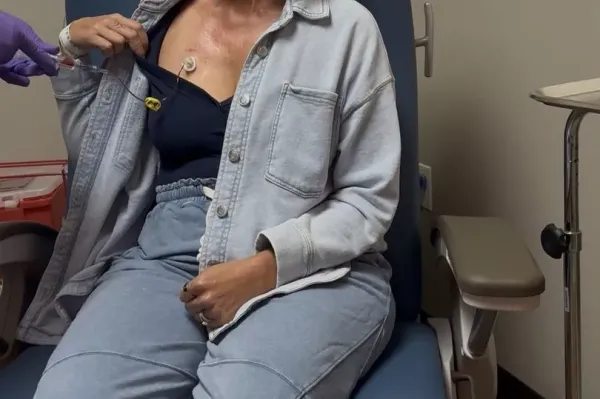
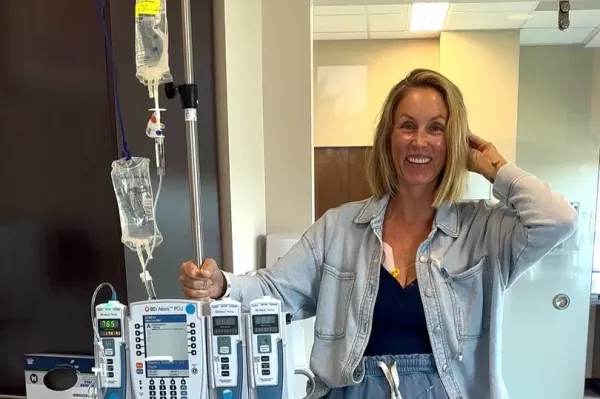
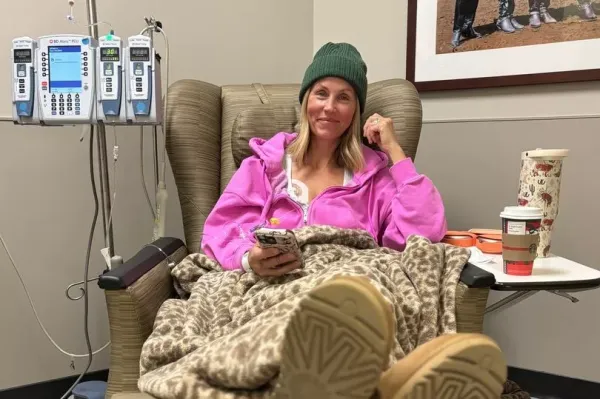
Jessica started a rigorous treatment plan, including chemotherapy and immunotherapy. S he received gruelling treatment on two consecutive days every six weeks for six months. Jessica said: “Treatment was brutal. For about a week after each one, I was so physically and emotionally sick that my world shrank down to my bed…
“There were moments I lay there and honestly didn’t know how much more I could take… I didn’t know how you’re supposed to keep choosing to go back to something that hurts you this much, over and over again.
“And then, slowly, almost quietly, I would start to feel like myself again. Just enough energy to laugh. Just enough appetite to feel human. Just enough normal to remember who I was. And then it was time to do it all over again.”
Now, Jessica is in remission and is undergoing maintenance therapy, which involves immunotherapy every two months for two years.
This is to “help keep the disease asleep”, as follicular lymphoma is not currently curable. She says her diagnosis “changed everything” for her and her family “quietly and completely”. Jessica added: “It changed how I plan, how I think about the future, how I spend my time, and how I define success.
“I no longer measure life by productivity or milestones. I measure it by presence. By meaning. By connection. It also gave me a lot of time for reflection…
“Honestly, it really forced me to sit with a lot of emotions I have been avoiding for quite some time. Overall, I'd like to think the experience has made me a better person. I have a better awareness of myself and my impact in this world with not only with myself but with others.
“I have a greater appreciation for life. That this life is worth living no matter what, and I am choosing to live!”
Asked how her loved ones have coped, Jessica said: “For my family, it was a shock and an adjustment… It introduced fear into places that used to feel stable. It made everyone more protective, more aware, and more emotionally honest with each other.
“But it also deepened our relationships. We talk more openly. We’re more intentional with our time together. We don’t take ‘ordinary days’ for granted anymore, because we understand how rare and valuable they actually are. It’s been hard. It’s been heavy.”
Jessica explained how she feels has changed throughout the experience. She added: “In the beginning, everything felt dominated by fear and uncertainty… [Then] I became more patient, more compassionate, and honestly more alive.
“I stopped waiting for the ‘right time’ to live. I stopped tolerating things that didn’t feel aligned anymore. I learned how to sit with uncomfortable emotions instead of running from them. The whole experience has changed me. not just in a medical sense, but in how I move through the world.”
Jessica says her advice to other women would be to “always listen to your body”. She added: “Be so intimately aware of your baseline that if something is off or you have that feeling that something isn't right, get seen by a medical professional. No question or concern is too small, and always advocate for yourself.”
Nearly two years on from when her symptoms first began, Jessica said she thinks a lot about “where I have been, where I am going and the people along the way, including all the ups and downs”.
Jessica added: “I can say that we never know when our time will come – so I choose to keep living no matter what. That’s all any of us can do anyway. Keep living!”
Contact to : xlf550402@gmail.com
Copyright © boyuanhulian 2020 - 2023. All Right Reserved.