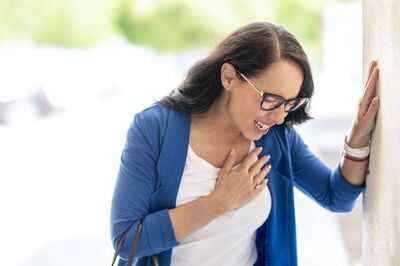
A BBC doctor has warned of some subtle signs of a "silent killer" affecting millions of people across the UK. According to the British Heart Foundation more than half of the population is expected to develop a heart or circulatory condition in their lifetime.
Figures show more than 8 million people are currently living with cardiovascular disease, made up of more than 4 million men and over 3.6 million women. It causes more than one in four of all deaths across the country with about 170,000 people losing their lives to the condition.
Speaking on BBC Morning Live, Dr Punam Krishan explained the risk factors behind the condition and how to boost your protection against developing it. And she also set out some signs to watch for - including one in the mouth.
- Seven warning signs you're prediabetic and how to prevent diabetes
- ‘I found an award-winning Yorkshire spa hotel with stunning views for £129 a night’
After being asked if it was common to not have any obvious signs then, the doctor answers: "Unfortunately yes and that is one of the hardest things about heart disease."

The GP says people expect there is going to be a big warning sign but often this is not the case, adding: "Often, especially things like coronary artery disease, can develop very quietly over a long period of time.
"Narrowing or hardening of the blood vessels doesn't necessarily always cause shortness of breath or chest pain or red flags and then eventually just something triggers and can tip off into a heart attack or heart failure, a rhythm disturbance.
"We looked at the statistics from the British Heart Foundation, you know there's over 8 million people in the UK that are living with cardiovascular disease. A significant number of first-time heart attacks, people didn't actually have prior symptoms.
"If we look at things like blood pressure, cholesterol, a lot of these we call them the silent killers. They don't often present with symptoms."
When asked who is most at risk the doctor said there were a number of factors. She said: "That's the thing with heart disease. If we break it down there's lots of different types of conditions that can affect the heart, they can cause heart disease, but what we're talking about is a build-up of fatty deposits in your blood vessels over a long period of time which can affect the blood flow across across your cardiovascular system and the heart.
"Now there are risk factors that we can control. There are factors that we can't. The point of this isn't to scare people it is to empower you, so things that we can control is lifestyle.
"As doctors we always talk about lifestyle. It is so powerful. Things like your diet, exercise, are you a smoker? Do you drink alcohol to excess? What are your stress levels like? These are all lifestyle modifiable factors."
But she went on to list some factors outside of our control. She said: "Ageing. As we get older our risk of heart disease does increase. Men usually tend to present a lot earlier but women catch up, particularly postmenopausal."
Ethnicity is also a factor with the doctor saying: "We know that heart disease is more common in certain communities, including South Asian communities."
Genetics and family history can also affect your risk, said the doctor adding: "If there is risk of heart disease in younger people or you know there was a strong family history then that is something to take note, mention that to your GP when you go in."
But she said the problem wasn't usually just one factor but a combination of things. And she advises it is important to know there are some symptoms to look out for.
She says: "While a lot of them can be silent there is typical symptoms. For example chest pain and chest tightness is the one most people tend to know about.
"Now, if you develop chest tightness or chest pain, especially during exertion, if it's not settling with rest, then that is something you do need to act on, especially that is going on beyond couple of minutes." She said if that happened should dial 999 and get medical help.
Dr Punam said there were some less well known symptoms, especially in women as they can present differently to men. She said: "It doesn't often have to be chest pain. It could be tightening in the jaw, pain down the arm, a bit of a numb sensation, anything like that, pain across the back, your shoulders.
"Sometimes it can just be a sudden onset of burning pain that you might pass off as just being indigestion but of its new for you, sudden, it is making you feel unwell, act on that"
She says there are some other things to watch out for. The doctor explains: "Things like a sudden shortness of breath, sweating, nausea, dizziness, extreme fatigue that comes out of the blue and you just don't know, you're suddenly floored.
"The key message here if something is new, a symptom that develops acutely, you are feeling unwell, don't ignore it. What I see a lot in general practice is that women are at risk of that. Women tend to dismiss it and think it's probably nothing. Just don't do that."
She says this is especially an issue as some of the symptoms were quite vague but insists it's important not to feel afraid when heaing about heart disease, adding: "It can present silently, it can make you panic, but we can do a lot to protect ourselves."
The doctor says the first thing is to look at your lifestyle. She explains, starting with your diet, ask yourself what are you eating across the day? She advises: "Try and have balanced healthy diet."
She also advises cutting down on smoking if you are a smoker and moderating alcohol intake. Then she advises of what is the most "powerful prescription" - exercise.
She says: "Even if it's just walking every day, which is amazing for your heart health, but any form of movement is good for you." The doctor also says it is important to have regular health checks - "especially if you're 40 or over".
She says: "Check in with your doctor, have that basic health screen, your blood pressure check, your cholesterol, your weight. If you are carrying excess weight that's something we can support you with. She reassures: "All these things are controllable."
Contact to : xlf550402@gmail.com
Copyright © boyuanhulian 2020 - 2023. All Right Reserved.