Many questions keep arising in the minds of people regarding this relationship, the biggest question of which is that the wife gets the fruits of her husband's virtues, but why the husband does not get the fruits of his wife's virtues.
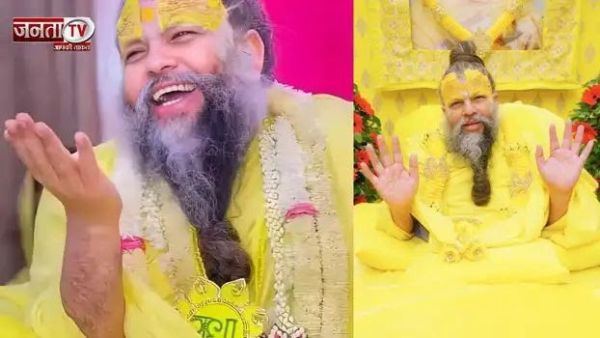
Recently a devotee asked the same question to the famous saint Premanand Maharaj of Vrindavan. Maharaj answered this question in such a simple and deep language that the listeners understood the real meaning of the marriage and karma principles of Sanatan Dharma.
Spiritual relationship between husband and wife in Sanatan Dharma
In Sanatan Dharma, the relationship between husband and wife is not considered merely a social system. In the classical traditions and interpretations of the saints, it is believed that dharma is linked to karma and moksha. The wife has been called the better half of the husband, that is, she is not just a life partner, but a partner in half of his existence. In this relationship, not only emotions but also responsibilities are divided equally. But behind the system that has been created for the distribution of virtue, there is a deep spiritual logic hidden behind it, which is important to understand.
What is the real meaning of Panigrahan Sanskar?
Premanand Maharaj told that the answer to this question is hidden in the marriage ritual that takes place at the time of marriage. During marriage, when husband and wife hold each other's hands in front of the fire, it is not just a ritual. In this ritual, the husband's hand is below and the wife's hand is above. This means that the husband takes a pledge that from now on he is taking full responsibility for the life, safety and welfare of his wife. There is a popular belief that the wife gets to share in the virtues of her husband.
Why does the wife get the virtue of her husband?
According to Premanand Maharaj, after marriage a woman leaves her home, parents, siblings and her entire world and comes to her husband's house. She connects her life with her husband's life and takes care of his service, support and arrangements. When the husband does any religious work like charity, fasting, yagya, pilgrimage or bhajan, the wife has a direct or indirect contribution in it. According to the scriptures, the wife's participation is considered in every auspicious work of the husband. For this reason, the wife automatically gets half the fruits of her husband's virtue.
Does this system make women weak?
Premanand Maharaj also dispelled the misconception that this system makes women weak or inferior. He clearly said that this is not inequality, but the principle of responsibility. It is the responsibility of the husband to protect and nurture his wife, hence the wife's participation in his virtue is considered. This system is based on sacrifice and dedication, and not on any kind of discrimination.
Why doesn't the husband get the virtue of his wife?
It is here that Premanand Maharaj said the most important thing. He told that the fruit of virtue and spiritual progress are two different things. The husband receives the virtues of his wife only when the husband himself is following the path of righteousness. If the husband is unrighteous, indulged in wrong deeds and the wife is quietly doing her chanting, penance and devotion, then the husband will not get the fruits of that virtue. In such a situation, the wife will progress on the strength of her virtue, but the husband will have to suffer the consequences of his own actions.
What happens when the husband is religious
According to Premanand Maharaj, if the husband himself is a worshiper, follower of religion and has faith in God, and the wife serves him selflessly, then in that situation the effect of the husband's devotion and virtue is visible in the wife's life also. In such married life, both become helpful to each other in spiritual progress.
Virtue can be shared, not salvation
Maharaj said in very simple words that virtue can be shared, but not moksha or spiritual liberation. Every soul has to do its own sadhana. The devotion of the wife will elevate the wife, and the devotion of the husband will elevate the husband. No person can depend completely on the devotion of another.
doctrine of sin and punishment
Premanand Maharaj also clarified that there is no partnership in the matter of sin. Neither the wife gets punished for the husband's sins nor does the husband get the consequences of the wife's sins. If both are not involved in each other's wrongdoings, each person bears the fruits of his own actions. This is the just principle of Sanatan Dharma.
Disclaimer- The information given here is given on the basis of general information. nh does not claim that these are true or accurate.