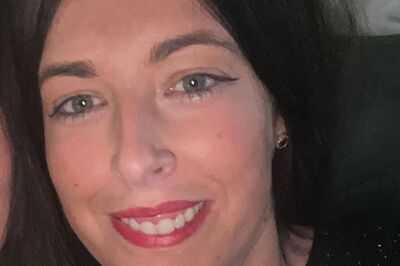
A chemotherapy nurse is fighting for urgent change after witnessinga 'rise in breast cancer cases'among patients under 50. Gemma, a 39-year-old NHS worker, is calling for the UK to lower the age for mammogram screeningby a decade, taking it from 50 to 40.
"There's that stereotypical age isn't there, that 'people over 60 getcancer' and things like that," Gemma Reeves, from Kent, said. "But sinceCovid, the age of the women is just getting younger and younger.
"And it is predominantly women, I think I‘ve treated one or two men, but it is mainly women, and it’s younger women as well. The women, they’re coming in, they’ve got young families, they are working, so they are trying to navigate having chemo while working, doing the food, the shopping, everything. And looking after their kids."
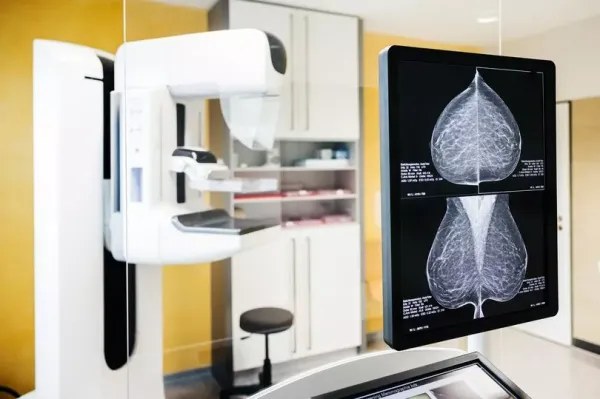
Right now, women in the UK are invited for their first NHS breast cancer screening between the ages of 50 and 53. Mammograms are then performed every 3 years until a person reaches their 71st birthday.
While invitations are issued at this age due to a higher risk of breast cancer, Gemma believes the danger is worsening among young women too - and official statistics agree.
According to data from Cancer Research UK, female breast cancer cases have increased by 14.4% for 25 to 49-year-olds between the periods of 1993-1995 and 2018-2019 to 2021. The average number of breast cancer cases also reached approximately 9,700 in this age group between 2018 and 2021, out of roughly 57,900 cases.
Although this increase isn't disproportionate to trends in other age groups, the statistics come as major US health organisations, such as Mayo Clinic and the USPSTF, are already promoting that mammograms should be offered annually from age 40. Gemma therefore believes it's essential for the UK to align with this approach as well.
In light of her beliefs, she's set upan online petition that has garnered more than 30,000 signatures. Should it reach 100,000, it will be considered for a debate in Parliament.
"They need to lower the age with the times," Gemma continued before later adding: "Over the years, I have been noticing more and more younger patients coming in. The main young patients are breast and bowel, and for a lot of them, it has already spread to stage four.
"Now, there is no rhyme or reason, I'm not saying that if they had been seen through Covid by a GP that it wouldn't have necessarily been stage four. But cancer in young patients can be more aggressive because your cells are still dividing and multiplying."
Despite Gemma's thoughts, some medical experts argue that challenges would exist in routinely screening younger people for breast cancer. Dr Gareth Nye, a Biomedical Science lecturer at the University of Salford, is among them, and asserts that there may be a higher risk of 'false positives or misdiagnosis'.
He told the Mirror: "It would be ideal to regularly screen everyone for all diseases, but unfortunately, there is a risk/reward evaluation with every medication or procedure.
"The issue with screening women younger than 50 is that there is a higher risk of false positives or misdiagnosis, which brings about unnecessary procedures and worry. There is no denying that for women under 50 who develop breast cancer, this could be considered a weak argument, but in the wider picture of the NHS, along with other countries around the world, 50 and up provides the best capture rate for the input.
"The reason it is difficult to accurately screen breasts under 50 is because the density of tissue is often higher, reducing the accuracy of mammograms, requiring more invasive testing procedures to confirm or deny the presence of cancer.
"The Government is exploring lowering the age to 47 when you have certain risk factors. Women who have known risks for breast cancer development will be offered earlier screenings and other tests."
Although Gemma acknowledges many of these difficulties, including the dense breast argument, she asserts that it is the screening team's responsibility to refer a patient for further examinations. She also argued that the threat of breast cancer outweighs the price of a more invasive testing procedure.
• Breast cancer screening update for people aged 40 as Government responds to public
Gemma, who works at a hospital in Kent, continued: "The reason why some people have disagreed with the petition is because they say that mammograms don't always pick up [tumours] in dense breasts, which they don't. But, until you go for a mammogram, you don't know if you've got dense breasts or not.
"They appear different on a mammogram as opposed to non-dense breasts. So, if you've got dense breasts, I think they appear white, and then the tumour’s white, so then they can be missed.
"But if you've got non-dense breasts, the tissue appears black so you can see the tumour. But even if you've got dense breasts, surely that's down to the referring consultant to say, 'We've seen the mammogram, your breasts are dense, we need to send you for an ultrasound and/or an MRI'?"
In response to Gemma's petition, the Department of Health said that it currently does not intend to lower the age or increase the frequency of breast screens. This decision is in line with scientific advice from the UK National Screening Committee (UK NSC), which makes recommendations 'based on internationally recognised criteria and a rigorous evidence review and consultation process'.
However, the UK NSC is set to eventually review the findings of AgeX, a trial undertaken with the NHS and Oxford University. This is exploring whether an extension of screening to women aged 47 to 49 and 71 to 73 could catch more cancers earlier.
The UK NSC has also been reviewing evidence related to the provision of additional breast screening for women who have dense breast tissue and is offering stakeholders the chance to provide feedback here.
• Ruth Langsford shares 'mistakes' she made with her dad - 'it was a hard lesson'
A Department of Health and Social Care spokesperson told the Mirror: "The UK National Screening Committee is reviewing screening for younger women based on the latest evidence and will update shortly.
"We are taking decisive action to tackle breast cancer head-on - from launching world-leading AI trials to support analysis of mammograms, to driving forward vital research that improves care and saves lives as part of the 10 Year Health Plan.
"We are also cutting cancer waiting times - diagnosing or ruling out cancer on time for 213,000 extra cases compared to before July 2024." You can also read the Department's official petition response in full here.
Sophie Brooks, health information manager at Cancer Research UK, similarly told the Mirror: "Breast screening helps spot breast cancer early, when treatment is more effective. But no screening test is perfect and can lead to false negatives or positives, or picking up cancers that may never cause harm.
"People who are younger than the screening age are usually at a lower risk, meaning that for most of people below the screening age, the harms of screening would outweigh the benefits.
"Those at higher risk, for example, with a strong family history or an inherited faulty gene, may be offered screening earlier. Anyone concerned about their breast cancer risk, or notices unusual changes should speak to their GP."
If you'd like to support Gemma's petition, visit Parliament's website by clicking here. Gemma has expressed her gratitude for the signatures received so far, and emphasised that every single one counts.
She said: "It's so important. Unfortunately, I'm just your average Joe, but from my personal experience, I've seen an increase in young patients. On my own, I don't have the power to implement the change."
What do you think? Let us know in the comment section below
Contact to : xlf550402@gmail.com
Copyright © boyuanhulian 2020 - 2023. All Right Reserved.