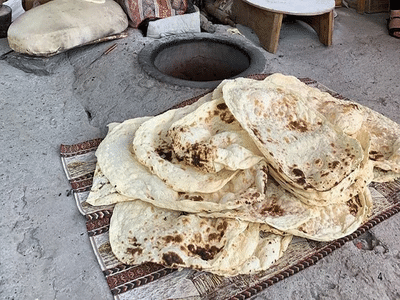
Iran is often discussed for its political influence and strategic geography, but its cultural heritage and cuisine are equally distinctive. Iranian food reflects centuries of tradition, marked by the use of aromatic herbs and spices such as saffron, cardamom and cinnamon. Alongside popular dishes like khoresh, polo, haleem and kufteh tabrizi, bread occupies a central place in everyday meals.
Unlike India, where rotis are usually small and round, Iranian flatbreads are strikingly large in size and prepared using unique techniques. Some of these breads measure up to two or three feet in length and are thin enough to resemble a sheet. In many households, a single roti is sufficient for an entire family. The variety, texture and baking methods of Iranian breads make them stand out globally.
The most widely consumed bread in Iran is sangak, which is also regarded as the country’s national bread. Made from fermented wheat flour dough, sangak is rectangular or triangular rather than round. It is typically two to three feet long and about a foot wide. What makes sangak unique is the way it is baked. The dough is placed directly on heated river stones, giving the bread a rough surface and a lightly crisp texture. This traditional method also adds a subtle smoky flavour.
Another popular bread is barbari, which is oval in shape and thicker than sangak. Barbari has a soft interior and a golden-brown crust. It is often topped with sesame seeds or black cumin seeds, enhancing its aroma and taste. This bread is commonly eaten at breakfast with butter, cheese or honey, and also pairs well with rich stews.
Taftoon is a softer variety of Iranian bread with a mildly sweet taste. It is prepared using flour, milk, yogurt, sugar and ghee, along with aromatic spices. The dough is baked in a tandoor, making it somewhat familiar to those accustomed to Indian breads. Taftoon is especially popular during weddings, festivals and special occasions.
Lavash is the thinnest among Iranian breads and is often compared to rumali roti in India. It is round or oval, extremely thin, and very flexible. Fresh lavash can be easily folded or wrapped around kebabs, cheese or herbs. Its softness makes it ideal for quick meals and street food.
Apart from these well-known varieties, Iran also has several regional breads. Komaj is a sweet bread made with dates, naan-e-jo is prepared from barley flour, sheermal is a milk-based sweet bread, naan-e-sabzi includes herbs and vegetables, and naan-e-sabjamini is made using potatoes.
Iranian rotis are more than just a staple food. Their size, shape and baking methods reflect the country’s culinary identity and communal dining culture. From stone-baked sangak to paper-thin lavash, these breads show how simple ingredients can produce extraordinary results when shaped by tradition.
Contact to : xlf550402@gmail.com
Copyright © boyuanhulian 2020 - 2023. All Right Reserved.