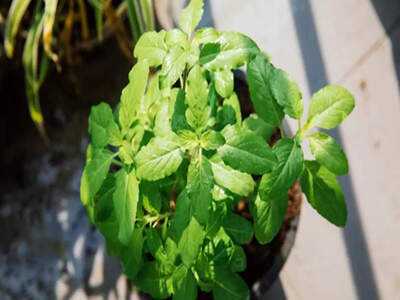
Understanding the Sacred Tulsi Plant: In Hindu culture, the Tulsi plant holds immense spiritual significance. Revered as a manifestation of the goddess, it is commonly worshipped in households, especially by devotees of Lord Vishnu. It is believed that honoring Tulsi brings joy, tranquility, and positive vibes into one's home. However, when the Tulsi plant wilts, many people mistakenly discard it, which is considered disrespectful. Let's explore the appropriate actions to take when a Tulsi plant has completely dried up and the guidelines set forth by religious texts.
Why Disposing of Dried Tulsi is Considered Inauspicious
Tulsi is viewed as a divine entity, and throwing away dried Tulsi without proper respect is frowned upon in scriptures. Such actions can attract negative energy. It is essential to honor Tulsi throughout its life cycle, whether it is thriving or withered.
Proper Uses for Dried Tulsi
The dried stems of the Tulsi plant can be ground into a fine powder and used as a tilak (forehead mark), similar to sandalwood paste. This practice is believed to enhance devotion and bring mental peace, making it a spiritually beneficial method.
Steps to Take If Your Tulsi Plant is Completely Dry
If the Tulsi plant has entirely dried out and cannot be revived, it is recommended to immerse it in a sacred body of water, such as a river, pond, or lake. Additionally, dried Tulsi branches can be crafted into rosaries used in the worship of Lord Vishnu and Lord Krishna.
The Significance of Dried Tulsi in the Padma Purana
According to the Padma Purana, conducting a havan (fire ritual) with dried Tulsi is highly auspicious, as its smoke purifies the environment and pleases deities like Lord Vishnu and Goddess Lakshmi. Furthermore, using dried Tulsi in a funeral pyre is believed to open the gates of heaven for the departed, granting great merit to those present. This is why Tulsi is often referred to as a divine plant that offers liberation.
Conclusion
PC Social Media
Contact to : xlf550402@gmail.com
Copyright © boyuanhulian 2020 - 2023. All Right Reserved.