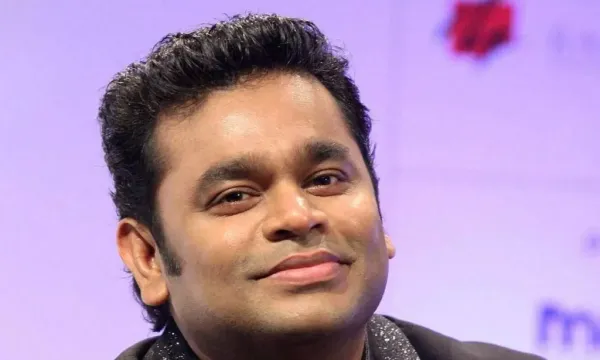
New Delhi, Jan 15 (PTI) Less work has been coming his way, says celebrated music composer A R Rahman, attributing it to a power shift within the Hindi film industry in the last eight years and also perhaps to “a communal thing” though one not in his face.
It comes to him as “Chinese whispers”, the Oscar winner told BBC Asian Network in an interview. “I’m not in search of work. I want work to come to me; the sincerity of my work to earn things. I feel it’s a jinx when I go on in search of things,” he said.
Asked if he faced any prejudice in the Hindi film industry when he started out in the 1990s, Rahman said, “Maybe I didn’t get to know all this stuff. Maybe God concealed all this stuff. But for me I never felt any of those, but the past eight years, maybe, because the power shift has happened.” “People who are not creative have the power now to decide things and this might have been a communal thing also but not in my face. It comes to me as Chinese whispers that they booked you but the music company went ahead and hired their five composers. I said, ‘Oh that’s great, rest for me, I can chill out with my family’,” he added. The 59-year-old said he was the first composer from the south who went to the Hindi film industry and survived it.
“It’s a whole new culture, no other south Indian composer till then. Mr. Ilaiyaraaja had done a couple of movies but they were not mainstream movies. So for me to cross and them embracing me was a huge rewarding experience.” Rahman said while his music for Mani Ratnam’s classics “Roja” (1992), “Bombay” (1995) and “Dil Se..” (1998) became popular, he credits Subhash Ghai’s 1999 musical hit “Taal” for making him a household name in north India.
“I was still an outsider with these three (films) but ‘Taal’ became famous in every household, like it entered the kitchen of everybody’s house. Even now, most of the north Indians it’s in the blood because it’s a little bit of Punjabi Hindi and the mountain music.” He also remembered the advice Ghai gave him once.
“I never spoke Hindi and it was difficult for a Tamil person to learn Hindi because we have such an attachment to Tamil. But then Subash Ghai said, ‘I love your music but I want you to stay longer. So you should learn Hindi.’ “I said, ‘Okay let me learn Hindi. And I’ll go one step further. I will learn Urdu which is the mother of Hindi music of the 60s and 70s, I would say,” he said.
Rahman said as an artist, he tries to avoid movies that “are made with bad intentions”.
The interviewer then asked him about his association with a “divisive” movie like Vicky Kaushal-starrer “Chhaava”.
“It is divisive. I think it cashed on the divisiveness of it but I think the core of it is to show the bravery… I told the director, ‘why do you need me for this?’ He said we need only you for this. I think it was an enjoyable finish.
“But I definitely think people are smarter than that. Do you think people are going to get influenced by movies? They have something called internal conscience which knows what the truth is and what manipulation is,” he said.
The movie, based on the life of Chhatrapati Sambhaji Maharaj, son of Maratha Empire founder Chhatrapati Shivaji Maharaj, who was tortured and killed by Mughal emperor Aurangzeb, was met with polarising reactions upon its release in February 2025 with many people claiming that it distorted history.
It, however, performed exceptionally well at the box office, raking in approximately Rs 700 crore during its theatrical run. PTI
(Except for the headline, this story has not been edited by The Federal staff and is auto-published from a syndicated feed.)
Contact to : xlf550402@gmail.com
Copyright © boyuanhulian 2020 - 2023. All Right Reserved.