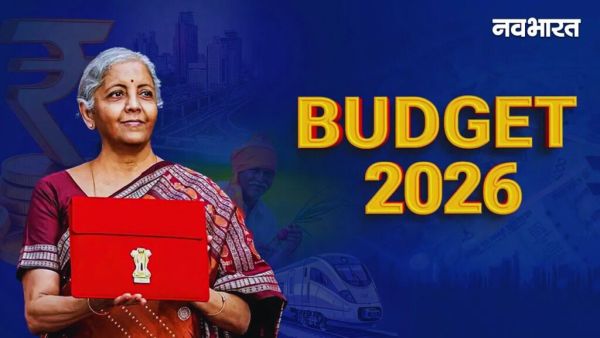
Income Tax Reforms In Nirmala Sitharaman’s Tenure: From the second term of the Modi government to the present, Finance Minister Nirmala Sitharaman has taken many historic steps towards making India’s direct tax system simple, digital and transparent. His main focus since assuming office in 2019 has been ‘Tax Terrorism’ The focus has been on abolishing GST and providing alternative relief to the middle class.
The biggest change during Nirmala Sitharaman’s tenure came in Budget 2020, when she introduced the Alternative Tax System (Section 115BAC). To give taxpayers the option of lower tax rates by freeing them from the hassles of investment (like LIC, PPF). However, it did not gain that much popularity initially because it did not provide deductions like the old system.
2023-2024: New tax regime becomes ‘default’
The budgets of 2023 and 2024 changed the direction of the new tax system. The Finance Minister called it ‘default’ By selecting and making major changes in the slab, it made it attractive for the middle class. Tax free income limit increased from ₹5 lakh to ₹7 lakh (with exemptions). The new system also introduced a standard deduction of ₹50,000, which was earlier available only in the old system. The highest surcharge rate for the richest Indians was reduced from 37% to 25%.
Historic cut in corporate tax (2019)
In September 2019, just months after taking over as Finance Minister, Nirmala Sitharaman had drastically cut corporate tax rates to boost the economy. Base corporate tax was reduced from 30% to 22% and for new manufacturing companies it was reduced to 15%. This was considered the biggest tax reform of the last three decades.
Faceless assessment and transparency
Sitharaman introduced Faceless Assessment to eliminate human intervention between the tax department and the taxpayer. Its objective was to stop corruption and make the assessment process completely digital. Along with this, ‘confidence through controversy’ Emphasis was laid on resolving pending tax cases by bringing schemes like this.
Change in Income Tax Slab (New Regime)
| Income limit (₹) | 2020 rates | Rates for 2024-25 |
| 0 – 3 lakhs | Zero | Zero |
| 3 – 6 lakhs | 5% | 5% |
| 6 – 9 lakhs | 10% | 10% |
| 9 – 1.2 million | 15% | 15% |
| 12 – 1.5 million | 20% | 20% |
| above 15 lakhs | 30% | 30% |
(Note: In Budget 2024, there is no tax to be paid on total income up to ₹7 lakh due to ‘rebate’)
Speed and simplification in ITR filing
The process of filing income tax returns has increased significantly in the last 6 years. Earlier it used to take months for refunds to come. Now, due to technological improvements and the new e-filing portal, refunds now come in an average of 10-15 days. Information about bank interest and dividend now comes pre-filled in the form, which has reduced the scope for mistakes.
Expectations of common people from Budget 2026
Looking at changes by 2025, experts believe that budget 2026 In this, the Finance Minister can play a big gamble by gradually abolishing the old tax system and making income up to ₹ 8 lakh completely tax free in the new system. The journey from 2019 to 2025 ‘from complexity to simplicity’ Is moving towards. While tax slabs were confusing in 2019, by 2025 India has moved towards a system where the taxpayer has freedom of choice and the process is completely digital.
Contact to : xlf550402@gmail.com
Copyright © boyuanhulian 2020 - 2023. All Right Reserved.