
Indore (Madhya Pradesh): Indore is challenging how bamboo has always been grown. Instead of relying only on cuttings and offsets, a government laboratory in the city has produced over 1.12 lakh tissue-cultured bamboo plants since 2019, marking a significant shift in bamboo propagation within public forestry in Madhya Pradesh.
The production is being carried out at the plant tissue culture laboratory of the Social Forestry Circle, Indore. Official data shows that the facility sold 112,642 tissue-cultured bamboo plants between 2019 and 2025, generating revenue of Rs 31.05 lakh.
Sharing the details, Pradeep Mishra, IFS, Divisional Forest Officer (DFO), Indore, said tissue culture was adopted to address biological limitations inherent in conventional bamboo propagation.
“Bamboo flowering is irregular, seed availability is unpredictable, and traditional methods like offsets and cuttings restrict how fast plantations can be scaled,” Mishra said. “Tissue culture allows year-round production and predictable supply.”
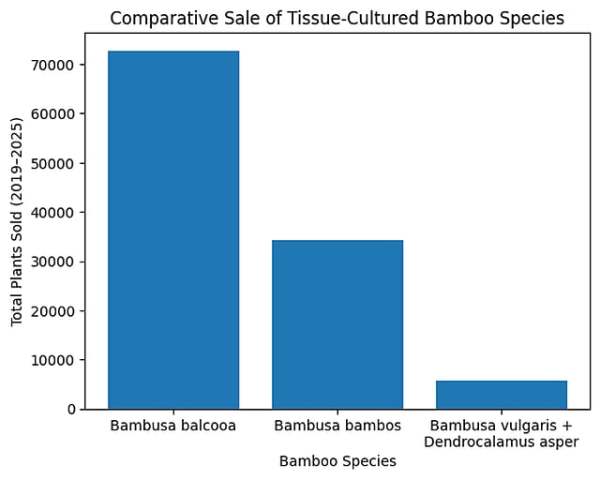
Bambusa balcooa leads the way
Mishra said the Indore laboratory has developed complete and standardised tissue culture protocols for four bamboo species — Bambusa balcooa, Bambusa bambos, Bambusa vulgaris and Dendrocalamus asper — enabling regular monthly production.
Among these, Bambusa balcooa accounts for the highest share of production and sales.
“The dominance of Bambusa balcooa reflects protocol maturity and consistent demand,” Mishra said. “Once a protocol stabilises, scale follows.”
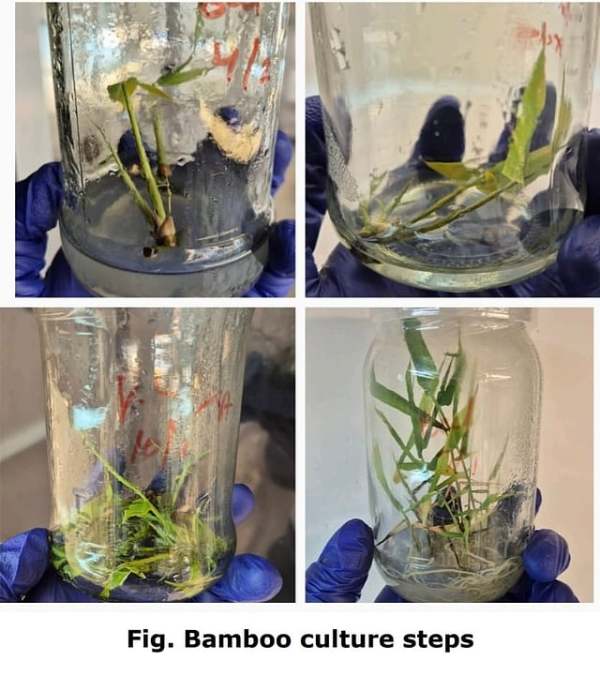
Growing bamboo, the Indore way… in labs, not just fields Mishra clarified that the initiative does not replace seed-based forestry systems, particularly for species where natural seed availability remains reliable. “In Malwa, teak continues to perform well through seed-based propagation,” he said. “Strong seed production areas like the Punjapura range in Dewas district make seeds the preferred option for teak.”
He said tissue culture is being applied selectively, based on species-specific biological constraints. “Seeds provide genetic diversity and long-term resilience. Tissue culture provides speed and predictability. Modern forestry requires both,” Mishra said.
Native and RET species under research
Indore laboratory is also engaged in tissue culture research for several native and rare, endangered and threatened (RET) species, including Dahiman (Cordia macleodii), Garud (Radermachera xylocarpa), Achar (Buchanania lanzan) and Anjan (Hardwickia binata).
Mishra said progress in these species has been gradual due to the complexity of tree tissue culture. “Tree biotechnology is a long-term process,” he said. “Some species respond faster, others require years of refinement.”
Experimental work on teak (Tectona grandis) is also underway to explore possibilities such as elite planting material and reduced nursery cycles, without displacing seed-based systems.
Demand trends
Year-wise sales data shows a steady rise from 2021, peaking in 2023. Mishra attributed the subsequent moderation to capacity and infrastructure constraints, not reduced demand.
“The demand exists. Production capacity is the limiting factor,” he said.
Contact to : xlf550402@gmail.com
Copyright © boyuanhulian 2020 - 2023. All Right Reserved.