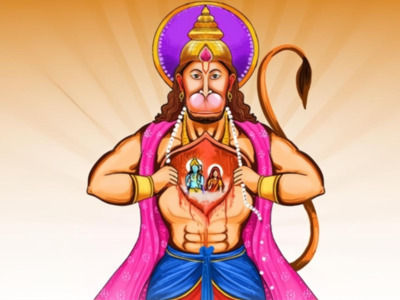
The Ramayana is not a single fixed text. It exists as a living tradition with multiple tellings across centuries, regions, and languages. Each version preserves the soul of the story while expressing it differently.
The most authoritative Sanskrit source is the
Valmiki Ramayana, traditionally attributed to sage Valmiki. Later devotional retellings, most famously the
Ramcharitmanas by Tulsidas, reshaped the narrative to emphasize bhakti or loving devotion.
The question of Hanuman tearing his chest sits exactly at the intersection of scripture and devotion.
1) The Valmiki Ramayana Does Not Describe Hanuman Tearing His Chest  The Ramayana Without Borders: How Southeast Asia Made Hindu Epics Its Own
In the Valmiki Ramayana, there is
no explicit scene where Hanuman physically tears open his chest to show Rama and Sita. This is a crucial point that often surprises readers.
What Valmiki does emphasize repeatedly is Hanuman’s unwavering devotion, humility, strength, and selflessness. Hanuman consistently declares that he exists only to serve Rama. His identity is defined not by his body but by his loyalty.
The absence of the chest tearing scene does not weaken Hanuman’s devotion in Valmiki’s telling. Instead, it keeps devotion inward and restrained, expressed through actions, words, and sacrifice rather than dramatic imagery.
2) Where the Chest Revelation Story Comes FromThe popular version of Hanuman revealing Rama and Sita in his heart emerges clearly in later devotional traditions, especially within the Ramcharitmanas and regional bhakti literature.
In these retellings, the scene often unfolds after the coronation of Rama. When Hanuman is questioned about his devotion or teased for wearing ornaments, he responds by showing that Rama and Sita live within his heart.
This moment is not meant to function as historical reportage. It is devotional poetry, designed to communicate an inner spiritual truth in a visual and unforgettable way.
3) Bhakti Over Biography: Why the Story Was Shaped This WayBhakti traditions prioritize emotional truth over literal chronology. The chest opening scene serves a clear theological purpose.
It teaches that true devotion is not external. Rama is not merely worshipped by Hanuman, Rama lives within him. The body becomes irrelevant. The heart becomes the temple.
In this sense, the story functions as a spiritual teaching rather than a physical claim. It tells the devotee where God truly resides.
4) Symbolism of the Chest and the Heart in Hindu Thought 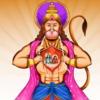 Hanuman devotional towards Ram
In Indian spiritual philosophy, the heart is not just an organ. It is the seat of consciousness, faith, and realization.
Hanuman tearing open his chest symbolizes the removal of ego, fear, and identity. What remains is divine presence.
This symbolism aligns perfectly with yogic and Vedantic ideas where the ultimate goal is dissolving the self so that the divine alone remains visible.
5) Temple Iconography Made the Symbol LiteralOver time, temple art and sculpture transformed this symbolic moment into a visual form. Murti makers needed an image that instantly communicated Hanuman’s unmatched devotion.
A figure with Rama and Sita visible in the chest became a powerful teaching tool. Even someone unfamiliar with scripture could understand the message at a glance.
Art froze metaphor into form, and repeated exposure slowly turned symbolism into assumed history.
6) Did Hanuman Feel Pain? Devotional Texts Say That Is the Wrong QuestionLater devotional texts make an important philosophical point. Hanuman does not experience pain in this act because he does not identify with the body.
For him, the body is merely an instrument of service. When ego dissolves, suffering loses meaning.
This idea mirrors broader Hindu teachings where liberation arises when attachment to the physical self ends.
7) Multiple Ramayanas, Multiple Truths  Courage and faith help overcome fear and obstacles.
Scholars often speak of “many Ramayanas” rather than one. Each version answers different spiritual needs.
Valmiki offers moral clarity, dharma, and human struggle. Tulsidas offers emotional surrender and divine intimacy.
The chest revelation belongs to the second stream. It does not contradict Valmiki. It completes him for a different audience.
Historical Fact or Spiritual Truth?So, did Hanuman actually tear his chest?
If we ask the Valmiki Ramayana, the answer is no. If we ask the bhakti tradition, the answer becomes more profound than yes or no.
The story was never meant to prove a physical event. It was meant to reveal a spiritual reality.
Hanuman’s greatest miracle was not strength, flight, or battle. It was the complete erasure of self, so that only Rama remained.
And perhaps that is why, even today, when devotees look at that image, they do not ask whether it happened.
They ask whether their own hearts are as full.
Contact to : xlf550402@gmail.com
Copyright © boyuanhulian 2020 - 2023. All Right Reserved.