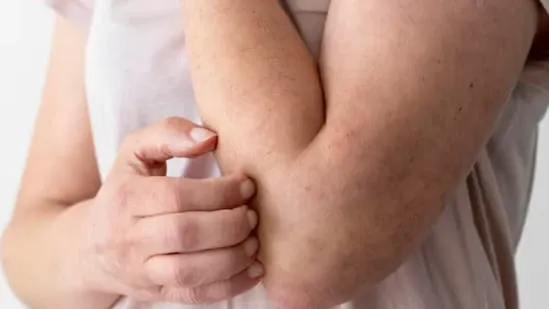
Measles cases hit a 30-year high in the US in 2025, doctor emphasises the importance of vaccination for prevention
Measles cases in the United States have surpassed 2,065 confirmed infections, according to the latest data from the US Centers for Disease Control and Prevention (CDC).
The surge has been reported across 44 jurisdictions, including Alabama, Alaska, Arizona, California, Colorado, Florida, Georgia, Hawaii, Indiana, Kentucky, Nevada, New Jersey, New Mexico, New York City, New York State, North Dakota, Ohio, Oklahoma, Pennsylvania, South Carolina, South Dakota, Texas, Virginia, Washington, and Wisconsin. Measles is a highly contagious viral disease that can affect people of all ages but is most common in children. It spreads rapidly through the air when an infected person breathes, coughs, or sneezes, making outbreaks difficult to contain without timely prevention measures.
Dr. Girish Chandra Vaishnava, Director of Internal Medicine at Medanta Hospital, tells Health Shots: "In recent years, the United States has seen a worrying fall in routine childhood vaccination rates due to vaccine hesitancy, misinformation, and gaps in public health outreach. This drop in immunization has directly contributed to the sharp rise in measles cases-now the highest seen in over 30 years."
Signs to watch out for
As this contagious disease affects mostly children and also someone who commutes and interacts with people in the public spaces, some of the signs you need to watch out are:
- High Fever
- Runny Nose
- Cough
- Red and watery eyes
- Koplik spots (tiny white or bluish dots seen inside the mouth, usually on the inner cheeks)
- The rash begins about 7-18 days after exposure, usually on the face and upper neck. It spreads over about 3 days, eventually to the hands and feet. It usually lasts 5-6 days before fading, as per the World Health Organization (WHO).
Who is at risk?
Measles is not a mild illness, says the doctor. It can lead to pneumonia, severe diarrhea, ear infections, brain inflammation (encephalitis), blindness, and, in severe cases, death.
According to the World Health Organization (WHO), complications are most common in children who are under 5 years old and adults over 30. But it is most likely in children who are malnourished, lack vitamin A, or have weak immune systems.
What's the treatment for measles?
WHO states that there is no specific treatment for measles. Instead, watch for symptoms and take precautions, such as drinking more water. Also, children and adults with measles should take two doses of vitamin A supplements separated by 24 hours. This will help to address the lack of this vitamin, which can occur even in well-nourished children. According to WHO, it may also reduce the number of deaths caused by measles.
Prevention tips
Vaccination is the most effective way to prevent measles. The measles vaccine is given alone or in combination with the mumps, rubella, and varicella vaccines. Children should receive at least two doses of the vaccine to ensure immunity. In most countries, the first two doses are given at 9 months, while in others, they are given at 12 to 15 months. The second dose should be administered around 15-18 months, says the World Health Organization.
Contact to : xlf550402@gmail.com
Copyright © boyuanhulian 2020 - 2023. All Right Reserved.