All day long the 25-year-old saleswoman in Ho Chi Minh City spins like a top amidst endless meetings and emails and the avalanche of work demands.
When she arrives home she is completely drained and her body begs for rest, but not her mind. “If I close my eyes now, the day will end without me having done a single thing for myself,” she says she thinks.
This compels her to open her laptop. Not to work, but to browse the web aimlessly, finish a movie she started, or simply scroll endlessly through her phone.
But despite evident physiological consequences, she maintains this mandatory ritual.
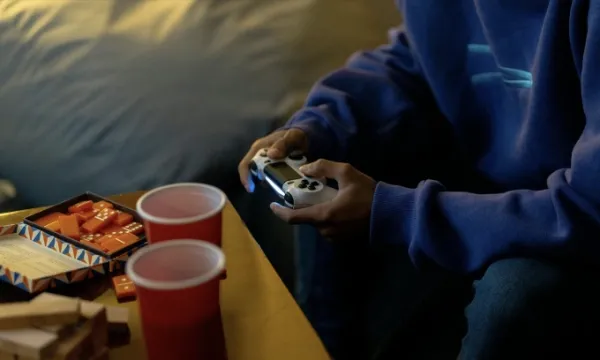
Staying up late for work or gaming can cause a range of health issues. Illustration photo by Pexels |
For Khoi, 31, the moment the bedroom door closes on his children at 9:30 p.m. is the moment he finally breathes a sigh of relief.
But instead of climbing into bed he tiptoes out to the living room and turns on his gaming console. At 1:30 a.m., the TV screen casts a blue glow on Khoi’s tired but satisfied face.
“I know staying up late is harmful,” he says. “But it is the only time of the day I don’t have to serve anyone. I get to live for myself.”
Both Mai and Khoi are examples of the phenomenon known as “Revenge Bedtime Procrastination” (RBP). It describes a behavior of deliberately sacrificing sleep to engage in leisure activities, in an attempt to regain control over time after a day dominated by external factors.
According to Vuong Nguyen Toan Thien, professional director of the Lumos Counseling and Psychotherapy Center, the core conflict of RBP lies in the subject being fully aware of the harm of staying up late yet pursuing it as a psychological need more urgent than biological necessity.
Although common, RBP is not listed as a mental disorder in WHO’s International Classification of Diseases (ICD-11) or Diagnostic and Statistical Manual of Mental Disorders (DSM-5-TR).
In current medical literature, it is viewed as a behavioral symptom stemming from a lack of self-regulation rather than an independent pathology.
But behavioral studies on students and other young people show an alarming rate, with 40-50% of survey participants indulging in it, mostly due to technology habits and daytime stress levels.
It is particularly acute among the 16-40 age group, including Gen Z and Millennials, generations under immense pressure for performance and constant social connection.
A study published in the International Journal of Environmental Research and Public Health indicated that those with low self-control at the end of the day are prone to the trap of sleep procrastination, especially when they feel their daytime did not “belong to them.”
For teenagers, this motivation stems from busy academic schedules; for adults like Khôi, it is a reaction to the double burden of work and family.
RBP creates a paradox where the effort to find comfort leads to chronic stress as cutting sleep for entertainment creates a negative feedback loop.
Sleep deprivation impairs the functions of the frontal lobe, the brain region responsible for decision-making and behavior control, making the ability to resist temptation even weaker the next night.
The result is a comprehensive decline in everything from the physical (reduced immunity, fatigue) to the cognitive (difficulty concentrating, emotional dysregulation), pushing the sufferer into low productivity and continued loss of time control during the day.
Thien emphasizes that because RBP is a behavioral issue, the solution does not lie in medical intervention with drugs but requires a restructuring of cognition and lifestyle.
The key to breaking this vicious cycle is addressing the root need for “autonomy,” he says. Instead of cramming leisure needs into the late hours of the night, experts recommend establishing hard boundaries for personal time during the day.
This includes proactively scheduling short breaks, practicing “sleep hygiene” by isolating electronic devices 30 minutes before bed, and, most importantly, accepting the need to refuse after-hours work requests, Thien says.
Only when the need to control one’s life is satisfied in a healthy way during the day can people let go of the toxic “revenge” at night, he adds.
Contact to : xlf550402@gmail.com
Copyright © boyuanhulian 2020 - 2023. All Right Reserved.