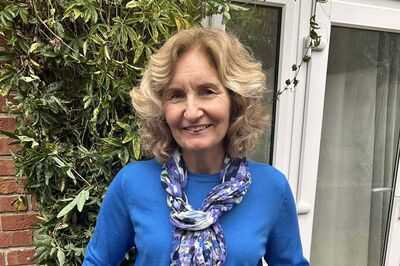
Having battled and overcome the challenges of cancer, Sally Burton, 61, was looking forward to a brighter future. However, life had another devastating blow in store: a diagnosis of multiple sclerosis (MS).
The news was a shock for Sally, a mother of two and former midwife from Hedge End, Southampton, who had already faced one life-altering health scare. Just a few years prior, her life had been straightforward and ordinary. "Before cancer, life was very busy but in a good way," recalls Sally.
"I was working as a lead practice educator in midwifery, responsible for teaching all grades of staff. This was a job I absolutely loved, and I was always on the go both at home and at work."
Sally's first inkling that she might have cancer came during a mammogram. She experienced severe pain during the routine check and noticed nipple discharge on the machine, reports Bristol Live.

"Despite an official letter confirming there was 'no sign of cancer' I knew this was abnormal and contacted the breast care team who were located within the hospital where I worked," shares Sally, who is married to Adrian and has two children: Laura, 29, a midwife, and son Matthew, a chemical engineer, 31.
"Several appointments later, I met a concerned breast surgeon who wanted to carry out some exploratory surgery on my breast to identify the source of the problem. As a result of this surgery, I was eventually diagnosed with breast cancer. Once diagnosed, everything happened quite quickly: I had surgery and recovered with the help and support of my family and friends."
The cancer diagnosis blindsided Sally and her loved ones, and the road to recovery proved difficult. She had a mastectomy and reconstruction but was fortunate enough to avoid chemotherapy.
After major surgery, Sally required a blood transfusion due to severe anaemia. She then spent years taking a drug called Tamoxifen, which triggered premature menopause.
• 'I lost more than twice my body weight after making major lifestyle change'
• UKHSA issues 'substantial impact on health' alert as snow and ice forecast
"It's an indescribable feeling when someone tells you that you have cancer," Sally remembers. "Your mind goes everywhere at once: total disbelief, fear and sadness. Sadness that I would have to cause upset and concern sharing my diagnosis with my family.
"But I also felt determined and found an inner strength that I didn't know I had. The treatment was tough physically and emotionally, but I was delighted that I did not need chemotherapy."
As though battling cancer wasn't enough of a struggle, Sally was simultaneously dealing with a spinal bulge diagnosis that stubbornly resisted physiotherapy. This led to sciatica down her left leg and severe lower back pain.
Just a fortnight following her operation, she began physiotherapy sessions to address the spinal issue. Yet despite consistent treatment, the sciatic pain in her left leg persisted, even after receiving a spinal injection. Meanwhile, tingling sensations she'd been experiencing grew more noticeable.
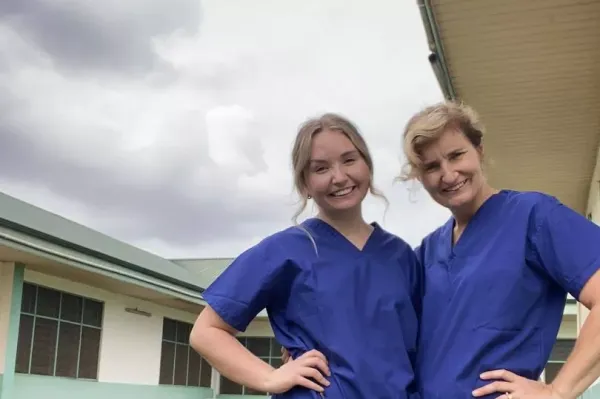
"When I saw a senior specialist physiotherapist, I confessed I was feeling tingling in my face and arms and was referred for an MRI of my spinal cord and brain," says Sally.
"In the next few months, I started to experience strange symptoms: walking into walls, balance issues, fatigue, memory problems. My thinking and processing skills were also affected. At first, I thought it was just the after-effect of everything I had been through.
"Unfortunately, this all coincided with my new job as a maternity investigator. This was going to be my dream job, and I couldn't wait to start."
However, whilst completing her initial training weeks, Sally underwent scans of her spinal cord and brain that uncovered multiple lesions. Heartbreakingly, these lesions appeared consistent with multiple sclerosis.
She was stunned by the revelation that having beaten cancer, she now faced another devastating diagnosis.
"It was devastating and I remember thinking, 'Someone has got it wrong'," Sally says. "Having two life-changing diagnoses in a short space of time seemed so unlikely.
"To survive cancer and then be told you have MS: it takes the wind out of your sails. I was also so very sad to have to share a second diagnosis with family and friends. Cancer had already taken so much from me, but MS took my career. I was medically retired earlier than I ever expected, and that was incredibly hard.
"My job had been such a big part of who I was. It was my purpose and meaning. I grieved for the loss of my final chapter of my career."
Despite the devastating news, Sally refused to let it defeat her, keeping herself occupied both mentally and physically. She now volunteers at a wellbeing café every Monday, leads a walking group, and has set up an antenatal teaching business.
"A diagnosis like this isn't the end of you," she says. "You can still use your skills in different ways - teaching, volunteering, doing activities that give you energy instead of exhausting you. Staying busy helps me focus on life beyond MS."
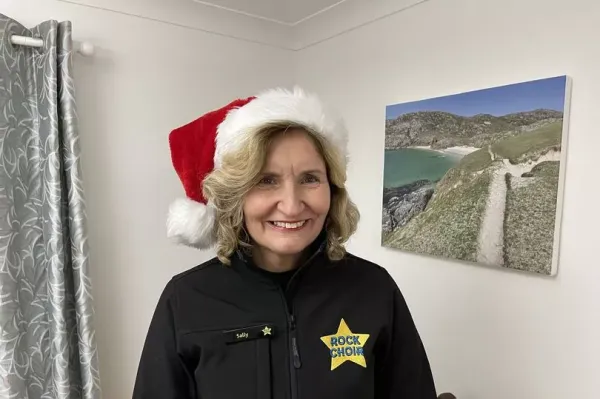
Sally has also thrown herself into rock choir singing to lift her mood. She recently put together a fundraising concert alongside her Rock Choir Leader, Jan Moll, and mate Jackie, to support the MS Trust and other charities helping those living with neurological conditions.
"Music, especially Rock Choir, has been a lifeline," she explains. "I've always loved singing, but since my diagnosis, it's become a way to stay connected, joyful, and active.
"Seeing over 300 people come together to support people like me was incredibly emotional. Supported by my consultant, I shared my story, giving a speech to the audience. I was extremely proud to wear my MS Trust T shirt and represent the charity."
Sally is also keen to highlight what living with MS really means, likening it to an iceberg – whilst she might appear fine on the surface, there's a lot happening beneath that others can't see.
"MS varies, it's unpredictable, no two people experience it the same way," she explains. "I also wish more people knew where to turn for reliable information. When I was first diagnosed, both my family and I found the MS Trust extremely helpful - their information was clear, evidence-based, and made everything feel a bit less overwhelming. They were also kind, caring and knowledgeable when I asked random questions."
Despite her diagnosis, Sally counts her blessings – particularly that her MS was identified later in life. She's committed to maintaining an upbeat outlook, even when things get tough.
"I feel grateful for my family, my mobility, my treatment, and the age I was when I was diagnosed," she says. "I'm very aware that some people face this in their 20s or 30s, or with young families.
"I also want people to know that disease-modifying therapy can help to slow the progression of the disease. There is hope and you can still live a full, meaningful life with MS. It doesn't need to define you. I have MS, but it doesn't have me."
To learn more about the MS Trust or to make a donation, visit.
Contact to : xlf550402@gmail.com
Copyright © boyuanhulian 2020 - 2023. All Right Reserved.