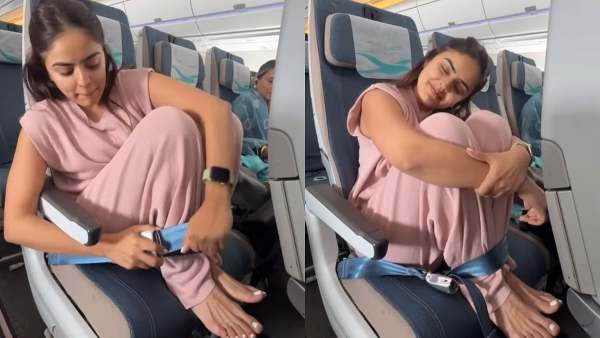
A viral TikTok airplane sleep trend showing passengers strapping their legs to seats has sparked backlash over safety and etiquette. Many flight attendants stop passengers from trying it. Doctors warn the position may restrict circulation and increase blood clot risk, while others note discomfort, numbness, hygiene issues, and poor in-flight manners
A new TikTok trend promising better sleep on airplanes is taking off online, but not without turbulence. Viral videos show passengers curling up by pulling their feet onto their seat and strapping their legs in with the seat belt. While some flyers swear it helps them rest, others, including flight attendants and medical experts, are warning that the trend may be unsafe and inappropriate.
What is the viral airplane sleeping position?
The trend involves passengers sitting cross-legged or tucking both feet onto the seat cushion, then fastening the seat belt around their legs instead of their waist. Creators claim it helps relieve lower-back strain and makes sleeping upright more comfortable, especially on long-haul flights.
However, many users on the internet report that flight crews quickly shut it down. “I tried to do this and the flight attendant made me stop,” one traveller wrote. Another said they were “yelled at by a flight attendant” moments after attempting it.
Even those who managed to try the position said it wasn’t perfect. Some reported numbness and tingling after a short time, while others joked about digestive discomfort caused by sitting folded up for too long. One creator admitted that while the setup felt cozy initially, “my legs fell asleep pretty fast.”
Doctors warn of blood clot risks
Health professionals are raising red flags, particularly for long flights. Dr. Carole Lieberman, a board-certified psychiatrist experienced in airline passenger care, warned that the position could restrict circulation.
“This trend is very dangerous because it keeps the legs in a tightly compressed position,” she said. Reduced blood flow increases the risk of deep vein thrombosis (DVT), a condition where clots form in the legs and can travel to the lungs. “Pulmonary embolisms can be deadly,” she told Fox News Digital.
Medical experts generally advise flyers to stretch, move their legs regularly, stay hydrated, and consider compression socks to reduce clot risk.
Why etiquette experts disapprove
Beyond health concerns, the sleeping position also clashes with widely accepted norms of in-flight behavior. Airplane seats are shared public spaces, and placing feet, especially shoe-covered ones, on seats meant for sitting is often viewed as inconsiderate. It can make surrounding passengers uncomfortable and raises hygiene concerns, particularly on long flights where seats are used by multiple travelers in a single day.
If someone feels the need to adjust their posture to ease discomfort, small considerations matter. Removing shoes, wearing clean socks or soft slippers, and ensuring feet are not touching shared surfaces can reduce the impact on others. Covering legs with a blanket or jacket also helps maintain cleanliness. Even then, such positions are generally only tolerable when the adjacent seat is empty and no one nearby is disturbed. Ultimately, being mindful of personal space and shared comfort is key to maintaining a pleasant cabin environment for everyone on board.
Contact to : xlf550402@gmail.com
Copyright © boyuanhulian 2020 - 2023. All Right Reserved.