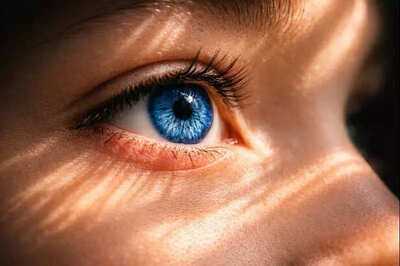
A rare vision disorder that changes what people see
What Is Visual Snow Syndrome?
Most people have probably seen a face in a cloud or in the grain of wood at least once. This common trick of the visual system is called face pareidolia. Ordinary brains are wired to identify face like patterns, even in objects that have no actual faces.
In contrast, people with visual snow syndrome experience ongoing visual static. The entire visual field appears filled with flickering dots, almost like an old television with poor reception. These persistent specks of visual noise rarely disappear, even in darkness. Scientists think that the issue stems from excessive activity in the visual cortex, a part of the brain responsible for interpreting visual signals. When neurons in this region become too reactive, the resulting overload leads to illusions and persistent perceptions that do not match reality.
This syndrome often comes with other visual symptoms such as light sensitivity, lingering afterimages, and visual trails that follow moving objects. Such effects can make everyday vision confusing and tiring.
How Researchers Examined Visual Illusions
To understand whether visual snow affects how people interpret ambiguous visuals, researchers conducted a large online experiment. Participants were divided into two groups: those who reported symptoms of visual snow and those who did not. All volunteers were shown hundreds of everyday images, including items like tree bark, coffee cups, and other random textures. They were then asked to rate how strongly each image resembled a face on a numerical scale.
Out of the volunteers, over 130 met the criteria for visual snow syndrome, while more than 100 people without the condition made up the comparison group. In addition, researchers noted whether participants experienced migraines, another neurological condition often linked with visual snow.

Brains That See Too Much
The study found that participants with visual snow consistently reported seeing face like patterns more frequently and more strongly than those in the control group. In other words, the same abstract pattern that looked like an everyday object to most people triggered stronger impressions of faces in people with visual snow.
Those with both visual snow and a history of migraines showed the strongest responses. This suggests a possible overlap in how the brain processes visual stimuli in both conditions, implying that a shared underlying mechanism may drive these enhanced illusions.
The pattern supports ideas from earlier theories that the visual systems of people with visual snow are hyper responsive. In a typical brain, early perceptual guesses are quickly checked and corrected by feedback systems. When these regulatory pathways are disrupted by abnormal neural firing, initial false perceptions are amplified rather than corrected.
Understanding Face Perception in the Human Brain
Seeing faces where none exist is not inherently pathological. The human visual system has evolved to prioritize social cues, particularly faces, because recognizing other humans quickly has historically offered survival advantages. Humans are naturally biased to detect face like forms before analysing them more deeply.
In people with visual snow, this bias may be exaggerated. Their brains link seemingly random visual noise to meaningful interpretations, such as facial patterns. This heightened sensitivity suggests that visual snow affects not only basic vision but also how the brain interprets and constructs visual meaning from sensory input.
Why This Matters
One reason this research matters is that visual snow syndrome is often misunderstood or dismissed. By linking the condition to a measurable illusion, researchers provide clinicians with a more objective way to recognize and potentially diagnose the syndrome.
Moreover, understanding how perception departs from reality in these cases deepens overall knowledge about the human brain. It shows that seeing is not just about receiving signals from the eyes but also about how the brain interprets those signals. The balance between sensitivity and accuracy in perception is delicate. Too little activity and important signals go unnoticed, while too much leads to illusory perceptions of patterns that are not .
The phenomenon of seeing faces that do not exist highlights how intricately the brain constructs our sensory experience. In people with visual snow syndrome, neural activity that is overly sensitive or poorly regulated can transform ordinary visual input into vivid illusions. This not only offers a window into a rare condition but also broadens our understanding of human perception as a whole. Recognizing these patterns helps scientists better comprehend how all humans see and interpret the world around them.
Unlock insightful tips and inspiration on personal growth, productivity, and well being. Stay motivated and updated with the latest at My Life XP.
Most people have probably seen a face in a cloud or in the grain of wood at least once. This common trick of the visual system is called face pareidolia. Ordinary brains are wired to identify face like patterns, even in objects that have no actual faces.
In contrast, people with visual snow syndrome experience ongoing visual static. The entire visual field appears filled with flickering dots, almost like an old television with poor reception. These persistent specks of visual noise rarely disappear, even in darkness. Scientists think that the issue stems from excessive activity in the visual cortex, a part of the brain responsible for interpreting visual signals. When neurons in this region become too reactive, the resulting overload leads to illusions and persistent perceptions that do not match reality.
This syndrome often comes with other visual symptoms such as light sensitivity, lingering afterimages, and visual trails that follow moving objects. Such effects can make everyday vision confusing and tiring.
How Researchers Examined Visual Illusions
To understand whether visual snow affects how people interpret ambiguous visuals, researchers conducted a large online experiment. Participants were divided into two groups: those who reported symptoms of visual snow and those who did not. All volunteers were shown hundreds of everyday images, including items like tree bark, coffee cups, and other random textures. They were then asked to rate how strongly each image resembled a face on a numerical scale.
Out of the volunteers, over 130 met the criteria for visual snow syndrome, while more than 100 people without the condition made up the comparison group. In addition, researchers noted whether participants experienced migraines, another neurological condition often linked with visual snow.
It is not just about seeing. it is about how the brain understands what the eyes deliver.
Brains That See Too Much
The study found that participants with visual snow consistently reported seeing face like patterns more frequently and more strongly than those in the control group. In other words, the same abstract pattern that looked like an everyday object to most people triggered stronger impressions of faces in people with visual snow.
Those with both visual snow and a history of migraines showed the strongest responses. This suggests a possible overlap in how the brain processes visual stimuli in both conditions, implying that a shared underlying mechanism may drive these enhanced illusions.
The pattern supports ideas from earlier theories that the visual systems of people with visual snow are hyper responsive. In a typical brain, early perceptual guesses are quickly checked and corrected by feedback systems. When these regulatory pathways are disrupted by abnormal neural firing, initial false perceptions are amplified rather than corrected.
Understanding Face Perception in the Human Brain
Seeing faces where none exist is not inherently pathological. The human visual system has evolved to prioritize social cues, particularly faces, because recognizing other humans quickly has historically offered survival advantages. Humans are naturally biased to detect face like forms before analysing them more deeply.
In people with visual snow, this bias may be exaggerated. Their brains link seemingly random visual noise to meaningful interpretations, such as facial patterns. This heightened sensitivity suggests that visual snow affects not only basic vision but also how the brain interprets and constructs visual meaning from sensory input.
Why This Matters
One reason this research matters is that visual snow syndrome is often misunderstood or dismissed. By linking the condition to a measurable illusion, researchers provide clinicians with a more objective way to recognize and potentially diagnose the syndrome.
Moreover, understanding how perception departs from reality in these cases deepens overall knowledge about the human brain. It shows that seeing is not just about receiving signals from the eyes but also about how the brain interprets those signals. The balance between sensitivity and accuracy in perception is delicate. Too little activity and important signals go unnoticed, while too much leads to illusory perceptions of patterns that are not .
The phenomenon of seeing faces that do not exist highlights how intricately the brain constructs our sensory experience. In people with visual snow syndrome, neural activity that is overly sensitive or poorly regulated can transform ordinary visual input into vivid illusions. This not only offers a window into a rare condition but also broadens our understanding of human perception as a whole. Recognizing these patterns helps scientists better comprehend how all humans see and interpret the world around them.
Unlock insightful tips and inspiration on personal growth, productivity, and well being. Stay motivated and updated with the latest at My Life XP.
Contact to : xlf550402@gmail.com
Copyright © boyuanhulian 2020 - 2023. All Right Reserved.