Whether you prefer doing your own car maintenance or taking your vehicle to a professional, car care is rarely straightforward. Even basic tasks, like changing the oil, require knowing the right type of oil, the correct viscosity, and whether the filter also needs replacing. For more complex jobs, such as a transmission oil change or a timing belt replacement, these considerations become even more important.
If you enjoy tackling projects with your own two hands, there are plenty of DIY tips and tricks that can save you a trip to the mechanic. Regardless of your approach, familiarizing yourself with preventive car maintenance can save both time and money. In other words, this is how you can spend a bit of your time every now and then to make sure you don’t waste a lot of time down the line.
As someone who takes pride in maintaining cars by myself, I’ve learned the hard way that being prepared and knowing what needs to be done is the best way to save time, money, and frustration. Although various factors can affect how long some maintenance tasks take, there are some practical ways to help you streamline the process and make it quicker, easier, and gentler on your finances.
Organize your tools and supplies
Zheka-boss/getty images
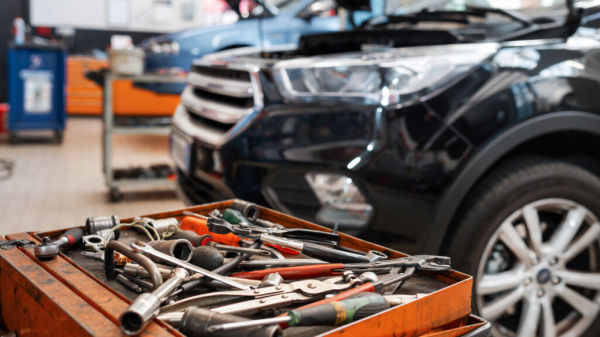
Organizing your tools and your supplies is a great way to save time during car maintenance. If you prefer doing basic maintenance tasks yourself, having all the necessary tools and supplies laid out before you start is vital. For instance, imagine the situation where you want to change the oil in your vehicle. You jack it up, drain the old oil, and only then realize you don’t have the necessary amount of oil.
Now you can’t finish the job, and if you are using someone else’s garage, you are not only wasting your own time but theirs as well. It’s the same with your tools. It’s always best to gather everything you need before you start so you won’t waste time looking for them during the process, and there are several budget friendly ways to organize your garage tools. It’s also important to properly store your tools, clean them, and inspect them from time to time.
Always use a checklist
Another great way to streamline your maintenance processes is by writing and following a clear and proven checklist of all the tasks you need to do. This will allow you to verify what you want to do and whether you are doing it correctly. Moreover, it will also alleviate the need of constantly remembering and thinking about what is required next.
This goes hand in hand with organizing tools and supplies, as it will help you gather everything in advance, avoid interruptions, and move efficiently from one step to the next without forgetting anything. For example, if you plan on changing the oil in your vehicle yourself, be sure to write down all of the step-by-step tasks you plan on doing such as jacking the car up, removing drain plugs, draining old oil, replacing the filter, refilling with new oil, checking for leaks, etc.
If you plan on doing more complex tasks that require more time and concentration, it’s also a good idea to write a checklist that will allow you to accurately check all specific tasks while you are doing them. All of this is intended to make sure you do not miss an important task that can waste time or even cause future problems that can take hours to fix.
Group maintenance tasks together
If you plan to jack your car up to change the oil, this is also a good time to check all of the hoses, rotate the tires, and inspect alignment. Because all of these tasks typically require you to jack up the car, by grouping them together, you are saving yourself the costs and time of having to jack the car up once instead of three or four times.
On a similar note, certain BMW and Audi engines have their timing chains located at the rear of the engine. This makes access very difficult and often requires engine or transmission removal. When you’re already in for such a big job, it’s an ideal time to also service the transmission, check or replace the clutch, and refresh the filter and fluids.
These tips also apply if you are taking your car to a professional. It’s a good idea to ask whether there are any other maintenance and repair tasks you should do while performing the one at hand, in case it’s an engine out or jacking up the car type of job. However, it is also important to know how to avoid getting ripped off a car mechanic, so be sure to ask such questions only if you have done your homework.
Do your own diagnostics
If something is up with the car, but you don’t know what it is, it’s a good idea to write down or even record all of the symptoms you encounter so the mechanic does not have to waste time diagnosing it. According to the 2025 PartsTech Reportalmost half of repair shops nationwide charge a labor rate between roughly $120 and $159 per hour. Therefore, this is not only saving you time, but potentially even hundreds of dollars.
There are a few different ways you can do your own basic diagnostics. For example, owning an OBD-II reader could save you a ton of money by scanning error codes and potential problems lurking in the background. Taking your car for a spin before you go to the mechanic and listening can go a long way. Not only does this help you understand your car better, it could also point out issues that are only starting to take shape.
Some problems, such as strange noises from the suspension, vibrations at certain speeds, or braking issues, can only be noticed when driving the car. So, if you are taking your car in for a basic task and know the mechanic will not test drive it, this is the time to communicate with your mechanic and play an active role in the diagnostics process.
Preparation is key
To round up our list, it’s also important you have your car prepared for whatever you plan on doing. An easy thing to do would be to clean the car up before working, parking it on a suitable and level surface, jacking it up on stands, and removing panels when needed. Laying down protective floor mats will ensure you don’t contaminate your garage or loose bolts, nuts, and screws.
It’s also very important to prepare everything you plan on to say to your mechanic. For example, saying “just do whatever it needs,” may seem like a good idea, but you should never say this to your mechanic as that can lead to costs you never expected. If you plan on working in the engine bay area, it is also a good idea to protect the painted panels around the bay with covers in order not to scratch them while working.
If you plan on taking your car to a professional to do something that requires the engine to be at a working temperature, make sure to do so in order not to waste time waiting for the car to warm up. Also be sure to remove all personal items in order not to waste billable hours for something you could’ve done yourself.